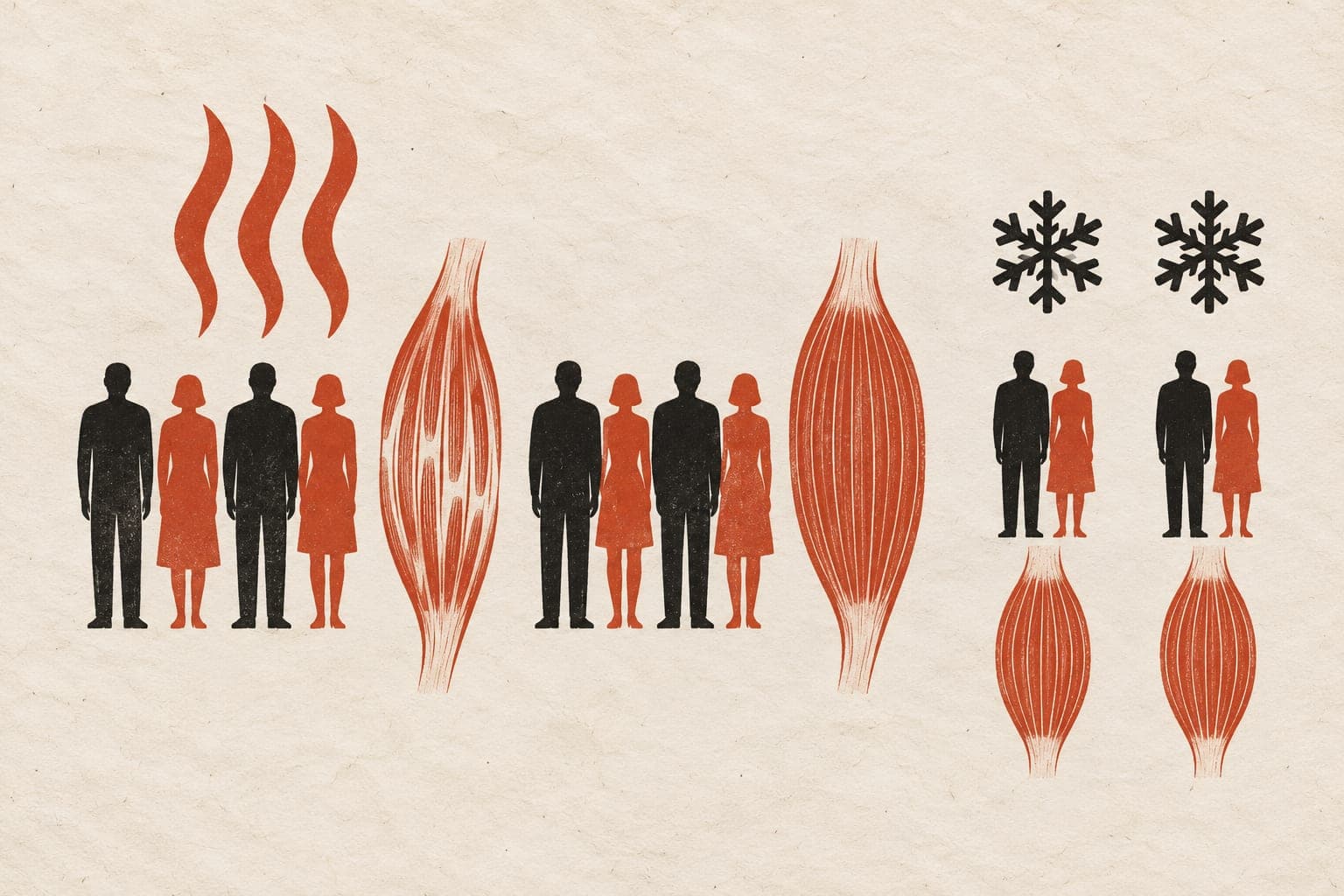
Extreme heat linked to greater death risk at older ages in Brazil
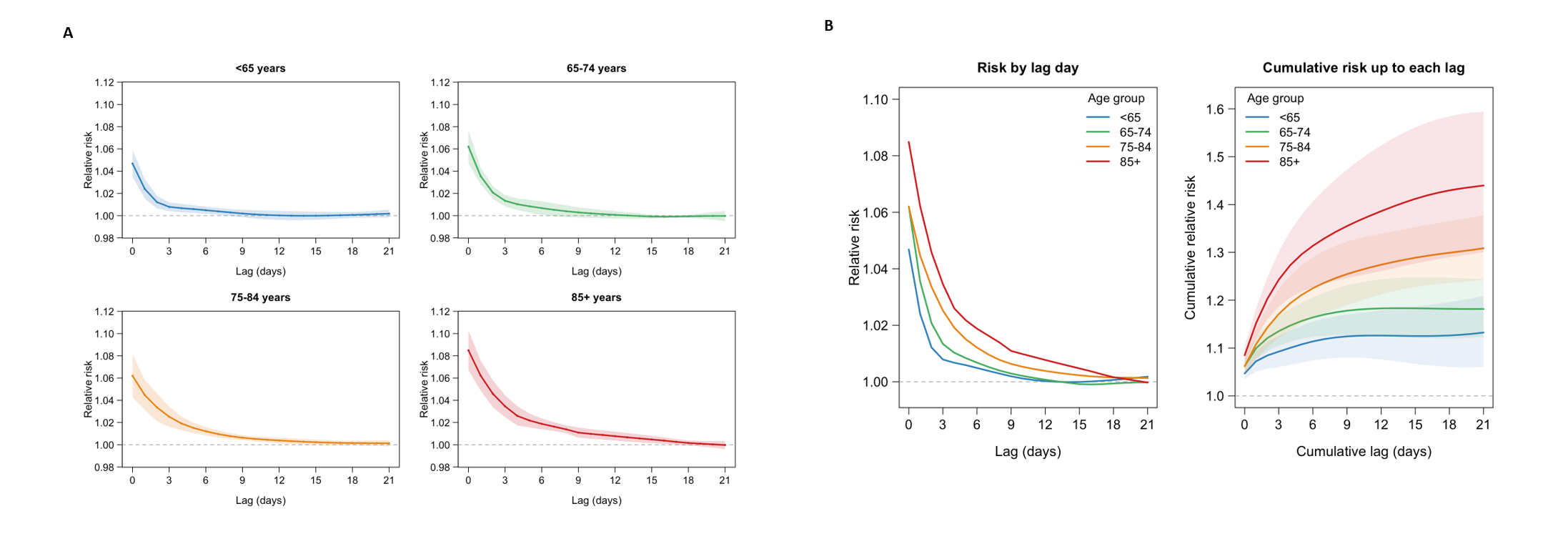
Comparing extreme heat with less-hot days, the first-week relative risk of death was 1.119 below 65 and 1.329 at 85 or older.
Limit: Deaths brought forward could be offset by fewer deaths after 21 days
Edited by Boris Djordjevic · AgingResearch.News
In an observational study, researchers analyzed daily records of 11,038,656 deaths from natural causes in 14 Brazilian state-level jurisdictions from 2014 to 2024. They compared daily maximum temperatures at the 99th and 75th percentiles—positions near the top and lower down in each jurisdiction’s temperature rankings.
The relative risk of death over the first week rose across all four age groups, from 1.119 below 65 to 1.329 at 85 or older. The researchers found no statistically detectable drop in deaths to offset the excess within 21 days. A second analysis using a different observational design reproduced the same age ordering.
Why it matters
The age pattern supports giving people aged 75 or older priority in extreme-heat response plans.
Caveats
The observational design cannot establish cause and effect, and this preprint has not been peer-reviewed. Some deaths may still have been brought forward, and an offsetting fall could have occurred after 21 days.
The paper
My Brazilian Doctor; Universidade de São Paulo
Research Square, Oct 20, 2026, Open access, Preprint, not peer-reviewed