Tadalafil tied to survival in men 40+ with erection or urinary issues
Death risk ratios were 0.574 for daily 5 mg tadalafil and 0.617 for on-demand 20 mg versus non-users; values below 1 indicate lower relative risk.
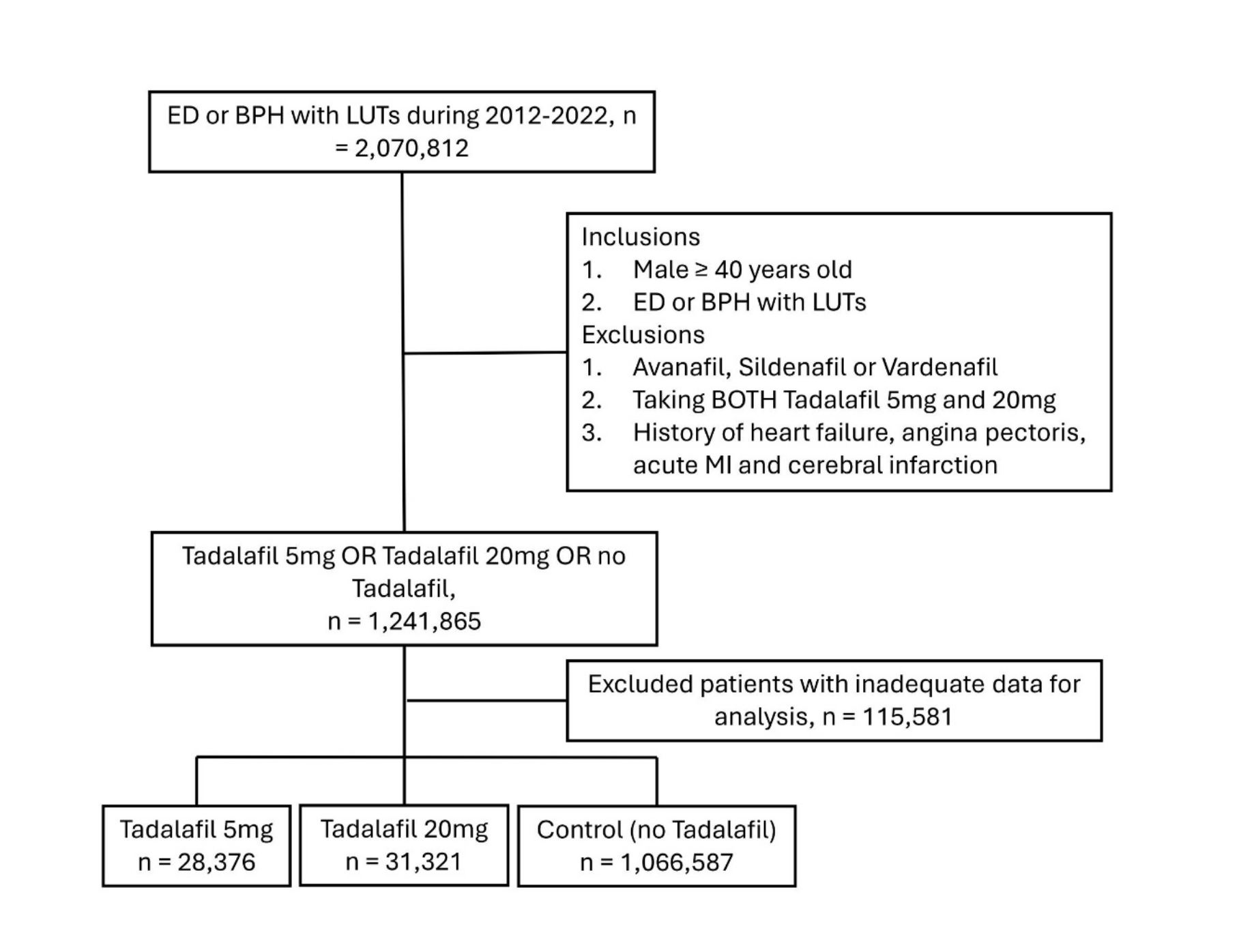
A retrospective observational study examined US health records for men aged 40 or older with erectile dysfunction—difficulty getting or keeping an erection—and/or lower urinary tract symptoms affecting urination. It included 28,376 men prescribed tadalafil 5 mg daily, 31,321 prescribed 20 mg on demand, and 1,066,587 who did not receive phosphodiesterase type 5 inhibitors, the drug class that includes tadalafil.
Researchers matched groups on demographic characteristics and major medical conditions. Within a 14-year follow-up period, both regimens were associated with lower risks of death, stroke, heart failure and ischemic heart disease, which involves reduced blood supply to the heart, compared with non-use. In a separate matched comparison, on-demand tadalafil was associated with more favorable overall survival and survival free of cardiovascular disease than daily tadalafil.
Why it matters
Erectile dysfunction and urinary symptoms are common in middle-aged and older men. Randomized studies could test whether tadalafil offers cardiovascular benefits beyond relief of these symptoms.
Caveats
This observational study cannot establish causation, because matching may leave unmeasured differences between groups. The preprint has not been peer-reviewed, excluded men with pre-existing major cardiovascular disease and reported no harms data in its abstract.
From the paper
- Participants
Between 1 January 2012 and 31 December 2022, a total of 2,070,812 men with erectile dysfunction (ED) and/or lower urinary tract symptoms (LUTS) were identified within the TriNetX US Collaborative Network.
- Result
… all-cause mortality (RR 0.574, 95% CI 0.535–0.615),
Quoted word for word from the full text on researchsquare.com.
The paper
Ministry of Health; Taichung Veterans General Hospital
Research Square, Oct 18, 2026, Open access, Preprint, not peer-reviewed