Probiotics linked to brain surface area changes in older adults
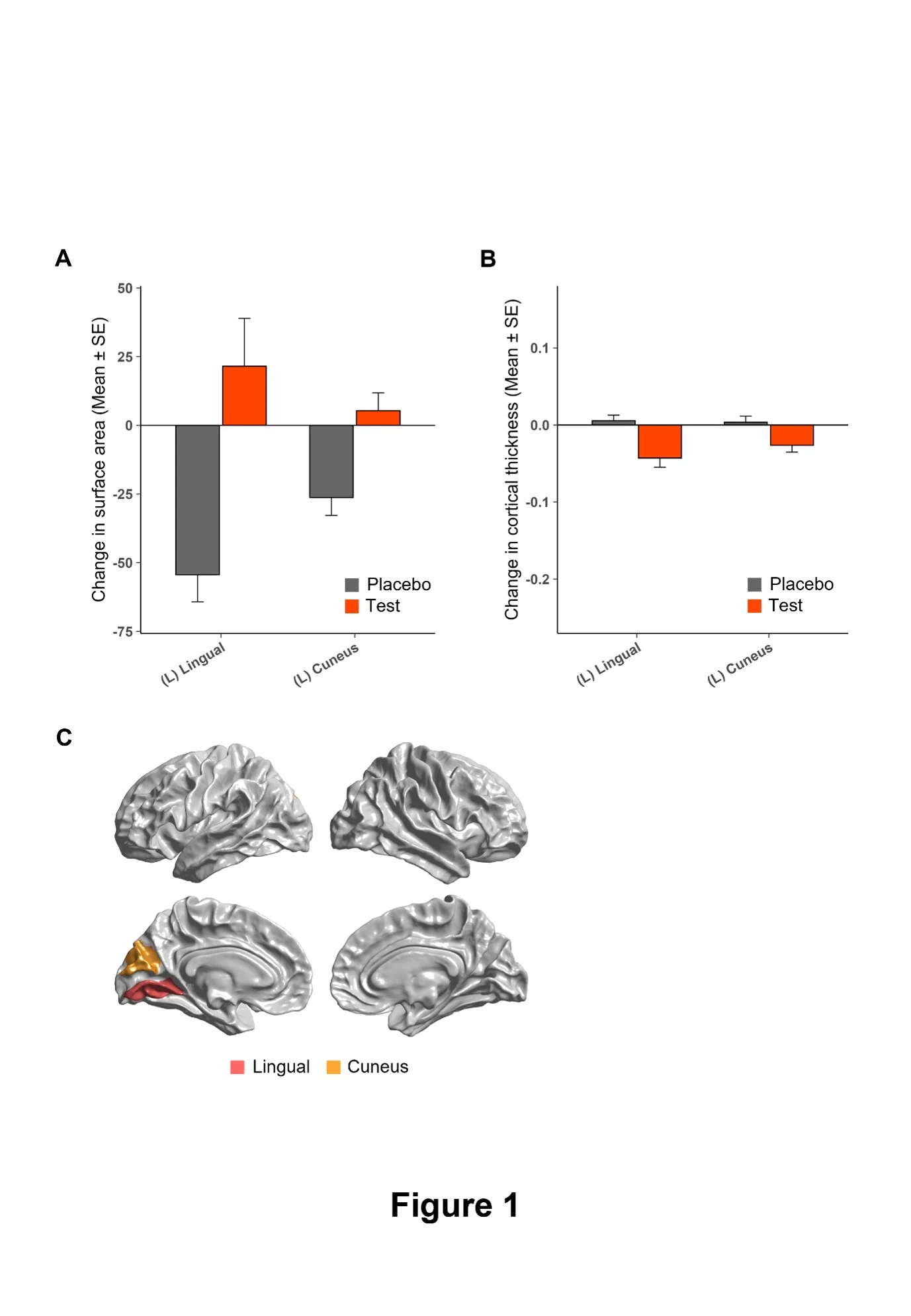
Surface area in one brain region increased by 21.53 square millimetres with probiotics, against a fall of 54.39 square millimetres with placebo over 52 weeks.
Double-blind, placebo-controlled
Limit: Excluding participants without repeat, analyzable MRI could bias the comparison
Researchers analysed brain scans from 68 older adults with early cognitive impairment in a randomised, double-blind, placebo-controlled trial of multistrain probiotics. The probiotic group included 32 people and the placebo group 36. Participants underwent magnetic resonance imaging at the start and after 52 weeks.
The researchers measured surface area and thickness of the cortex, the brain’s outer layer. In a region called the left lingual gyrus, surface area rose by 21.53 square millimetres with probiotics, versus a fall of 54.39 square millimetres with placebo. Surface area also increased in another left-sided region, the cuneus, compared with placebo. Thickness decreased modestly in both regions in the probiotic group. Structural changes in these regions were associated with performance on tasks involving visual and spatial thinking.
Why it matters
For older adults with early cognitive impairment, the research addresses how previously reported cognitive benefits of probiotics relate to changes in brain structure.
Caveats
The associations do not establish that structural brain changes caused better cognitive performance. This preprint has not been peer reviewed; it studied only older adults with early cognitive impairment, not cognitively healthy adults, and the abstract reported neither dose nor harms.
From the paper
- Participants
A total of 68 participants with available baseline and 52-week data were included in the final analysis, comprising 32 participants in the test group and 36 participants in the placebo group (Table 1).
Quoted word for word from the full text on researchsquare.com.
- Probiotics
- Multistrain probiotic
- Mild cognitive impairment
- Cortical surface area
- Cortical thickness
- Humans
The paper
Neural correlates of cognitive enhancement after probiotic supplementation
Chosun University
Research Square, 14 Oct 2026, Open access, Preprint, not peer-reviewed