Alpha-synuclein pathology alters lipids in mice and human cells
In mouse midbrain and cultured human neurons, alpha-synuclein pathology led to shorter, more saturated lipid chains, an effect largely reversed in mice by intermittent fasting.
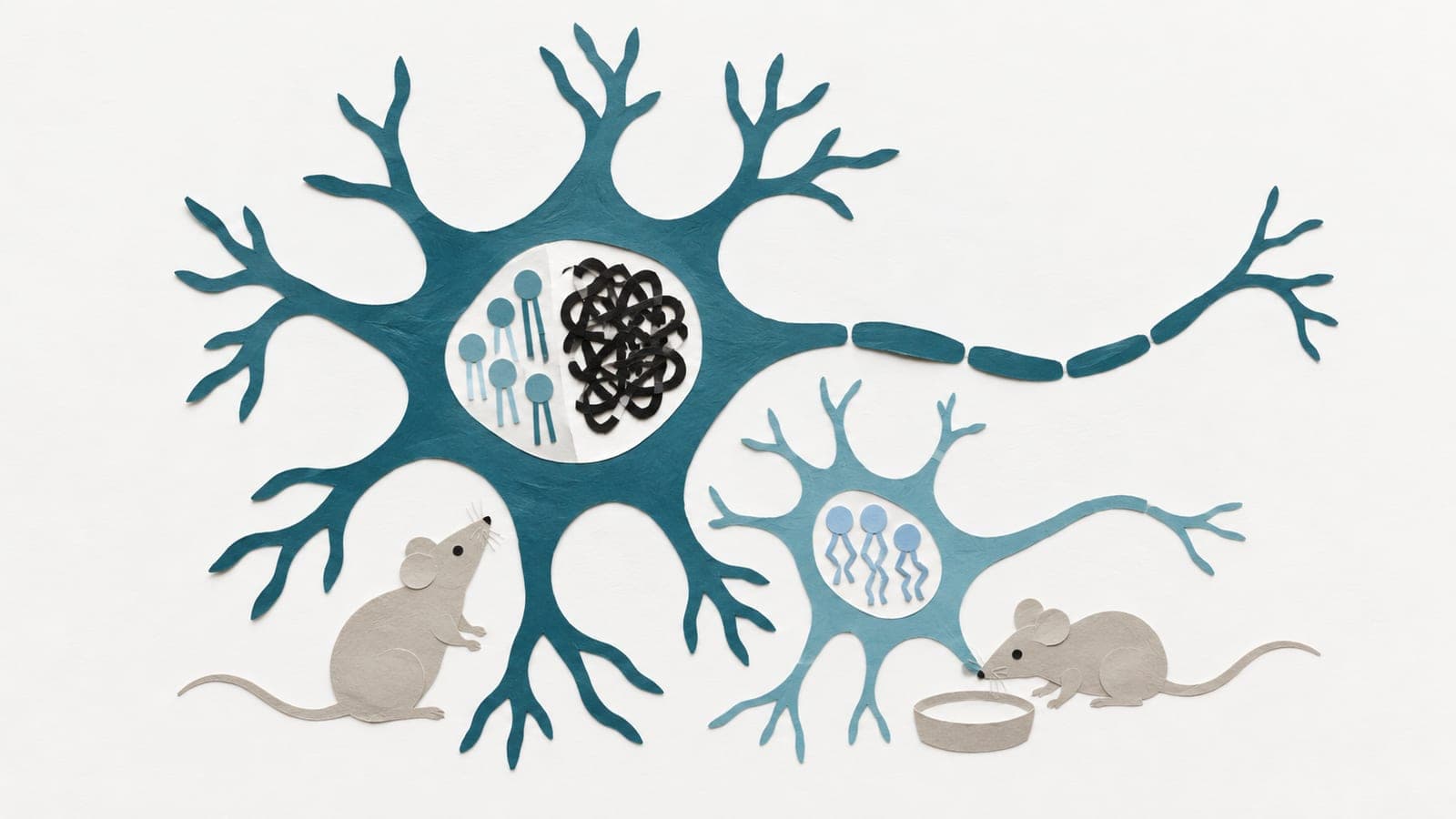
In an experiment in mice and cultured human dopaminergic neurons, researchers examined how alpha-synuclein pathology, a hallmark of Parkinson's disease, alters cellular lipids. In mouse midbrain, introducing alpha-synuclein increased triacylglycerol, ceramide and sphingomyelin, while decreasing phospholipids. The pathology also triggered coordinated remodelling across multiple lipid classes, producing shorter and more saturated acyl chains, the fatty acid components of lipids, though phosphatidylinositol showed a distinct response. Human dopaminergic neurons derived from LUHMES cells displayed a partially similar shift in acyl chains seven days after viral delivery of alpha-synuclein. In the mouse midbrain, intermittent fasting largely reversed these lipid changes, whereas continuous activation of the immune-signalling protein STING did not reproduce the acyl-chain pattern.
Why it matters
Parkinson's disease is an age-related neurodegenerative condition marked by alpha-synuclein accumulation. The study implicates altered lipid synthesis and remodelling as potential mechanisms underlying the membrane lipid shifts associated with this pathology.
Caveats
The findings come from lab-grown cells and animal models rather than people with Parkinson's disease. The work is also a preprint, meaning it has not yet been peer-reviewed.
The paper
Technische Universität Dresden
Research Square, 9 Oct 2026, Preprint, not peer-reviewed