Translation error rates rise with age in post-mitotic mouse cells
Mass spectrometry showed error frequencies increased in post-mitotic mouse tissues during aging but not in dividing cells, correlating with changes in tRNA pools.
bioRxiv
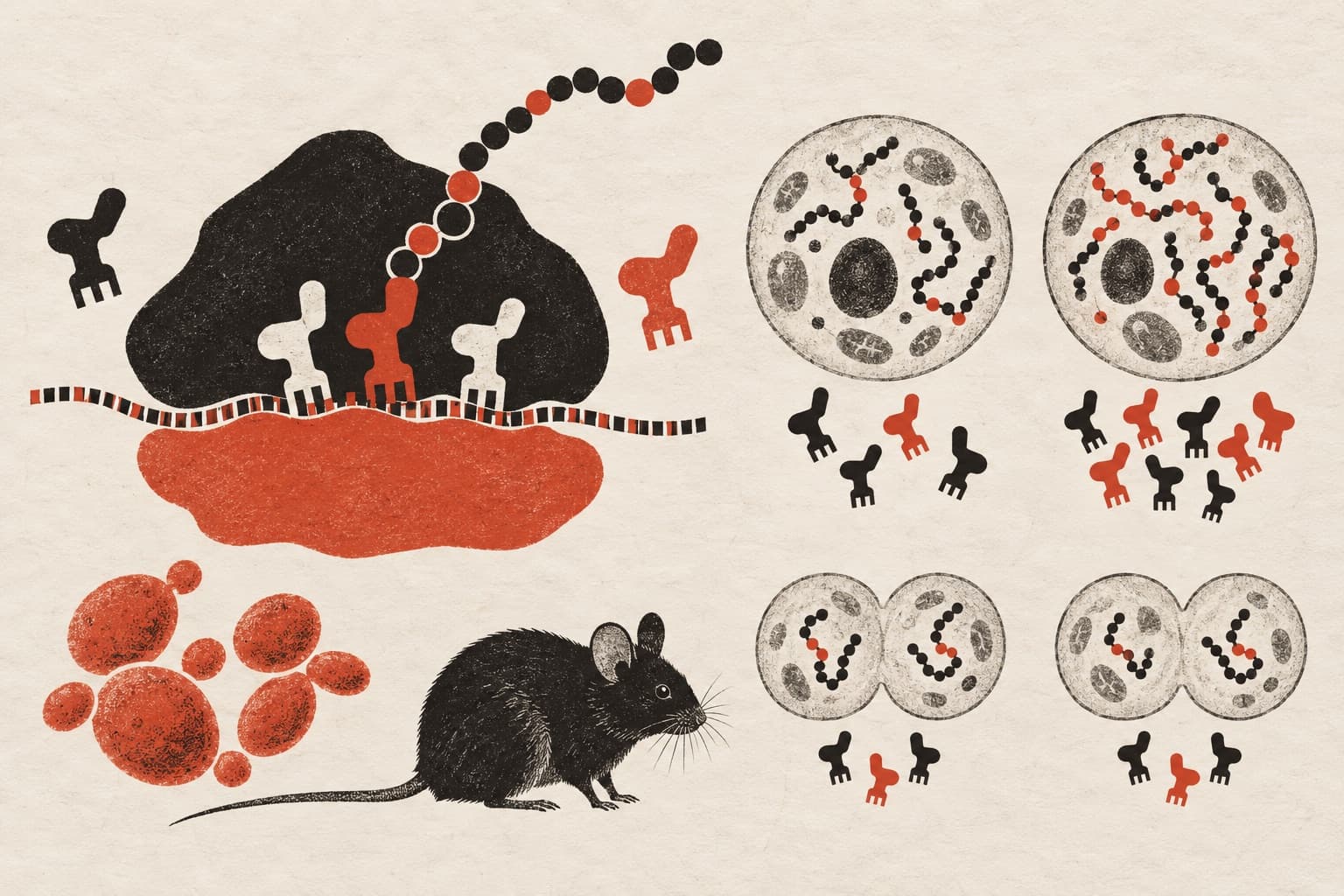
In a preprint study using yeast and mice, researchers tracked proteome-wide amino acid misincorporations using mass spectrometry. They found that translation fidelity is both organism- and organ-specific. Measured error frequencies correlated with codon:anticodon pairing thermodynamics and tRNA pool composition, which displayed synergistic or opposing effects depending on the organism or tissue type. Most identified protein errors carried a negative fitness burden. During aging experiments across both systems, error frequencies increased with age in post-mitotic cells but did not in mitotic cells. These changes correlated with remodeling of the tRNA pool, which the authors identified as a crucial regulator of translation fidelity across the lifespan.
Why it matters
Protein misincorporations correlate with protein misfolding and shorter lifespan. Pinpointing how translation accuracy declines selectively in non-dividing tissues helps clarify how cellular proteostasis degrades over time.
Caveats
The reported connections between tRNA pool remodeling and translation fidelity are correlational, and the findings are in yeast and mice rather than human subjects. The work is also a preprint and has not yet completed peer review.
The paper
Translation fidelity mechanisms and their changes in aging
Stanford University
bioRxiv · 25 Sep 2026 · Preprint, not peer-reviewed