Association Between Statin Use and Cardiovascular Events Among Type 2 Diabetes Patients in South Ethiopia: A Case-Control Study
Abstract
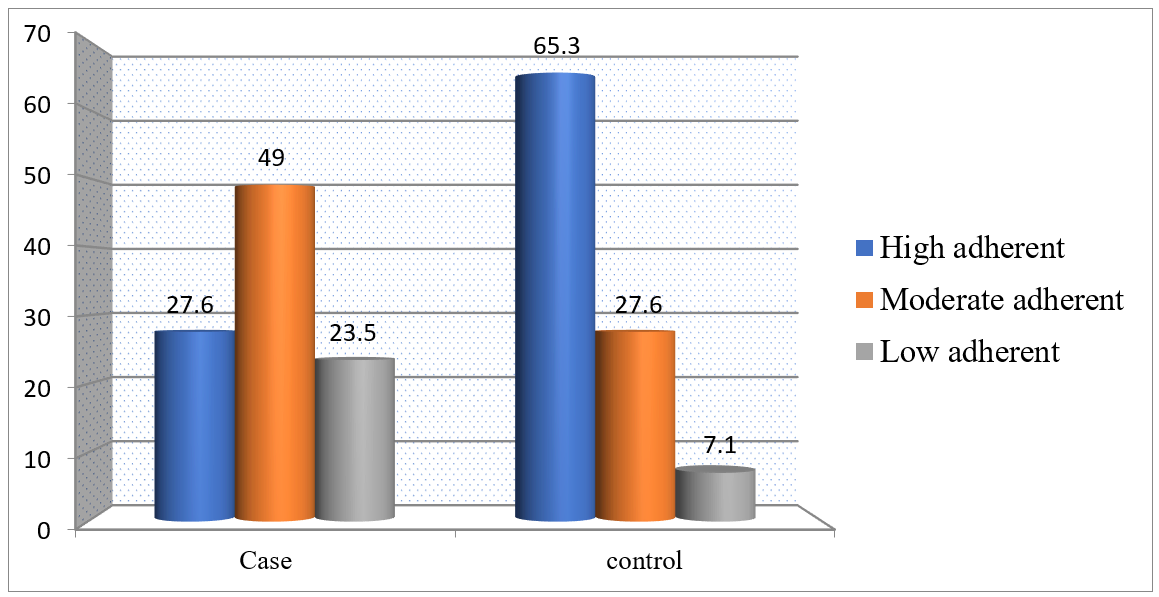
Background : Type 2 diabetes mellitus (T2DM) significantly increases cardiovascular disease (CVD) risk, making statin therapy a cornerstone of primary prevention. Despite clinical guidelines recommending statins for all T2DM patients aged 40–75 years, suboptimal prescribing and adherence remain common, particularly in resource-limited settings. Evidence on statin utilization and outcomes in Ethiopian T2DM patients is limited. Therefore, this study aimed to determine the association between statin therapy utilization and cardiovascular events among T2DM patients at Wolaita Sod:o University Comprehensive Specialized Hospital (WSUCSH). Methods : A hospital-based matched case-control study was conducted from April to July 2022 at WSUCSH in southern Ethiopia. Cases were T2DM patients aged 40–75 years who developed a first cardiovascular event after T2DM diagnosis. Controls were T2DM patients without CVD, frequency-matched by age (±5 years) and sex. Data were collected through retrospective medical record review and patient interviews using a structured data abstraction form and the Morisky Medication Adherence Scale (MMAS-8). Conditional logistic regression was used to estimate adjusted odds ratios (AOR) with 95% confidence intervals (CI). A p-value <0.05 was considered statistically significant. Result s: A total of 196 participants (98 cases and 98 controls) were included. In multivariable analysis, T2DM patients not receiving statin therapy according to clinical practice guidelines had significantly higher odds of CVD events compared to those receiving guideline-directed therapy [AOR=3.16, 95% CI: 1.73–5.78, p<0.001]. Patients who discontinued statin therapy had approximately threefold increased odds of CVD events [AOR=3.15, 95% CI: 1.00–9.88, p=0.049]. Low adherence to statin therapy was associated with increased odds of CVD events [AOR=2.21, 95% CI: 1.12–4.36, p=0.022]. Hypertension [AOR=2.12, 95% CI: 1.14–3.94, p=0.017], longer diabetes duration [AOR=1.31, 95% CI: 1.08–1.58, p=0.006], higher HbA1c [AOR=1.42, 95% CI: 1.13–1.78, p=0.003], and smoking [AOR=2.54, 95% CI: 1.18–5.47, p=0.017] were independently associated with CVD events. In conclusion ,guideline-directed statin therapy was significantly associated with reduced odds of CVD events among T2DM patients receiving primary prevention. Non-adherence and discontinuation of statins were strongly linked to adverse cardiovascular outcomes. Interventions to improve statin prescribing, adherence, and continuity of therapy are urgently needed in Ethiopian healthcare settings.
The paper
Wolaita Sodo University
Research Square, Sep 21, 2026, Open access, Preprint, not peer-reviewed