Sex-Specific Cardiovascular Risk Phenotypes Integrating Cardiometabolic, Psychosocial, and Autoimmune Determinants: A Population-Based Cross-sectional Study
Abstract
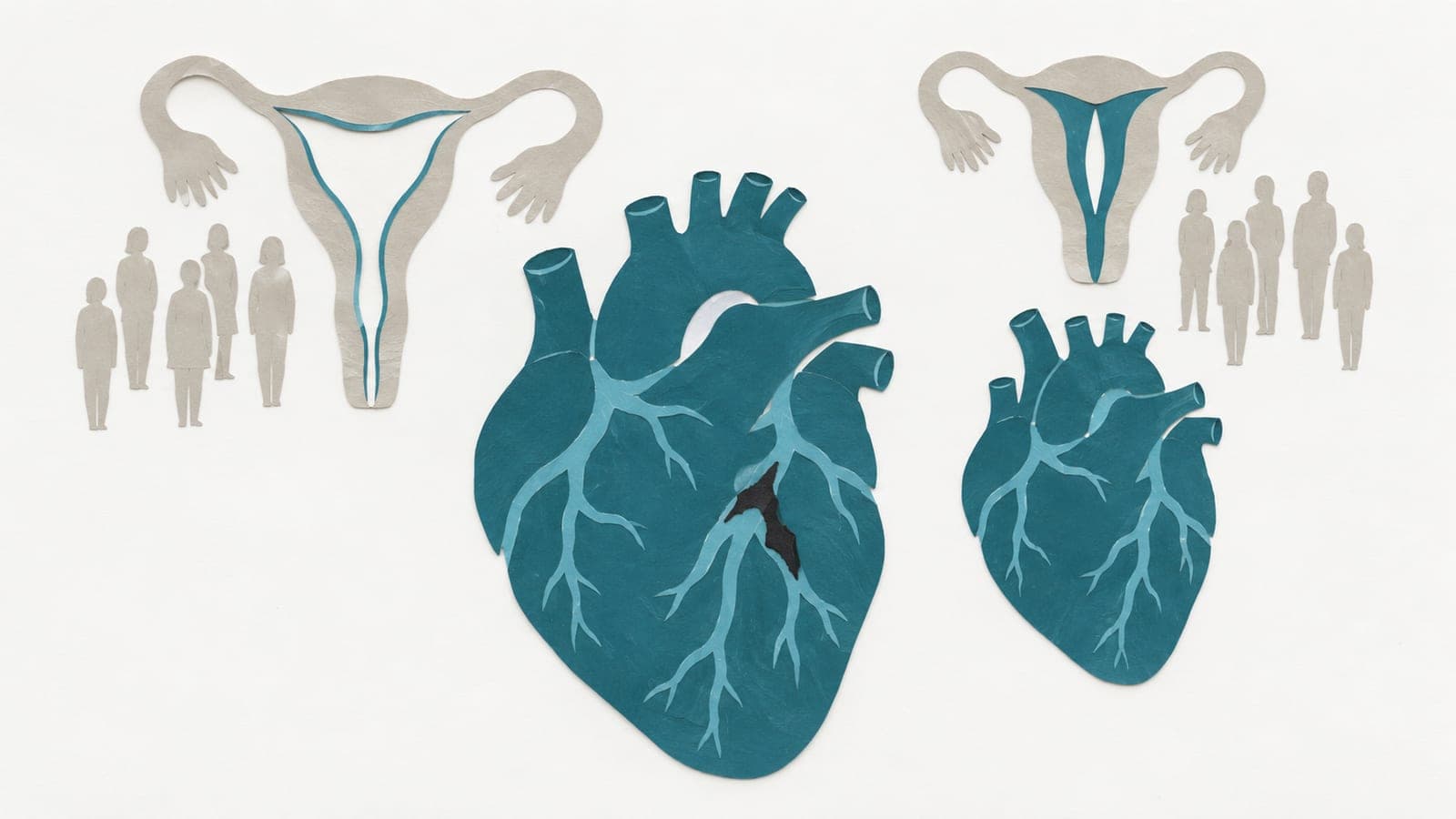
Background Emerging evidence suggests that psychosocial, autoimmune, and reproductive factors contribute substantially to cardiovascular vulnerability, yet these domains are rarely integrated within population-based cardiovascular risk assessments. We aimed to identify sex-specific cardiovascular risk phenotypes combining traditional and non-traditional determinants and to evaluate factors associated with established CVD in women. Methods We conducted a population-based cross-sectional study using linked electronic health records from 138,507 adults aged 18–90 years residing in Catalonia, Spain. Sex differences in cardiovascular risk profiles were assessed using descriptive and comparative analyses. Latent cardiovascular risk phenotypes were identified through unsupervised Two-Step cluster analysis incorporating cardiometabolic, psychosocial, autoimmune, socioeconomic, and female-specific reproductive variables. Exploratory Factor analysis, multivariable logistic regression, variance inflation factors, and ROC curves were used to determine factors independently associated with established CVD among women. Results The study included 67,512 women (48.7%) and 70,995 men (51.3%). Five statistical cardiovascular risk phenotypes were identified: cardiometabolic, metabolic-inflammatory, psychosocial vulnerability, advanced multimorbidity, and autoimmune profiles. Women were overrepresented in psychosocial and metabolic-inflammatory phenotypes, while men predominated in the classical cardiometabolic phenotype. Among women, established CVD was independently associated with age (OR 1.07 per year; 95%CI 1.071–1.080), hypertension (OR 1.88; 95%CI 1.708–2.076), diabetes mellitus (OR 1.40; 95%CI 1.26–1.56), dyslipidaemia (OR 1.227; 95%CI 1.11–1.33), (OR 1.10 per unit; 95%CI 1.00–1.20), depression (OR 1.11; 95%CI 1.00–1.24), and multimorbidity burden (OR 1.92; 95%CI 1.84–2.00). Systemic lupus erythematosus showed particularly strong associations with CVD among younger women. Conclusions Women do not follow a single pathway to cardiovascular disease. Instead, cardiovascular vulnerability develops through distinct multidimensional life-course phenotypes that complement conventional risk factors. This approach may improve identification of vulnerable women and help reduce the burden of cardiovascular disease.
The paper
Institut Català de la Salut; Universitat Rovira i Virgili
Research Square, 27 Aug 2026, Open access, Preprint, not peer-reviewed