Gut hormone drugs linked to serious hand and shoulder disorders
Across 210 placebo-controlled trials, the odds of serious disorders in one soft-tissue disease group were 3.88 times those with placebo.
Limit: Non-serious hand and shoulder symptoms were outside the trial analysis
Edited by Boris Djordjevic · AgingResearch.News
Researchers analyzed genetic data from over 900,000 FinnGen and UK Biobank participants to study seven hand and shoulder soft-tissue disorders. They also pooled serious adverse events from 210 placebo-controlled trials involving 134,138 participants. These trials tested incretin receptor agonists, drugs that mimic gut hormone signals and are used for obesity and diabetes.
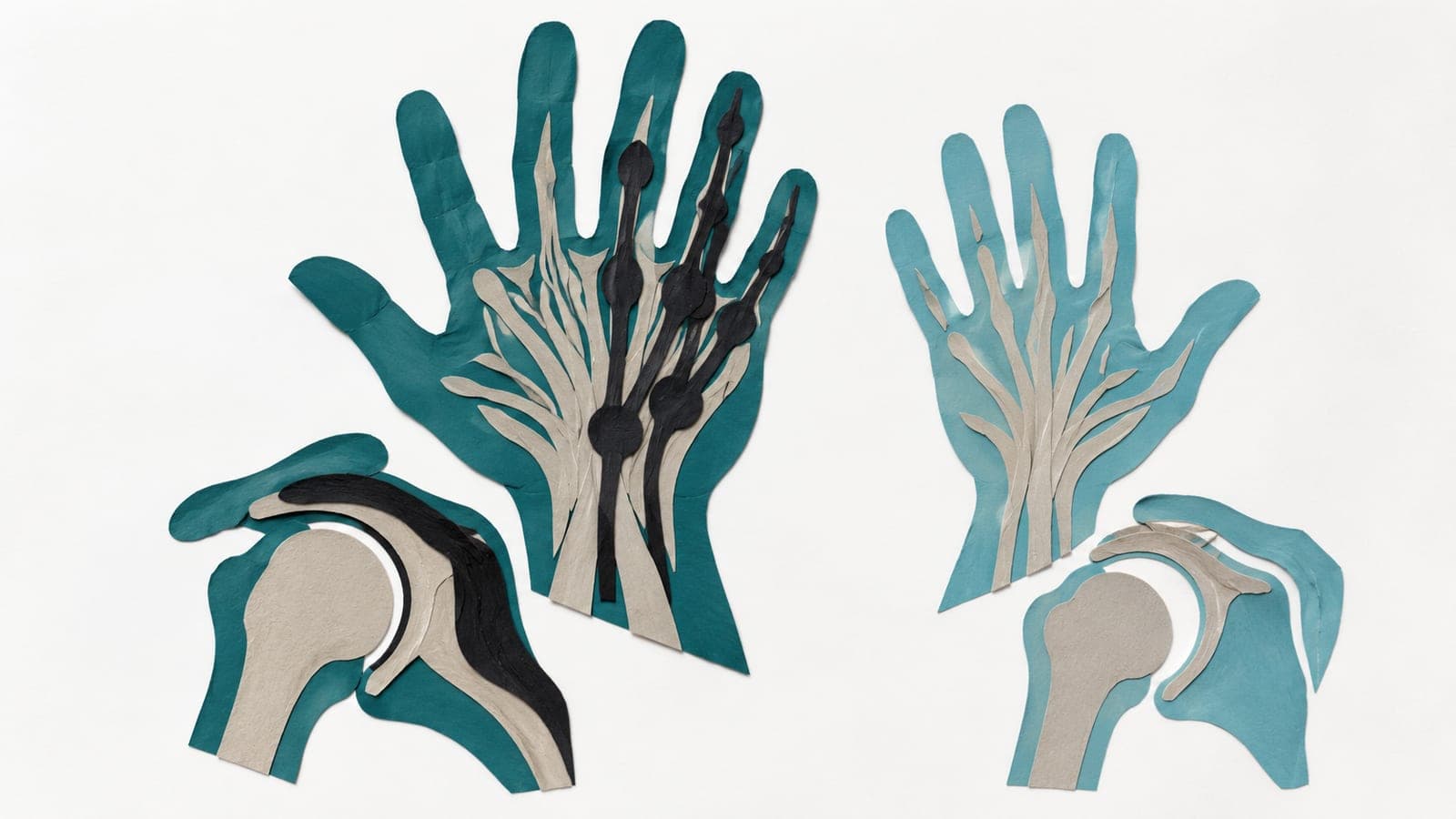
The genetic analysis separated disorders into two groups, involving tendon coverings or fibrous tissue and joint capsules. Mendelian randomization, a method using genetic variants to study associations, linked higher genetically predicted body mass index to higher odds of wrist nerve compression but lower odds of Dupuytren’s disease, which thickens tissue in the palm. In the trials, the drugs increased the odds of serious events in the second group, including frozen shoulder and Dupuytren’s disease. They did not clearly change the odds of events in the tendon-covering group.
Why it matters
The safety of obesity and diabetes treatment matters to research on maintaining health with age. The authors identified frozen shoulder and Dupuytren’s disease as targets for drug-safety monitoring.
Caveats
The trial analysis covered serious adverse events rather than all symptoms, and the abstract does not report absolute event rates. This preprint has not been peer-reviewed.
- Incretin receptor agonists
- Body mass index
- Hand and shoulder soft-tissue disorders
- Dupuytren's disease
- Frozen shoulder
- Humans
The paper
Hubei University of Medicine
medRxiv, Oct 28, 2026, Open access, CC BY, Preprint, not peer-reviewed


