Melanoma risk linked to immune and cancer-related genes
An analysis of 69,871 melanoma cases and 1,616,233 comparison participants identified 156 independent genetic signals in 116 regions linked to risk.
Meta-analysis, independent replication
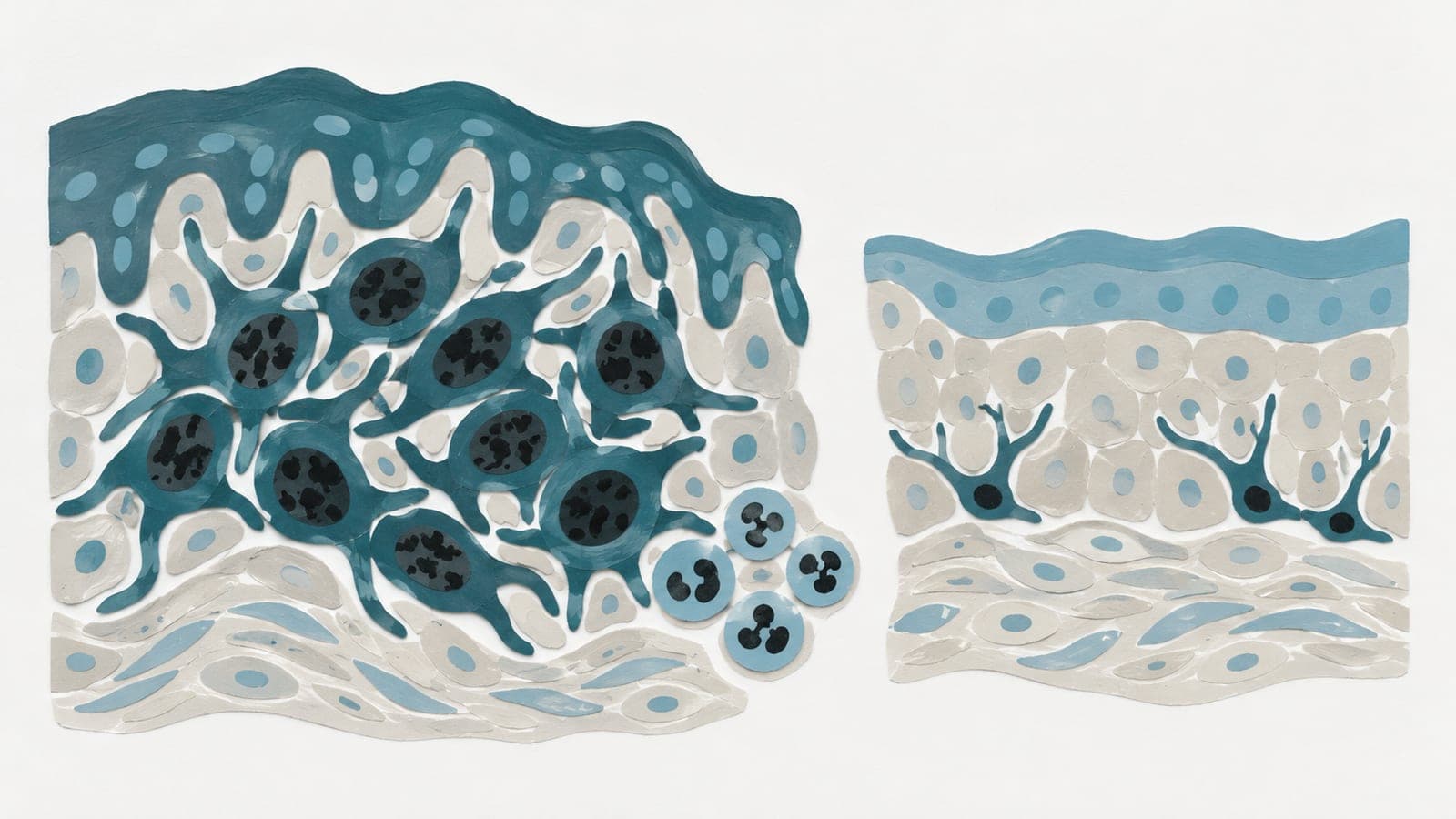
An observational meta-analysis combined 35 studies of inherited genetic variation from 29 cohorts, including 69,871 people with cutaneous melanoma, a skin cancer, and 1,616,233 comparison participants. These studies searched for DNA differences associated with melanoma risk.
The researchers identified 156 independent genetic signals across 116 risk regions. The findings linked susceptibility to immune function. Mapping the signals to genes implicated genes known to drive several cancers at more than a third of these regions. At 22% of regions, they identified potential causal genes in the Wnt/beta-catenin pathway, a system for passing signals within cells. They also developed and validated a genetic risk score in two cohorts, improving the ability to distinguish melanoma cases from comparison participants beyond age and sex alone.
Why it matters
The genetic risk score addressed a question about age-based melanoma risk: whether inherited differences might help identify people at higher risk earlier in life.
Caveats
These observational associations and gene-mapping analyses did not establish that the candidate genes caused melanoma. The findings come from a preprint that has not been peer-reviewed.
- Human genetics
- Histone modification and chromatin remodelling
- Immune response
- Cutaneous melanoma
- Acral lentiginous melanoma
- Humans
The paper
Melanoma germline genetics: immune, cancer driver, and Wnt signaling genes
medRxiv, 15 Oct 2026, Open access, CC0, Preprint, not peer-reviewed