Inherited gene variants linked to breast cancer risk in UAE
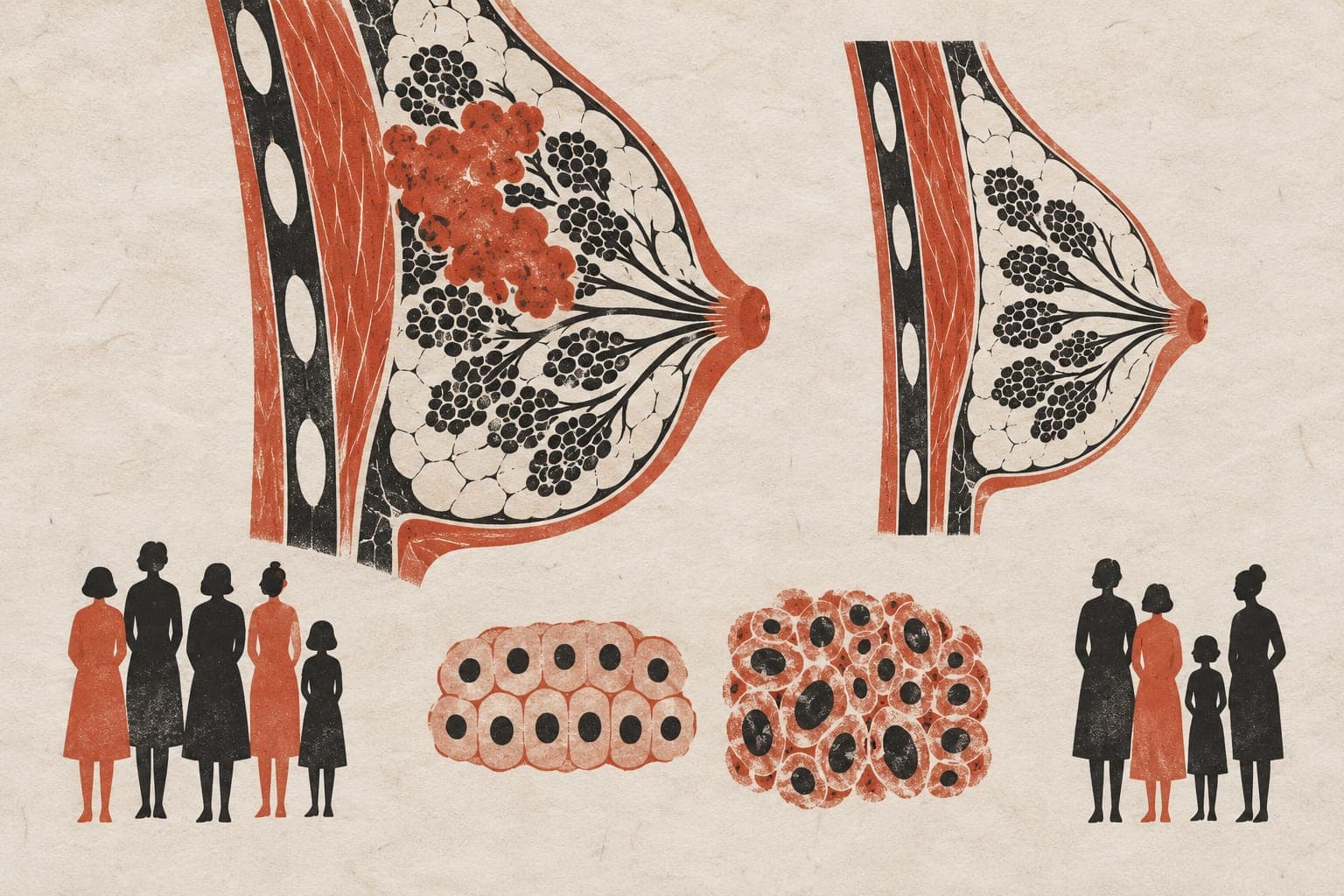
Women carrying variants classed as harmful or likely harmful made up 0.84% of women studied and 5.2% of breast cancer cases.
Research Square
The observational study analysed genome sequences and electronic health records from 436,780 Emirati Genome Program participants, including 229,309 women. Researchers examined 13 genes recommended for assessing breast cancer risk. They also reconstructed more than 48,000 family trees.
Variants classed as harmful or likely harmful appeared in 0.84% of women and accounted for 5.2% of breast cancer cases. For two specific variants in BRCA1 and BRCA2, genes linked to inherited breast cancer risk, the estimated chance of breast cancer by age 60 was 37.6% and 31%, respectively. Scores combining many genetic variants distinguished family members with breast cancer from those without it. The researchers proposed combining genetic and family information into a national framework for assessing risk.
Why it matters
Age-specific breast cancer risks bear on when screening might be most useful as women grow older. The authors proposed using inherited risk information to guide prevention and early detection.
Caveats
The observational design cannot show whether genetically guided screening improves health outcomes. The findings came from Emirati Genome Program participants, and the preprint has not been peer-reviewed.
The paper
A National Genomic Framework for Breast Cancer Risk Stratification in UAE
Magalhaes T, Sanchez DM, Khan F et al.
Research Square · 6 Oct 2026 · Preprint, not peer-reviewed