A signal from aging skin fat delays hair growth in mice
Experiments in male mice aged 18–24 months linked a protein from skin fat to immune cell buildup and delayed entry into the hair-growth phase.
Our read
Mechanisms- Studied:
- Experiments in young male C57BL/6 mice, 14 consecutive days, against PBS-injected mice
- What changed:
- Hair growth started later in mice injected with MCP-1 than in control mice
- The catch:
- Fat-cell origin rests on overlapping stains; macrophages also expressed MCP-1
- Why it’s aging research:
- It studies organisms or tissues that aged naturally.
Editor of record: Boris Djordjevic · AgingResearch.News
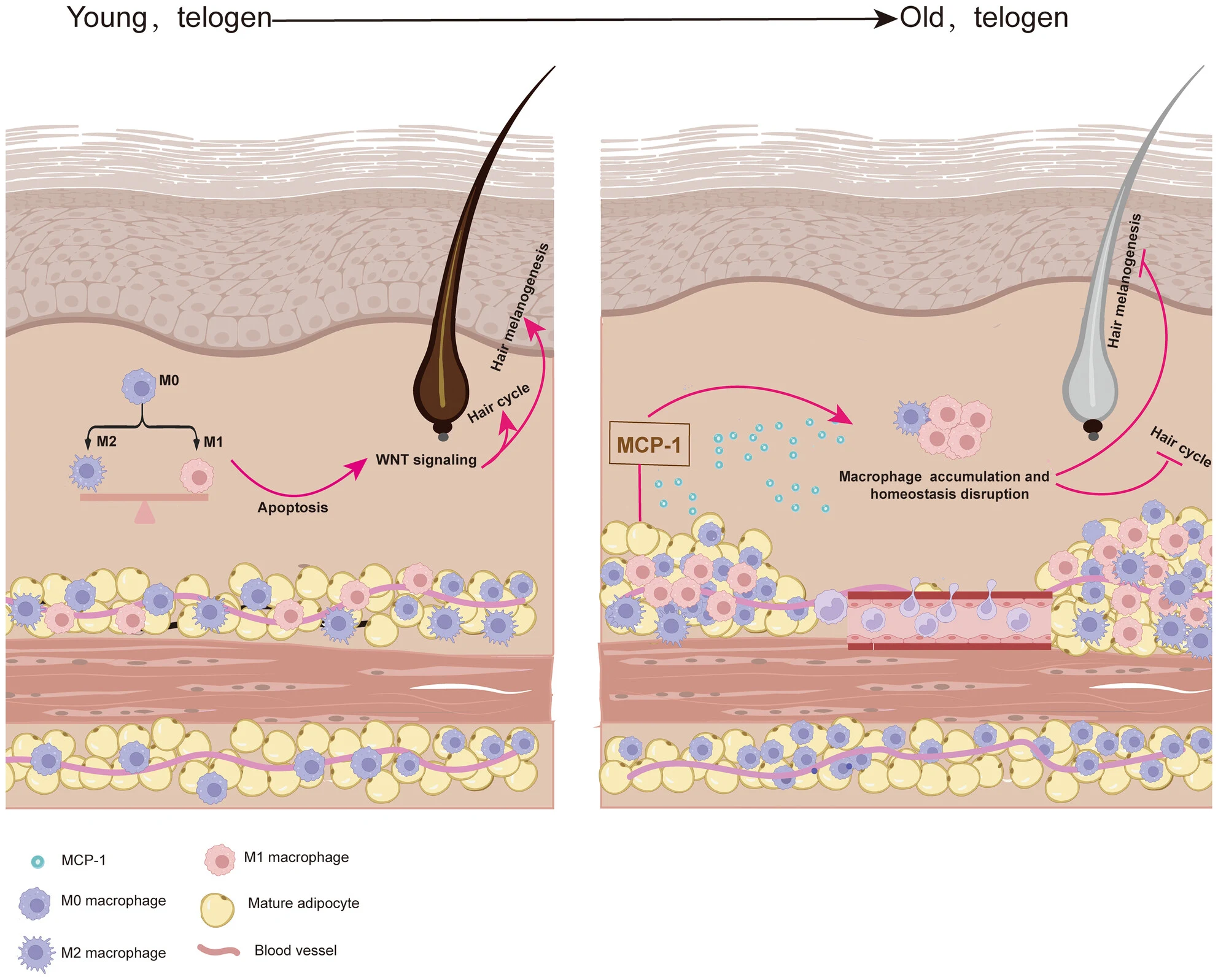
Male C57BL/6 mice aged 18–24 months and young males aged 6–7 weeks were studied in animal experiments on fat within the skin. Researchers identified MCP-1, a protein that attracts immune cells, as a key signal released by aged skin fat. It recruited macrophages, a type of immune cell, around hair follicles.
Neutralizing MCP-1 in old mice reduced macrophage numbers and prompted follicles to enter their growth phase. Depleting skin macrophages also shifted follicles from rest into growth. Follicles entered growth on average on day 11, while control follicles remained resting until day 15. Regrown hairs were more numerous and more pigmented. Macrophage type mattered: some types were associated with earlier entry into growth, while another delayed it.
Why it matters
Hair loss and graying accompany aging. The findings may help guide efforts to target the environment around hair follicles when developing therapies for age-related hair disorders.
Caveats
The experiments used male mice from one strain; they did not test whether targeting this signal helps people with hair loss.
The paper
Nanfang Hospital of Southern Medical University
Aging Cell, Nov 2026


Comments
Be the first to comment.