Severe infection linked to long-term heart rhythm problems
The adjusted hazard ratio for new heart rhythm disorders was 1.85 after hospital-treated infection compared with no infection, over 14.2 years’ median follow-up.
Dose-response, independent replication
Limit: Subclinical cardiovascular disease could increase both infection susceptibility and arrhythmia risk
Edited by Boris Djordjevic · AgingResearch.News
Researchers followed 465,374 UK Biobank participants in a prospective observational study of hospital-treated infections and new arrhythmias, or abnormal heart rhythms. Over a median of 14.2 years, 70,527 participants had a severe infection. The analysis accounted for social factors, lifestyle, other illnesses and blood measurements.
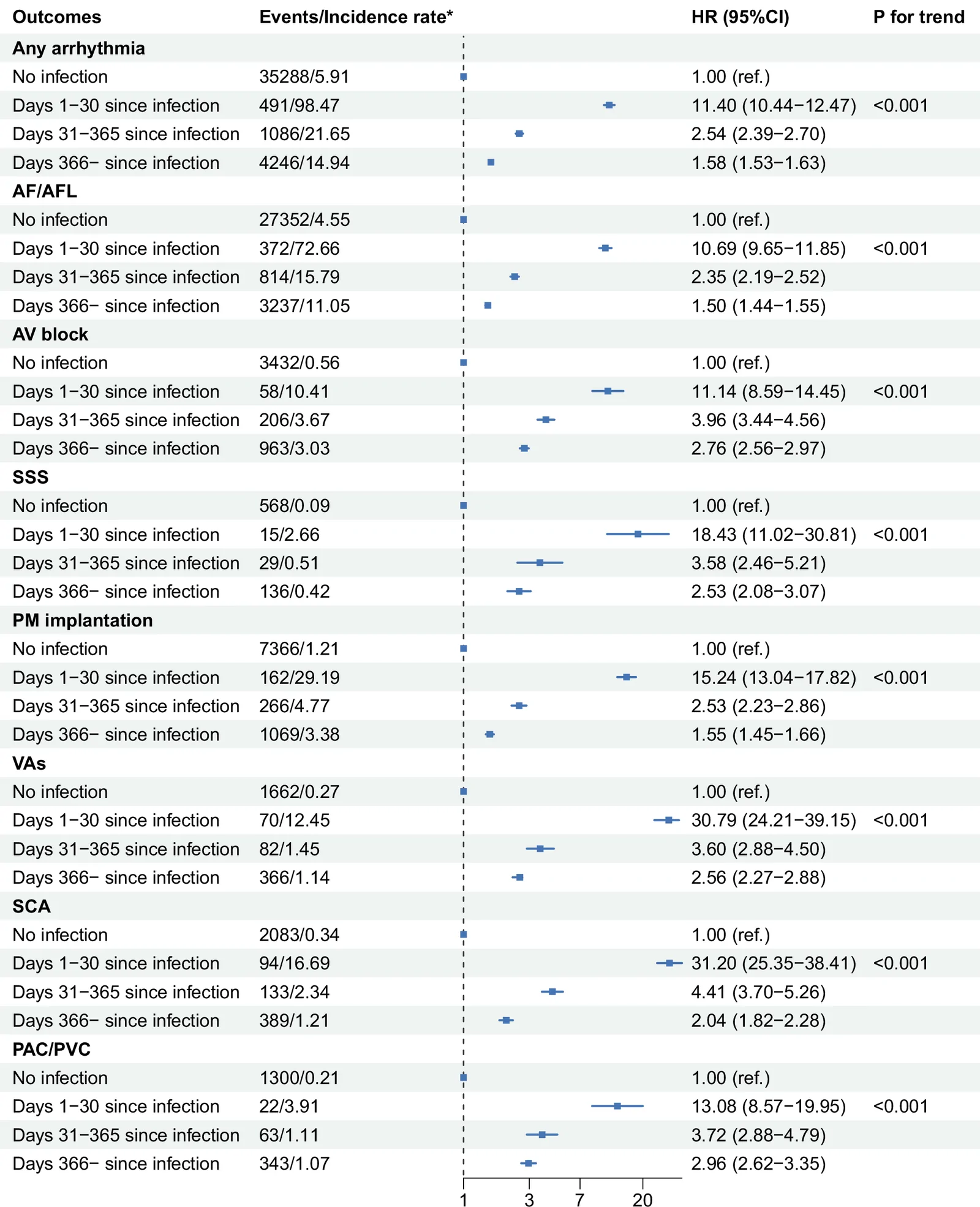
Infection was associated with a higher hazard of any new arrhythmia: an adjusted hazard ratio of 1.85 compared with no infection. This describes relative risk over time, not the absolute chance of developing an arrhythmia. The association was strongest during the first 30 days, with a hazard ratio of 11.40, and remained elevated from 366 days onward, at 1.58. Repeated infections were associated with greater risk. The researchers also found these associations in two other cohorts.
Why it matters
For cardiovascular health in later life, one question is whether past severe infections help identify future heart rhythm risk. The authors suggest infection history may add modest information to risk assessments, substantially less than high blood pressure.
Caveats
This observational study cannot establish that infection caused arrhythmias. The abstract reports relative hazards but not absolute arrhythmia risks.
Where the evidence stands
Severe infection
- 3 independent labs in 3 countries
- Funders: National Natural Science Foundation of China and others
Bacterial infection
- 3 independent labs in 2 countries
- Funders: National Heart, Lung, and Blood Institute and others
From the paper
- Participants
The analytical cohort comprised 465,374 participants from the UK Biobank.
- Follow-up
Over a median follow-up of 14.2 years, 70,527 (15.2%) participants had a severe infection.
- Result
Infection was associated with a significantly increased risk of any incident arrhythmia (adjusted HR 1.85, 95% CI 1.80–1.90).
- Absolute difference
The HR for any arrhythmia was 1.85 (95% CI: 1.80–1.90), corresponding to an absolute risk increase of 9.60 per 1000 person-years.
Results, Association of severe infection with incident arrhythmias
- Limitation
The lack of detailed severity indicators (e.g., SOFA/qSOFA scores, ICU admission, vasopressor use, or mechanical ventilation) precluded assessment of a dose-response relationship.
Quoted word for word from the full text on link.springer.com.
The paper
Guangdong Academy of Medical Sciences
BMC Medicine, Aug 4, 2026, Open access


Comments
Be the first to comment.