Past infections linked to older organ age estimates
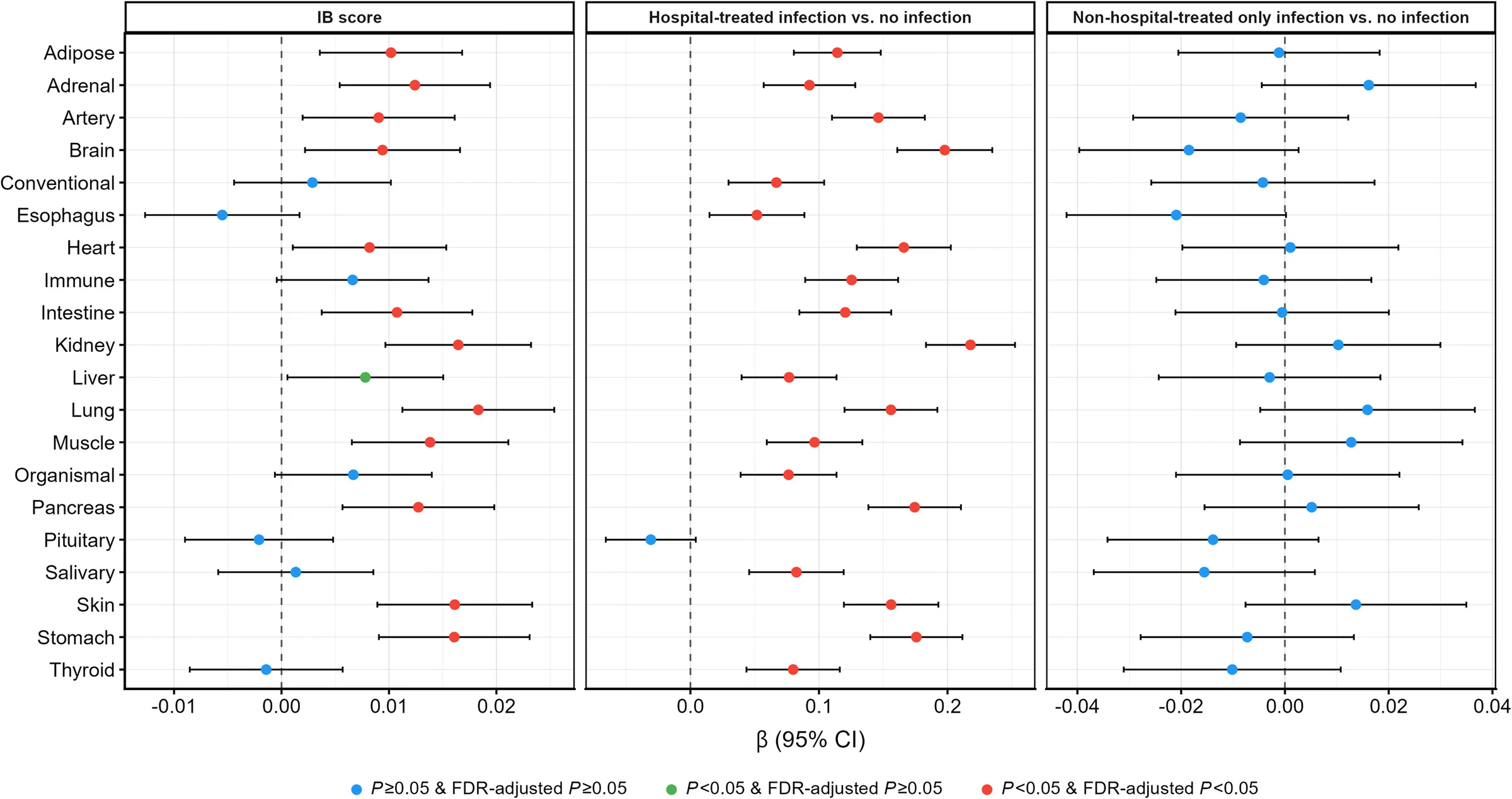
Higher counts of past infection diagnoses were linked to larger estimated age gaps in 12 of 18 organs among 42,395 UK Biobank participants.
Limit: Organ ages were estimated from blood proteins, a stand-in for organ aging
Edited by Boris Djordjevic · AgingResearch.News
In an observational study of 42,395 UK Biobank participants, researchers examined links between past infections and estimated biological ages of 18 organs. They counted distinct infection diagnoses first recorded before the study’s baseline assessment. They estimated organ ages from patterns of proteins in blood plasma, with larger age gaps indicating more advanced biological aging.
The links were statistically significant among participants with at least one infection first recorded in hospital inpatient data, but not among those with only other record sources. Among eight infection categories, sepsis, a life-threatening response to infection, had the strongest and most widespread associations. Links were generally stronger for infection diagnoses first recorded more recently and weaker for those first recorded further in the past.
Why it matters
Infection history may offer clues for developing strategies to prevent age-related disorders across multiple organs.
Caveats
This observational study cannot establish that infections caused faster organ aging. Organ ages were estimates based on blood proteins.
The paper
Associations between infection and organ age gaps: results from the UK Biobank
Zhejiang Chinese Medical University
Archives of Gerontology and Geriatrics, Oct 23, 2026