Fat score linked to future heart and blood vessel disease
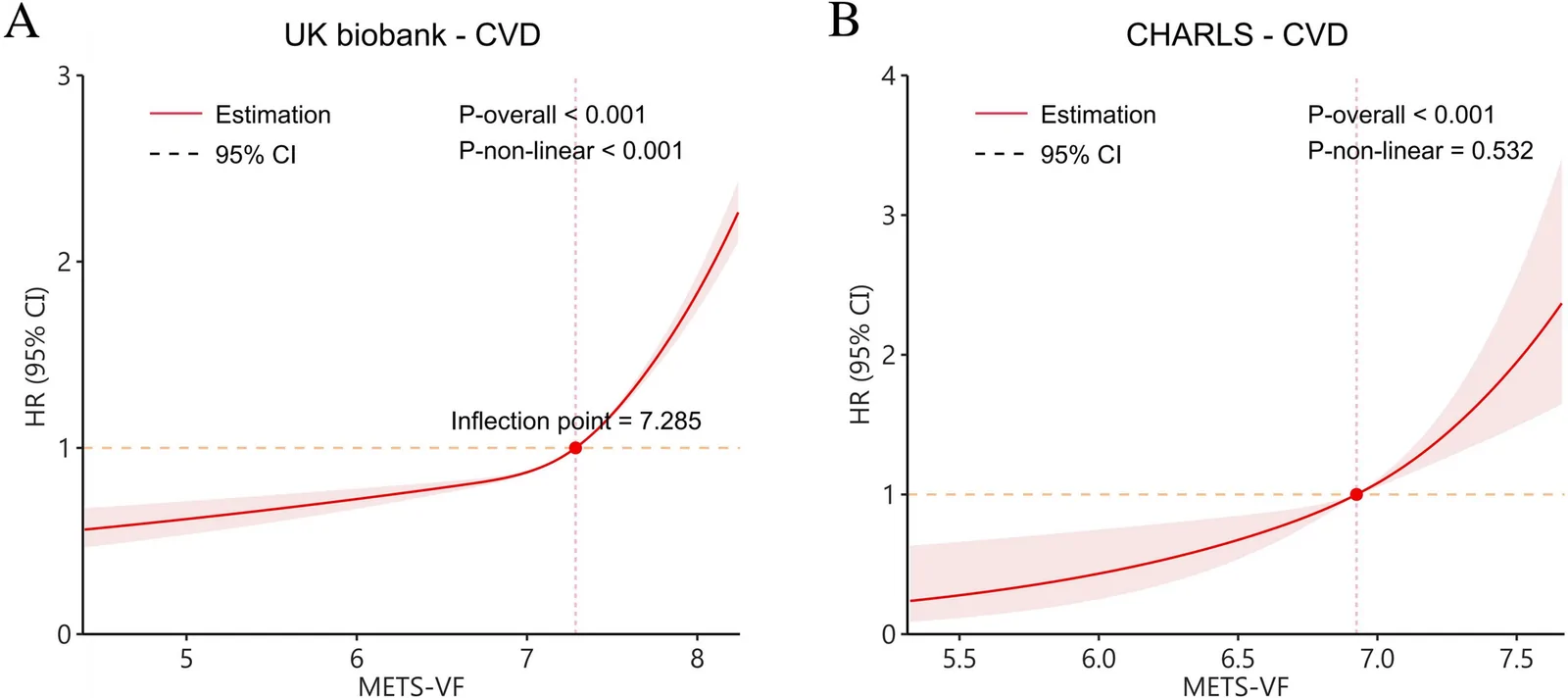
In UK Biobank, high versus low scores were linked to a hazard ratio of 1.63—a relative risk measure—for heart and blood vessel disease.
101,292 participants
Limit: Self-reported cardiovascular diagnoses in CHARLS risk recall errors and missed cases
Edited by Boris Djordjevic · AgingResearch.News
An observational study analyzed 101,292 UK Biobank participants and 1,680 participants in the China Health and Retirement Longitudinal Study, all with metabolic syndrome—a cluster of conditions that raises cardiovascular risk. Researchers examined a metabolic score intended to estimate visceral fat, the fat around internal organs.
Median follow-up was 14.6 years in UK Biobank and 5.0 years in the Chinese cohort. High scores were associated with higher risk of developing heart and blood vessel disease than low scores. The hazard ratios, measures of relative risk during follow-up, were 1.63 and 2.11, respectively. In UK Biobank, participants with the highest fat scores and high genetic risk had the highest disease risk.
Why it matters
The authors suggest the score could help guide prevention and management of cardiovascular disease, an age-related health concern, in people with metabolic syndrome.
Caveats
The observational design cannot establish whether lowering the score would prevent disease. The findings concern people with metabolic syndrome, and the abstract does not report absolute disease risks.
From the paper
- Participants
A total of 101,292 individuals from the UK Biobank and 1,680 individuals from CHARLS were included.
- Result
High METS-VF was significantly associated with an increased risk of new-onset CVD in both UKB (HR = 1.63, 95% CI: 1.56–1.71) and CHARLS (HR = 2.11, 95% CI: 1.52–2.94) compared with low METS-VF.
Quoted word for word from the full text on link.springer.com.
- Metabolic syndrome
- Cardiovascular disease
- New-onset cardiovascular disease
- Cardiovascular disease polygenic risk score
- Metabolism score for visceral fat
- Humans
The paper
Suining Central Hospital
BMC Cardiovascular Disorders, Aug 1, 2026, Open access