Arts engagement linked to blood protein patterns in people
Greater arts and cultural engagement was associated with differences in 17 blood proteins in an observational study of 6,180 people.
Limit: Protein differences could precede arts engagement because both were measured near contemporaneously
Edited by Boris Djordjevic · AgingResearch.News
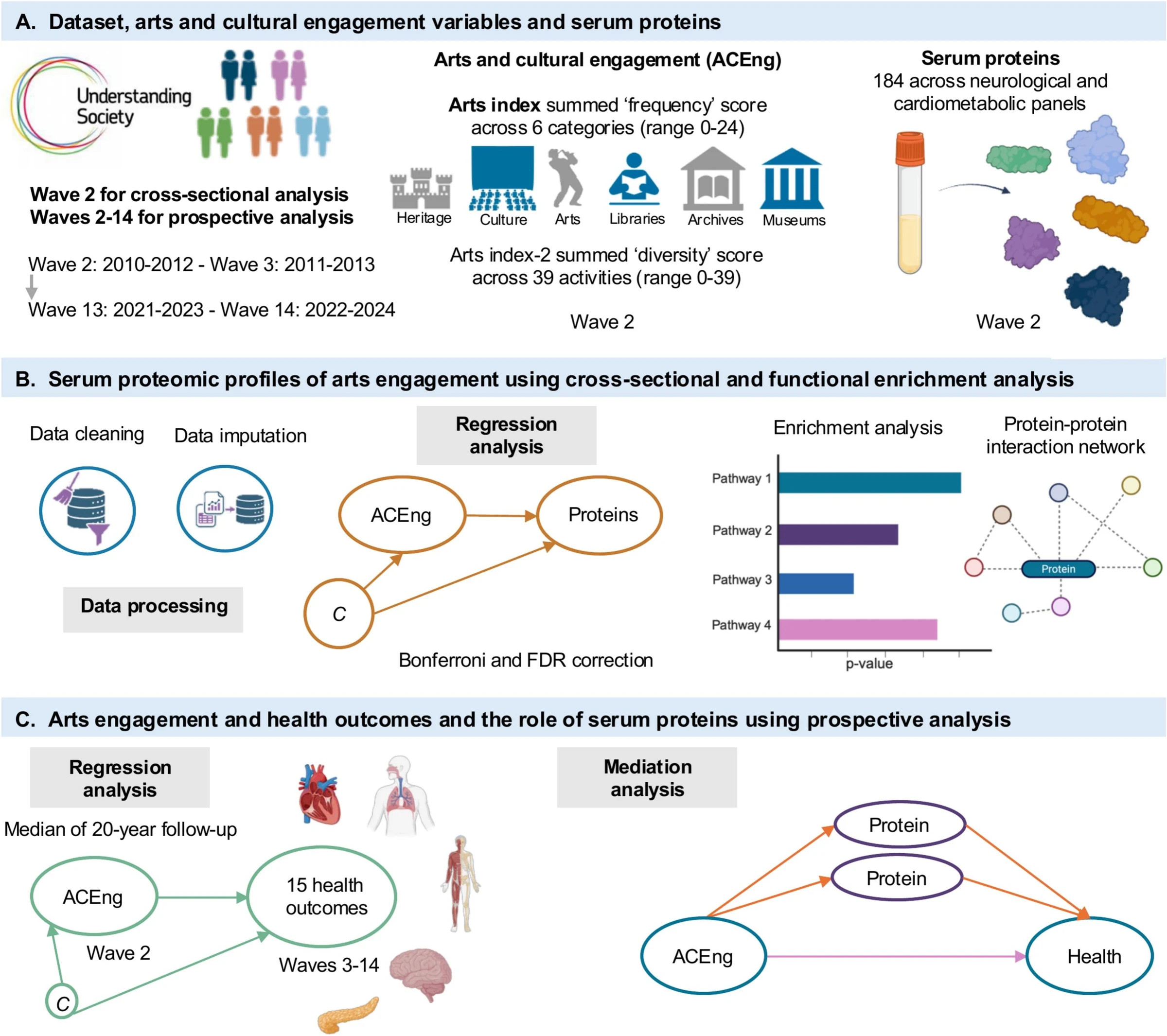
In an observational study, researchers analyzed data from 6,180 participants in the UK Household Longitudinal Study who had blood protein measurements. They scored arts and cultural engagement using the frequency and variety of arts participation, cultural attendance, and visits to libraries, archives, museums and heritage sites.
Greater engagement was associated with differences in 17 proteins after accounting for social and demographic factors. It was also linked to lower subsequent risks of several chronic conditions, including heart and blood vessel disease, stroke, diabetes, clinical depression and dementia. The researchers did not find these links for cancer, heart failure, liver disease or epilepsy. Exploratory analyses suggested that the proteins might partly account for some of the associations with disease.
Why it matters
For age-related conditions such as heart disease and dementia, the findings offer starting points for testing possible biological links with arts and cultural engagement.
Caveats
The observational design cannot establish cause and effect. Engagement and proteins were measured at nearly the same time, so the exploratory analysis did not establish a causal protein pathway.
The paper
University College London
Brain, Behavior, and Immunity, Oct 29, 2026, Open access
