Presurgery exercise did not raise surgery rates in a cancer trial
Surgery intended to cure the cancer did not take place in 9.9% of the exercise group versus 7.9% with usual care.
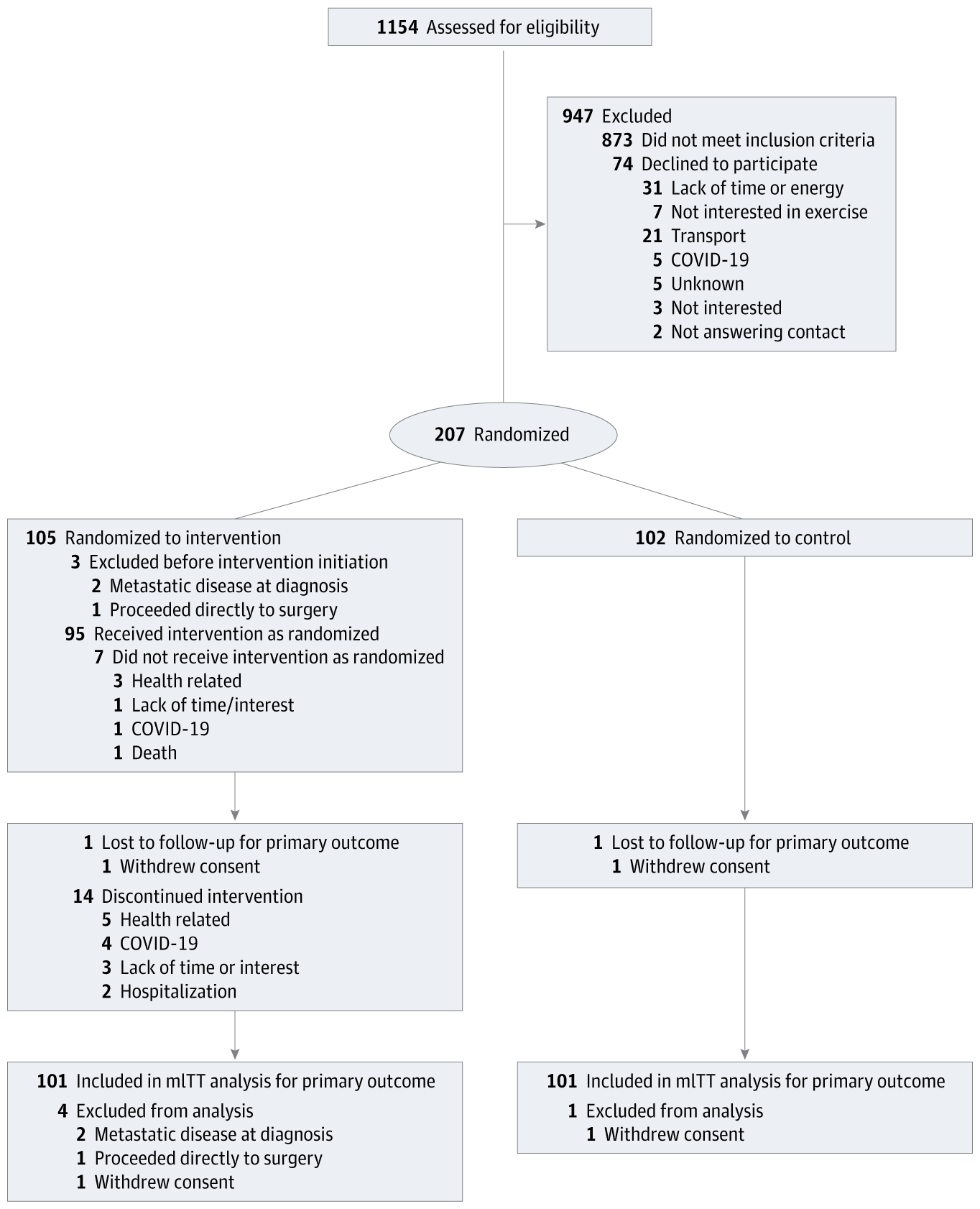
Blinded, registered NCT03490565
Limit: The analysis left out randomized participants: 202 of 207 were included
Edited by Boris Djordjevic · AgingResearch.News
The randomized trial analyzed 202 people with gastroesophageal adenocarcinoma, a type of stomach or esophageal cancer. Their average age was 65.3 years, and 161 were men. All were scheduled for cancer treatment before surgery, with the aim of a cure. The exercise program combined aerobic and strength training twice weekly from diagnosis until surgery. The control group received usual care.
Exercise did not increase the likelihood of undergoing surgery intended to cure the cancer after presurgery treatment. The trial found no differences in permanently stopping presurgery treatment or in complications after surgery. Three-year survival was lower in the exercise group: 51.0%, compared with 65.0% with usual care. The authors called for further research on long-term outcomes.
Why it matters
Physical decline during cancer treatment can put planned surgery out of reach. For older adults facing such treatment, the trial addressed whether structured exercise could help preserve the chance of an operation intended to cure the cancer.
Caveats
The analysis included 202 of 207 randomized participants, and survival was a secondary outcome. The findings may not apply to people with medical reasons to avoid exercise or those not receiving treatment intended to cure their cancer.
- Exercise training
- Gastroesophageal adenocarcinoma
- Gastroesophageal junction cancer
- Postoperative complications
- Humans
The paper
Copenhagen University Hospital
JAMA Network Open, Oct 1, 2026