Blood-flow pauses reduced injury in aged animal hearts
Experiments in aged animal hearts linked the benefit to suppression of a small RNA involved in excessive splitting of mitochondria, the cell’s energy-producing structures.
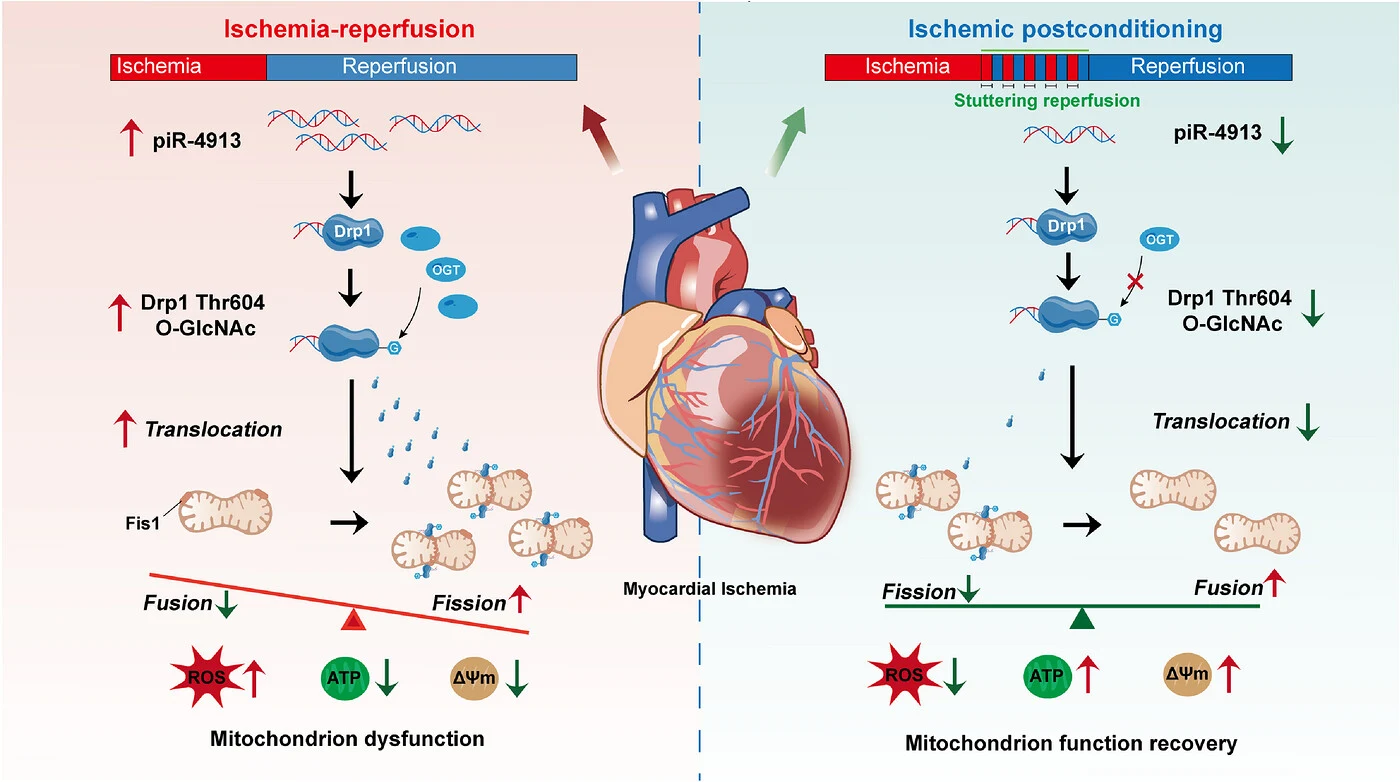
Limit: Heart injury was assessed after only 180 min of reperfusion
Edited by Boris Djordjevic · AgingResearch.News
Experiments in aged animal hearts examined injury after blood flow was interrupted and then restored. Researchers tested ischemic postconditioning, a procedure that briefly interrupts blood flow again after it returns, and examined levels of small regulatory RNA molecules.
The procedure suppressed piR-4913, a small RNA enriched in the heart that rose markedly after this injury in aged hearts. Silencing this RNA limited the amount of heart tissue killed, increased production of ATP, a molecule cells use for energy, and reduced oxidative stress, chemical stress from reactive molecules. The researchers reported that piR-4913 promoted a chemical modification of a protein that encouraged excessive splitting of mitochondria, the cell’s energy-producing structures. Postconditioning restrained this pathway.
Why it matters
The authors proposed this pathway as a potential treatment target for older people with heart attacks.
Caveats
These were animal experiments, not tests of benefit in older patients. The abstract does not report the animal species or sample sizes.


