Plant extract yielded a small cognitive-test gain in adults
Over 12 weeks, cognitive screening scores rose 0.72 points with Gastrodia elata extract versus 0.13 points with placebo.
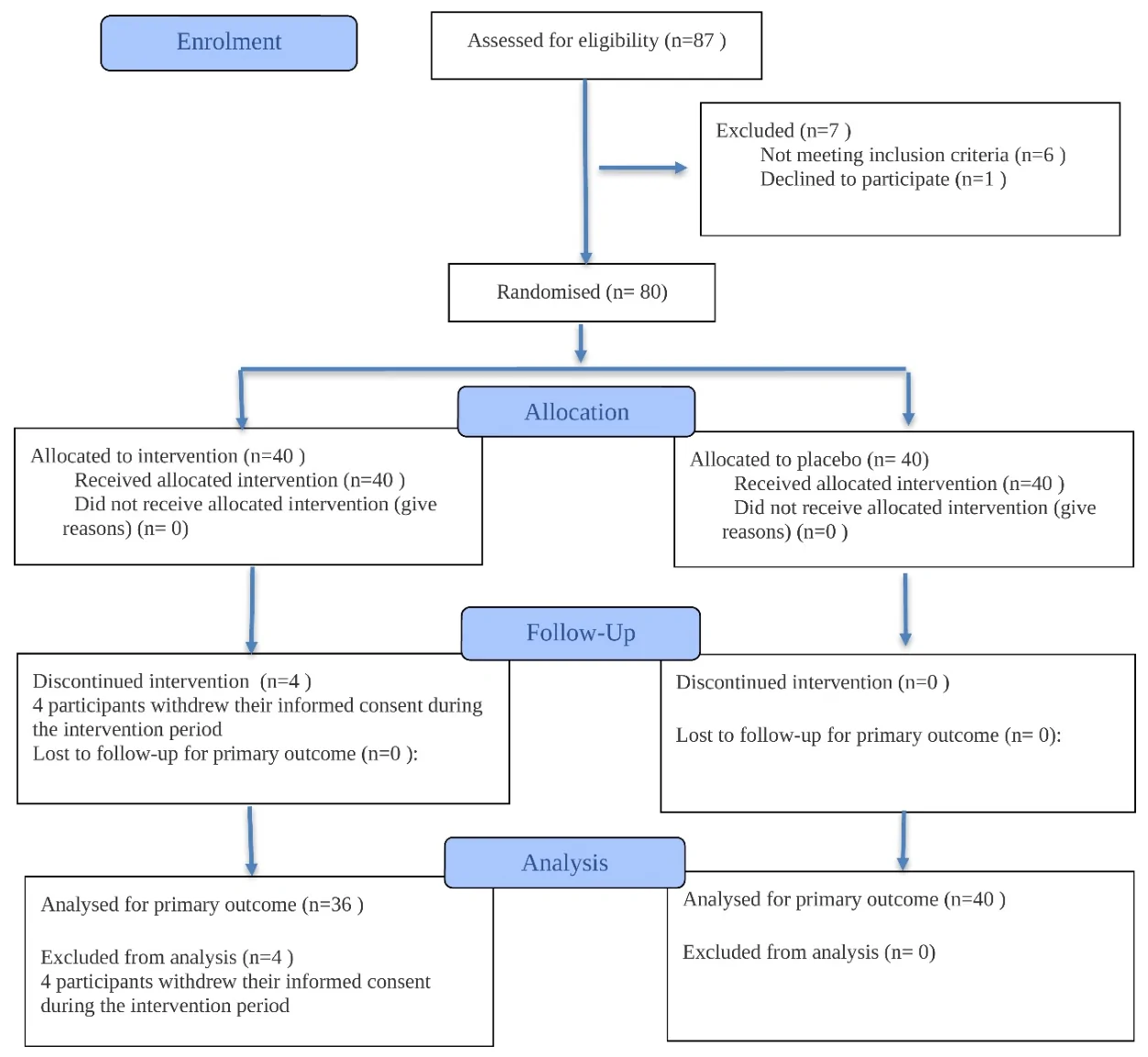
80 participants, 12 weeks, double-blind, placebo-controlled, registered KCT0011966
Limit: Four participants withdrew only from the extract group, potentially biasing the results
Edited by Boris Djordjevic · AgingResearch.News
A randomized, placebo-controlled trial enrolled 80 adults who reported memory problems but had normal results on objective cognitive tests. Participants received Gastrodia elata, a traditional medicinal plant, as an extract or received placebo for 12 weeks. Participants and staff assessing them did not know the assignments.
The main analysis included 76 participants: 36 in the extract group and 40 in the placebo group. The primary outcome was change in the total score on a cognitive screening test. Scores rose slightly more with the extract. Exploratory analyses also found differences in memory recall and another cognitive test. No serious adverse events occurred among the 80 participants assessed for safety.
Why it matters
Memory complaints raise a question relevant to cognitive aging: whether an intervention can support cognition before tests show impairment.
Caveats
The main analysis included 76 of 80 randomized participants, and the trial was registered retrospectively. Clinical relevance remains uncertain, and the findings do not establish benefits in people with objective cognitive impairment.
From the paper
- Participants
Four G. elata group participants withdrew consent after randomization and had no post-baseline efficacy assessment, leaving 76 participants in the FAS; all 80 participants were included in the safety set (Figure 1).
- Harms
All events were graded as mild and assessed as unrelated or clearly unrelated to the study product; no serious adverse events occurred.
Quoted word for word from the full text on mdpi.com.
The paper
Wonkwang University
Pharmaceuticals, Oct 1, 2026, Open access

