Orforglipron linked to weight loss in a trial subgroup
Orforglipron at 17.2 mg daily was associated with 13.5% average weight loss over 72 weeks, versus 0.3% with placebo.
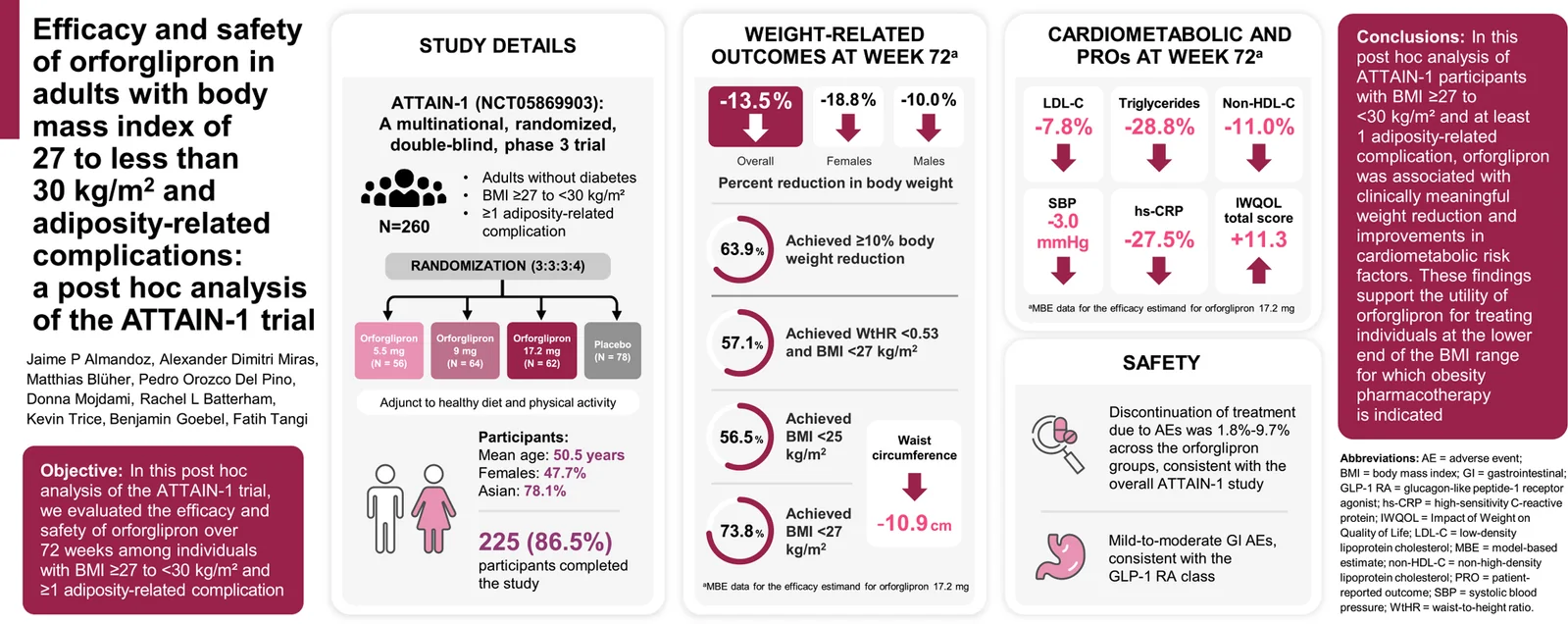
72 weeks, double-blind, placebo-controlled, registered NCT05869903
Limit: Researchers examined this subgroup after the original trial, rather than designing the trial for it
Stake: Eli Lilly and Company, which develops orforglipron, funded the study; authors work for it, hold shares in it, take fees from it and receive grants from it.
Edited by Boris Djordjevic · AgingResearch.News
The analysis included 260 adults without diabetes who had a body mass index—a measure of weight relative to height—of 27 to less than 30 and at least one complication related to excess body fat. Researchers examined this subgroup after the original randomized, placebo-controlled trial. Participants had been assigned to oral orforglipron at 5.5, 9 or 17.2 mg daily, or placebo, for 72 weeks.
The highest dose was associated with a 13.5% average reduction in body weight, compared with 0.3% on placebo. Orforglipron was also associated with improvements in waist size, blood fats and outcomes reported by participants. Reported side effects were predominantly mild-to-moderate digestive problems, consistent with earlier trials.
Why it matters
Adults with overweight and related complications face substantial heart and metabolic risks, making this group important for research on health in later life.
Caveats
This was a post hoc subgroup analysis, rather than a trial designed specifically for this population. The results do not establish effects in people with diabetes or outside the studied body mass index range, and the abstract did not provide side-effect rates.
The paper
The University of Texas Southwestern Medical Center; Eli Lilly (United States)
Obesity Pillars, Oct 14, 2026, Open access

