Retatrutide reduced sleep apnea severity in randomized trials
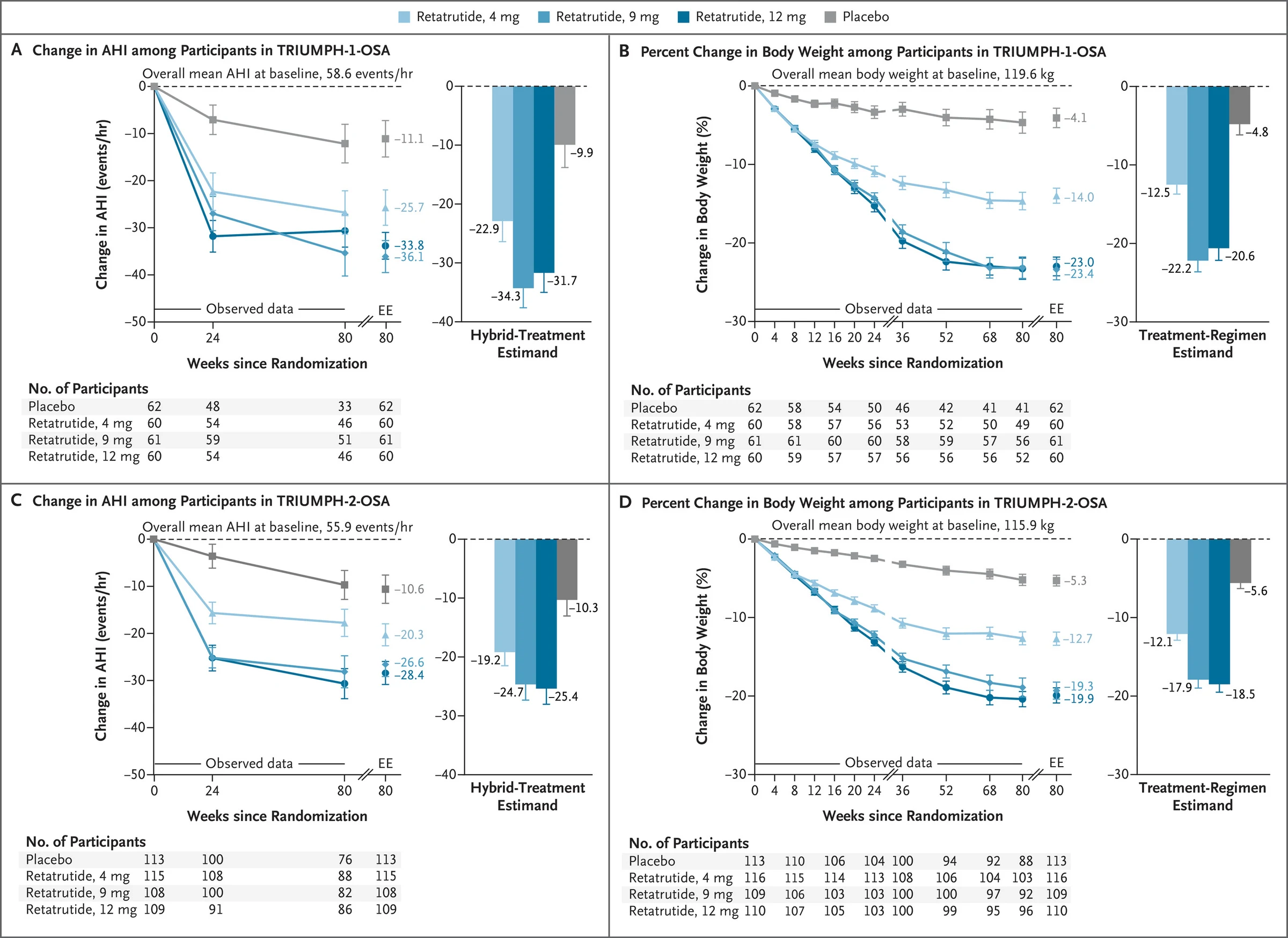
At 80 weeks, breathing disruptions fell 34.3 per hour with 9 mg retatrutide versus 9.9 with placebo in adults without type 2 diabetes.
448 participants, double-blind, placebo-controlled, registered NCT05929066
Limit: Eli Lilly funded the trials
Edited by Boris Djordjevic · AgingResearch.News
Two double-blind randomized trials enrolled 243 adults without type 2 diabetes and 448 with it. All had moderate-to-severe obstructive sleep apnea, which involves repeated pauses or reductions in breathing during sleep. Their body-mass index, a measure of weight relative to height, was at least 27. Participants received weekly injections of retatrutide at 4, 9 or 12 mg, or placebo, over 80 weeks.
In the main analysis, breathing disruptions fell by 34.3 and 31.7 per hour with 9 and 12 mg, respectively, versus 9.9 with placebo among those without diabetes. Among those with diabetes, the reductions were 24.7 and 25.4 versus 10.3 per hour. An analysis including everyone as randomized gave similar results. Digestive problems were the most common adverse events.
Why it matters
For people growing older with sleep apnea and overweight or obesity, the work bears on medication options for managing the condition.
Caveats
The main analysis estimated what outcomes would have been without certain events suggesting treatment failure. The trials did not cover people with mild sleep apnea or a body-mass index below 27, and the abstract did not give adverse-event rates.
The paper
Retatrutide Once Weekly for Treatment of Obstructive Sleep Apnea
The University of Sydney; Eli Lilly (United States)
The New England Journal of Medicine, Oct 21, 2026