Combined fat and inflammation measures linked to death risk
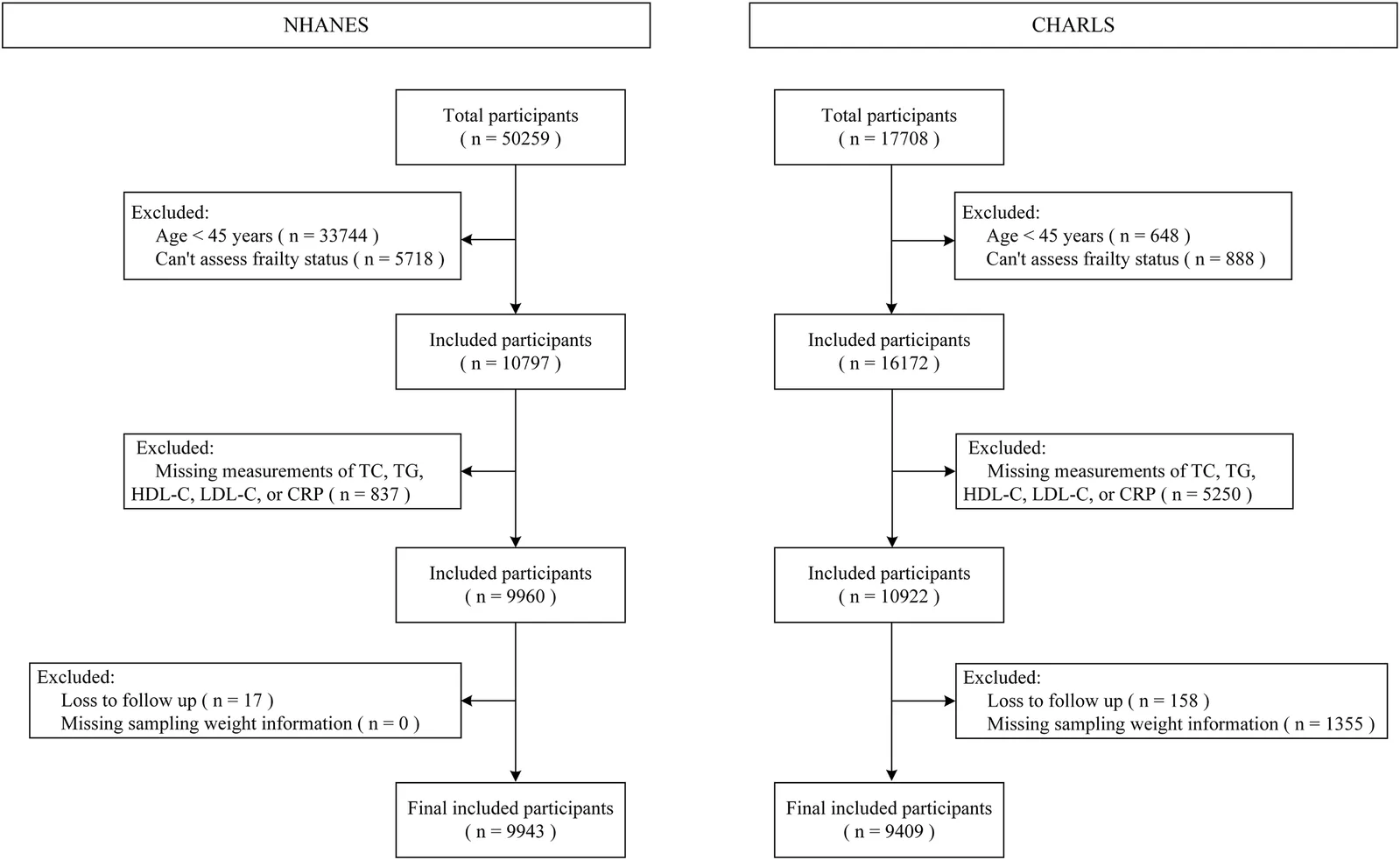
Two observational cohorts linked higher combined blood measures to death risk among 9,943 and 9,409 middle-aged and older adults over average follow-ups of 80.3 and 100.2 months.
9,943 participants, dose-response
Limit: The analyses did not measure whether lowering these combined blood markers prevents deaths
Edited by Boris Djordjevic · AgingResearch.News
Researchers analyzed two observational cohorts of middle-aged and older adults: 9,943 participants in the National Health and Nutrition Examination Survey and 9,409 in the China Health and Retirement Longitudinal Study. They examined measures combining routine blood fat tests with tests of inflammation. During average follow-ups of 80.3 and 100.2 months, respectively, the cohorts recorded 2,377 and 1,246 deaths.
After accounting for other factors, researchers linked higher levels of every measure to a higher risk of death from any cause. Comparisons between participants in the highest and lowest quarters of values supported this pattern, except for two measures in the Chinese cohort. Models incorporating the measures distinguished mortality risk better than the base model.
Why it matters
The authors proposed these measures as simple, low-cost tools for identifying middle-aged and older adults at higher mortality risk using routine tests.
Caveats
These observational associations do not show that blood fats or inflammation caused the deaths. The findings concern middle-aged and older adults and do not establish how these measures perform in younger people.
The paper
Shandong Provincial Hospital
Metabolism Open, Oct 9, 2026, Open access