Blood marker linked to higher cardiovascular risk
For cardiovascular events, the highest fifth of blood marker levels had a hazard ratio—a relative risk measure—of 1.70 versus the lowest fifth.
1,648 participants, dose-response
Limit: Absolute cardiovascular event risks were not reported
Edited by Boris Djordjevic · AgingResearch.News
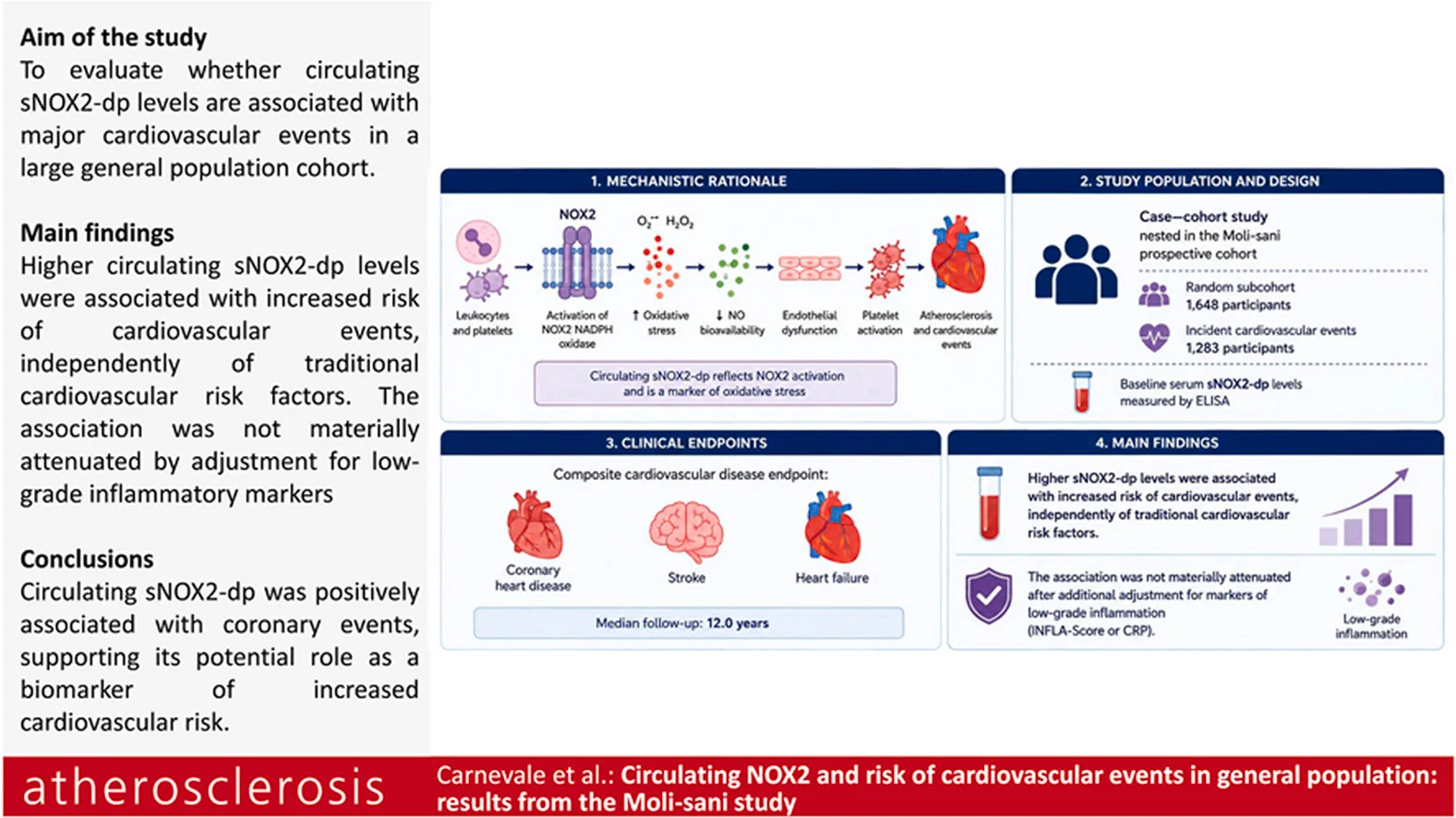
In the Moli-sani general-population cohort, researchers conducted an observational case-cohort study using a random subcohort of 1,648 participants and 1,283 new cardiovascular disease cases. They measured a blood marker derived from NOX2, an enzyme involved in oxidative stress, in samples collected at the start. Oxidative stress occurs when reactive molecules outstrip the body’s defenses.
Higher marker levels were associated with higher cardiovascular risk after researchers accounted for major cardiovascular risk factors. Risk estimates rose across five groups defined by marker levels. Further adjustment for measured signs of low-grade inflammation did not materially weaken the association. The researchers concluded that NOX2-related oxidative stress had potential value as a cardiovascular risk marker.
Why it matters
Atherosclerosis, an age-related disease involving fatty buildup in arteries, is linked to oxidative stress. The study addressed whether a marker of one source of that stress might add information beyond traditional cardiovascular risk factors.
Caveats
This observational study cannot show that NOX2 caused cardiovascular events. The abstract did not report participants’ ages, follow-up duration or absolute event risks.
- Inflammation
- Oxidative stress and ROS signaling
- Cardiovascular disease
- Incident cardiovascular disease
- C-reactive protein
- Humans
The paper
Istituto Neurologico Mediterraneo
Atherosclerosis, Oct 21, 2026
doi.org/10.1016/j.atherosclerosis.2026.121918PubMed 42933048