Nerve injury marker linked to death in community-living 75-year-olds
Each doubling of the marker’s blood level was linked to higher mortality, with an adjusted hazard ratio—a relative-risk measure—of 1.91.
Limit: Brain imaging was omitted, limiting identification of the pathology underlying elevated NFL
Edited by Boris Djordjevic · AgingResearch.News
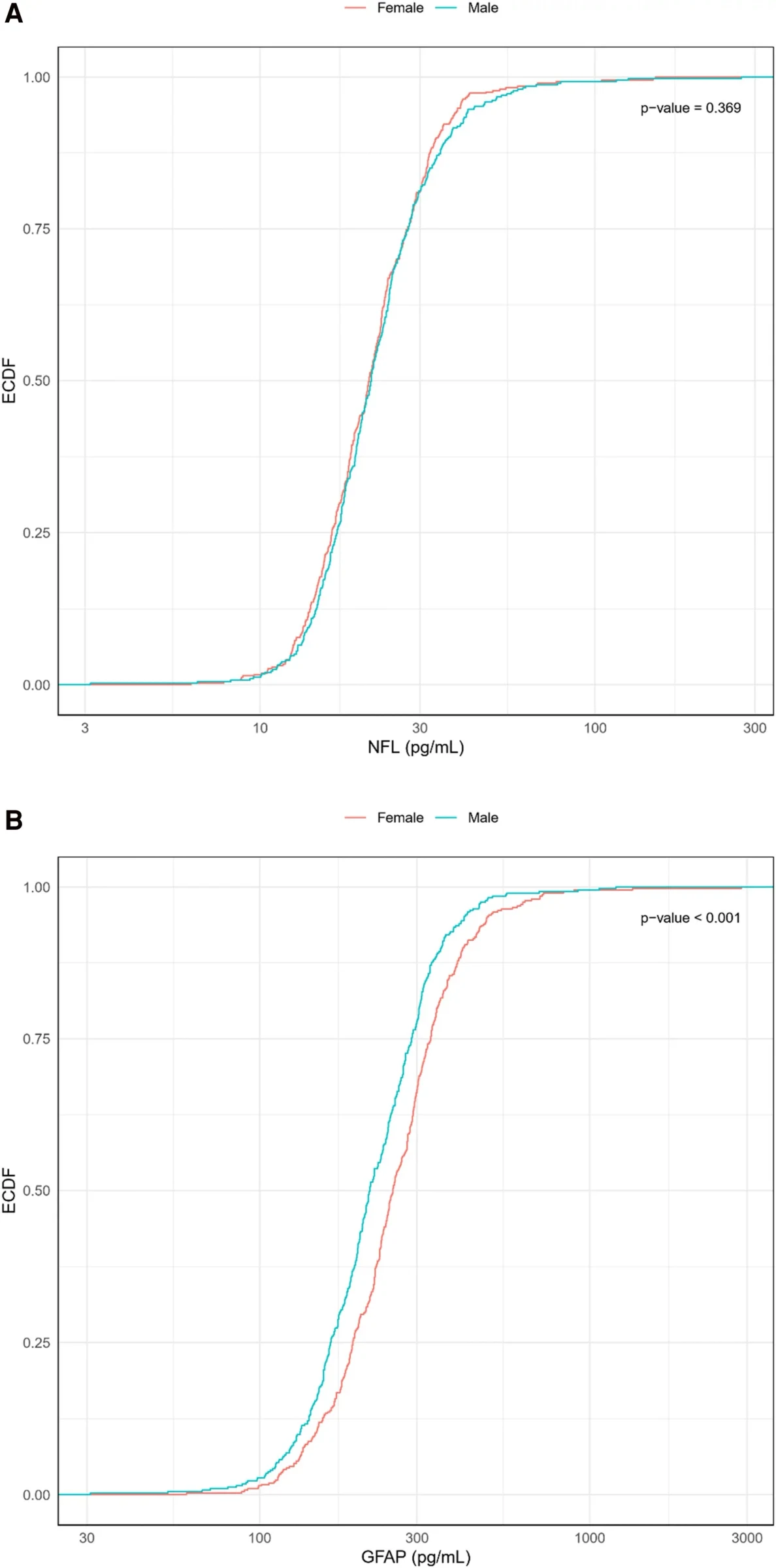
An observational cohort study followed 806 community-dwelling men and women aged 75 in Uppsala, Sweden, for a median of 10 years. Researchers measured blood levels of neurofilament light chain, a protein used as a marker of nerve cell injury, at the start.
During follow-up, 188 participants died. Higher protein levels remained linked to death after researchers accounted for factors including kidney function, diabetes and heart failure. Adding the marker improved the model’s ability to distinguish people who died from those who did not, beyond established risk factors. The marker was not independently linked to strokes caused by blocked blood vessels or heart attacks. Its association with death from heart or blood vessel disease did not remain after the full adjustment.
Why it matters
The findings suggest that this nerve injury marker may reflect overall vulnerability in later life rather than the risk of specific heart or blood vessel diseases.
Caveats
This observational study could not establish cause and effect. Its findings in community-dwelling 75-year-olds do not establish the marker’s value in younger adults or people living in residential care.
From the paper
- Follow-up
Over a median follow-up of 10 (IQR 9.9–10.1) years, a total of 55 ischaemic stroke events, 48 myocardial infarctions, 52 cardiovascular deaths, and 188 deaths from any cause occurred, corresponding to incidence rates of 0.78, 0.67, 0.71, and 2.57 events per 100 person-years, respectively.
- Result
In the fully adjusted model, GFAP showed no independent association with incident ischaemic stroke (hazard ratio for a doubling of GFAP 0.93, 95% CI 0.57–1.52).
Results, Plasma NFL and GFAP in relation to incident ischaemic stroke
Quoted word for word from the full text on PubMed Central.
- Ischemic stroke
- Ischemic stroke and myocardial infarction
- Major adverse cardiovascular events
- Myocardial infarction
- Glial fibrillary acidic protein
- Humans
The paper
Uppsala University
European Heart Journal Open, Sep 16, 2026, Open access


