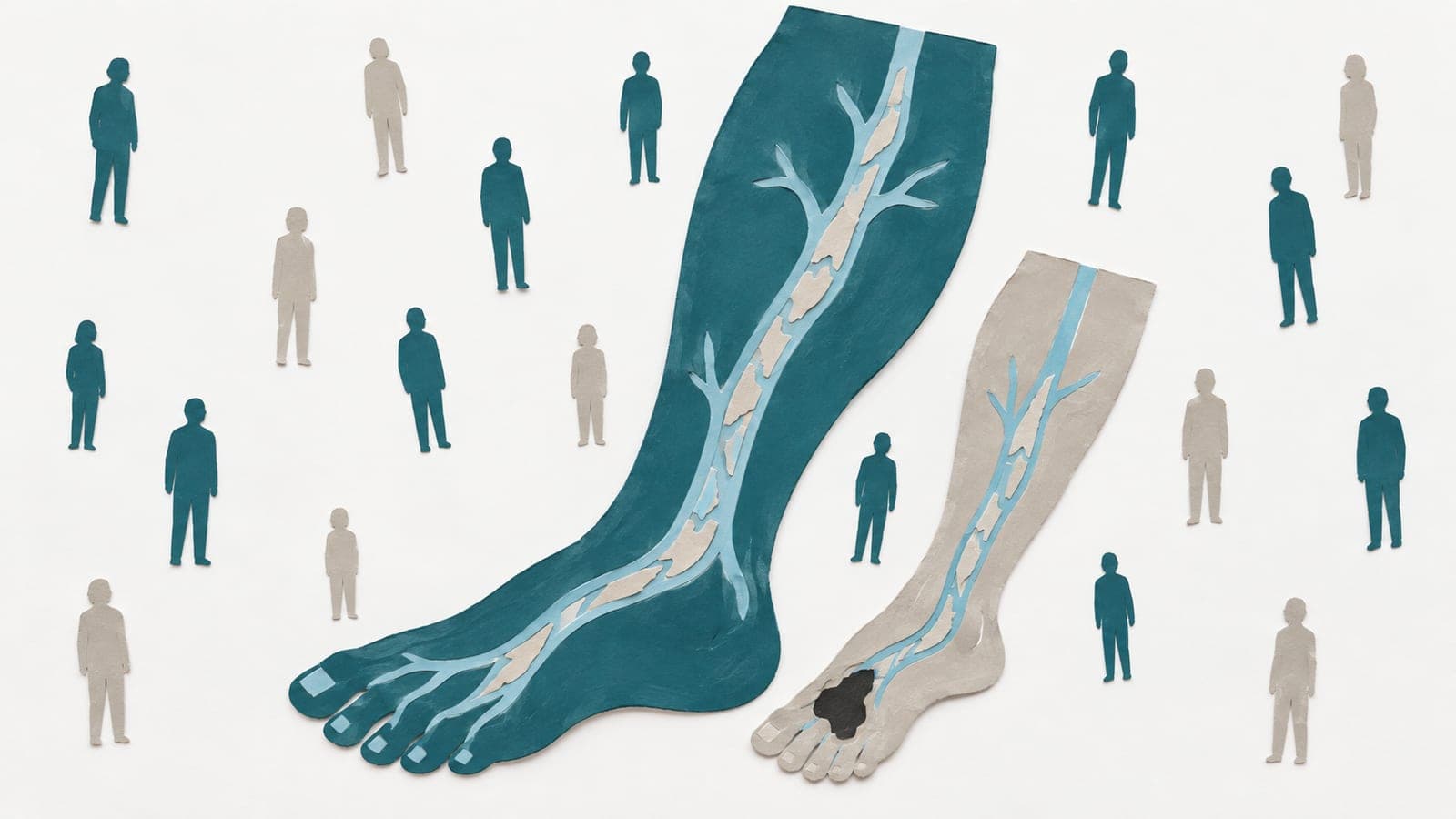
Diabetes–death link stronger with early-onset leg artery disease
Compared with people without diabetes, death hazard ratios were 2.00 for artery disease diagnosed at ages 35–50 and 1.30 after 50.
Limit: PAD severity at diagnosis was unavailable for adjustment, potentially confounding the diabetes–death link
Edited by Boris Djordjevic · AgingResearch.News
In a retrospective cohort study, researchers examined 4,538 adults diagnosed with peripheral artery disease at ages 35–50. This disease involves narrowed arteries supplying the limbs. Researchers analyzed Israeli health records and compared diabetes-related risks with those in people diagnosed after 50.
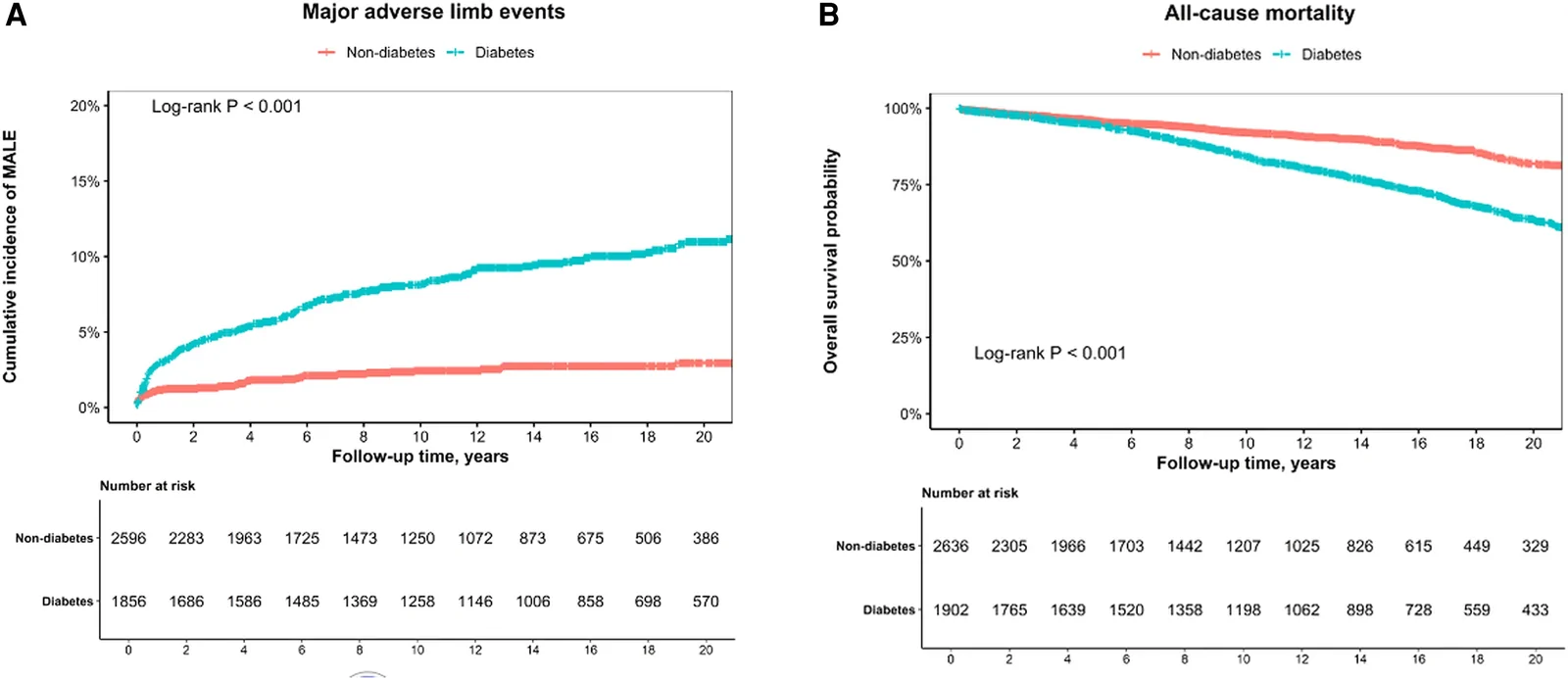
Among the younger patients, serious leg events occurred in 11.4% with diabetes versus 3.7% without it over a median 12.0 years. These events included procedures to restore leg blood flow or amputations above the ankle. Deaths occurred in 27.9% versus 9.1%, respectively, over a median 10.8 years. The association between diabetes and death was stronger in the younger group. The association with leg events did not differ significantly by age. Hazard ratios compare the risk of an event at a given time.
Why it matters
For people with peripheral artery disease, the study addressed whether diabetes signals the same long-term risks when artery disease begins in midlife rather than later.
Caveats
This observational study could not show that diabetes caused the outcomes, and missing smoking and body-size data limited adjustment for other differences. The study excluded people diagnosed before 35, those with blood vessel inflammation and those with prior study outcomes.
From the paper
- Participants
The study cohort included 4538 participants, of whom 1902 (42%) had diabetes and 2636 (58%) did not.
- Limitation
First, the retrospective observational design precludes causal inference, and residual confounding cannot be excluded despite extensive adjustment and sensitivity analyses.
Quoted word for word from the full text on PubMed Central.
The paper
Hebrew University of Jerusalem; Wolfson Medical Center
Journal of the Endocrine Society, Oct 15, 2026, Open access