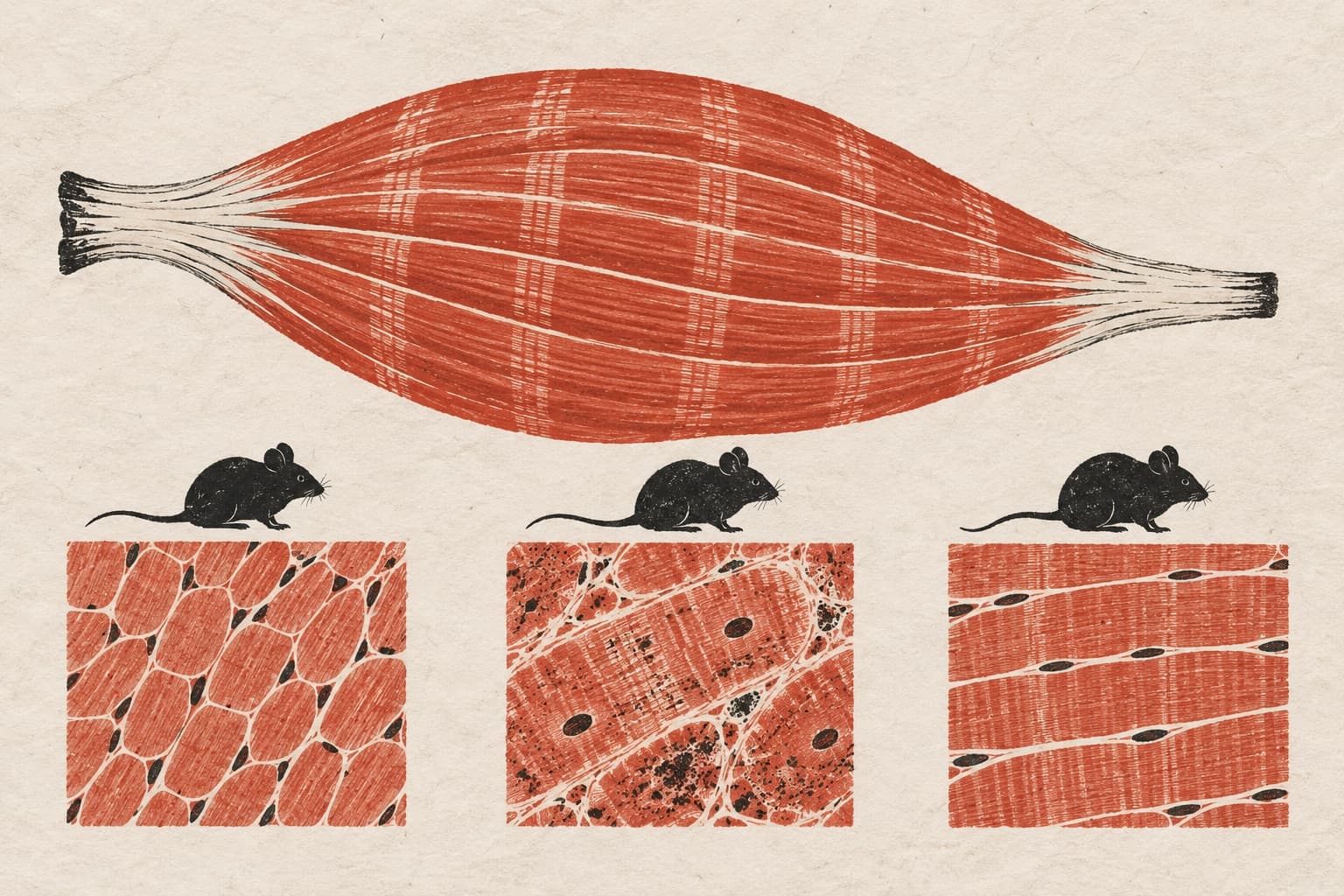
Blood serum after fermented whey enlarged lab-grown muscle cells
In a randomized crossover trial involving young and older men, serum collected after fermented whey increased cell diameter compared with serum collected after conventional whey.
Randomized trial, double-blind, placebo-controlled
Limit: The experiments measured cell growth and signaling, not muscle strength
Edited by Boris Djordjevic · AgingResearch.News
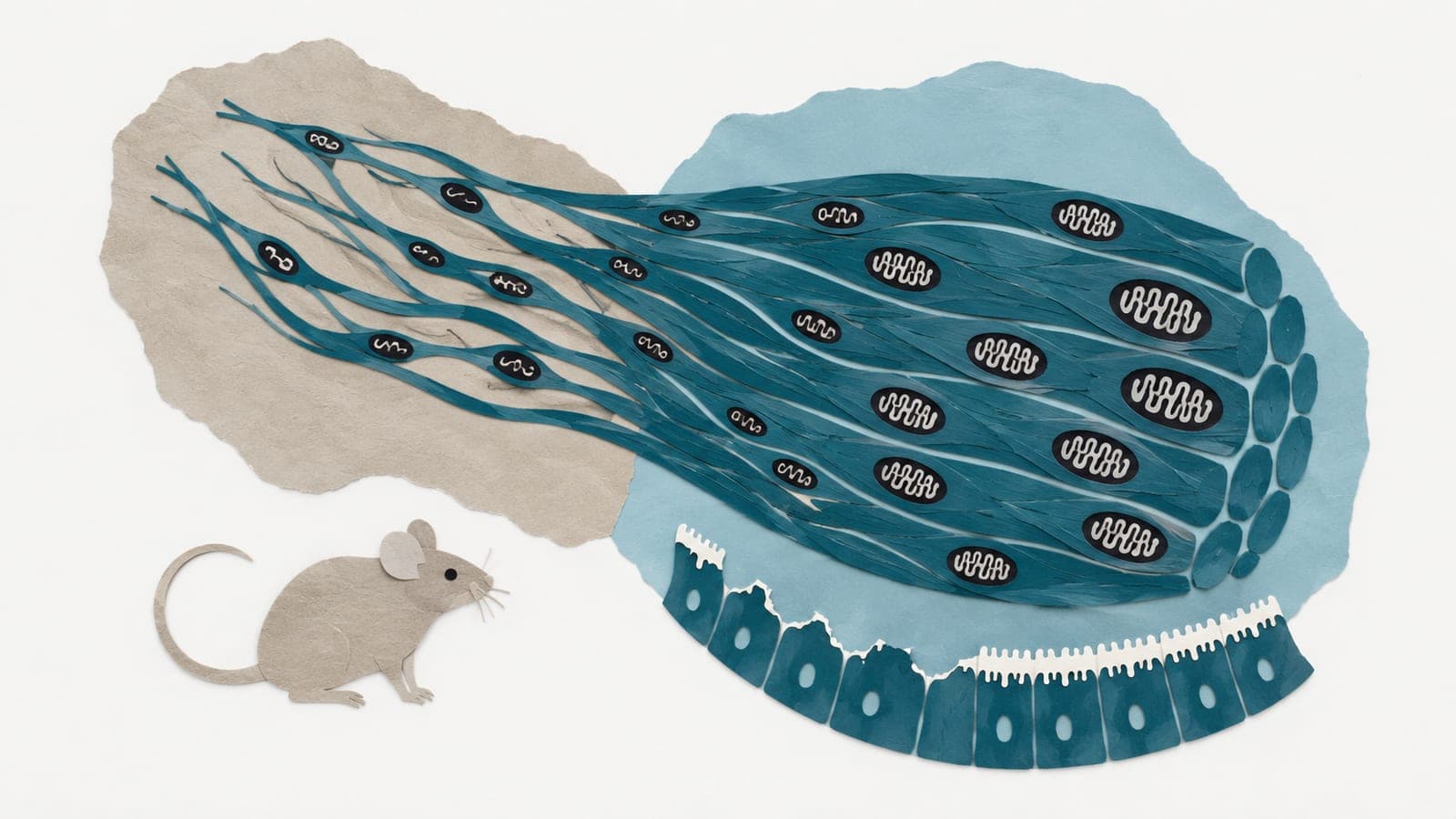
Lab-grown C2C12 muscle cells received serum, the liquid part of blood, collected from young and older men after they consumed whey protein. In the randomized, double-blind crossover trial, participants consumed fermented whey and conventional, non-fermented whey on separate occasions. Researchers then grew the cells in a mixture containing 10% serum.
Serum collected after fermented whey increased muscle cell diameter compared with serum collected after conventional whey. The researchers found no evidence that donor age changed this effect. With serum collected after fermented whey, protein production was greater in cells receiving serum from older donors than in cells receiving serum from young donors.
Why it matters
A reduced muscle-building response has been proposed as one contributor to muscle loss in older adults. The work may inform nutritional strategies aimed at this age-associated response.
Caveats
Responses in lab-grown cells do not establish effects on muscle growth or strength in people, and all serum donors were male. The abstract did not report participant numbers, exact ages, doses or duration.
The paper
Ritsumeikan University; College of Sport and Health Science
Experimental Gerontology, Oct 23, 2026