Nanoparticle vaccine candidate protected adult and aged mice
In mouse experiments, pre-existing immunity to the vaccine’s protein scaffold enhanced responses to the attached bacterial antigens rather than weakening them.
Limit: How long vaccine protection lasted was not reported
Edited by Boris Djordjevic · AgingResearch.News
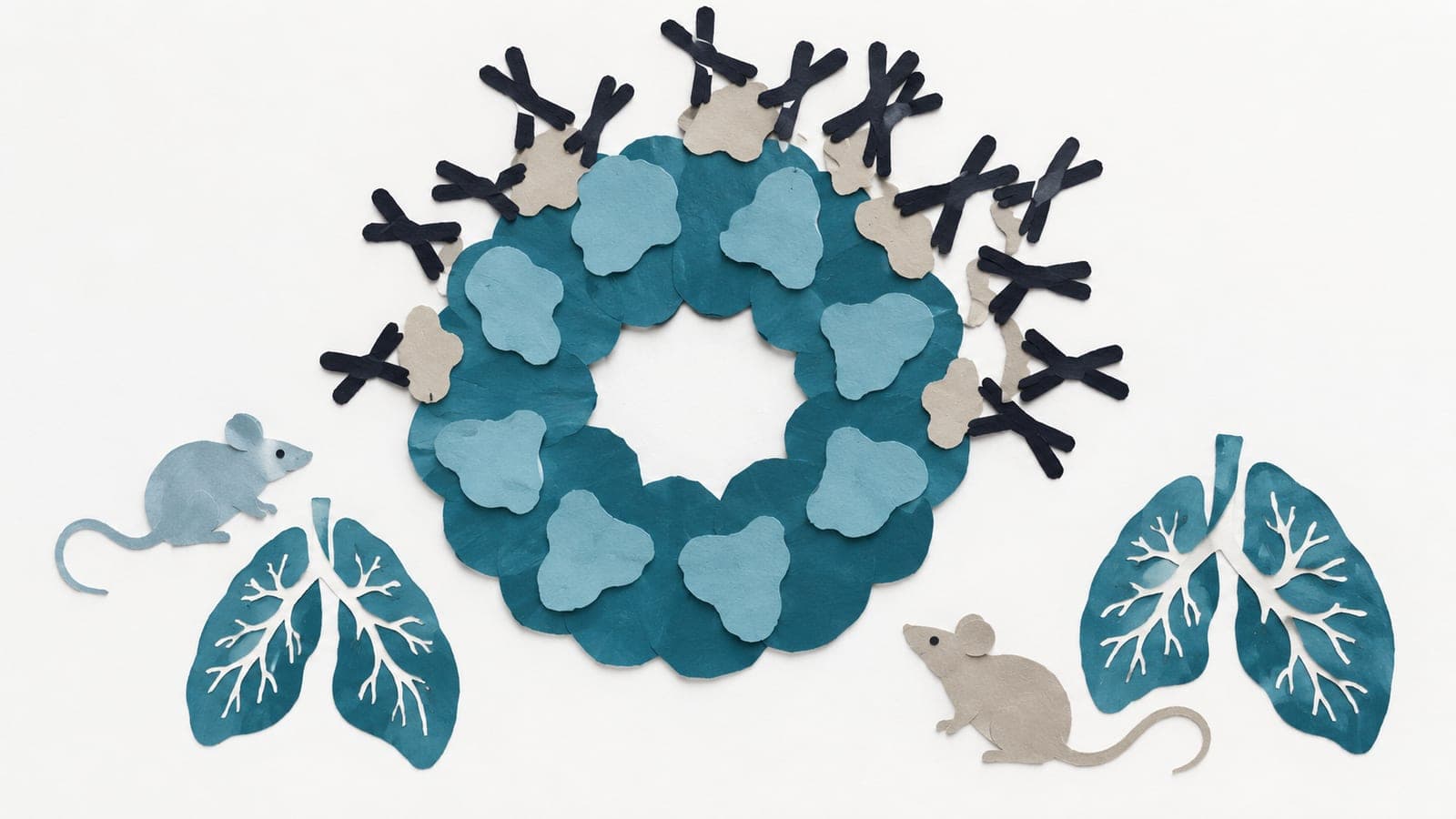
Adult and aged mice received an experimental nanoparticle vaccine targeting Pseudomonas aeruginosa, a bacterium that causes severe infections. The researchers built the vaccine around GroEL, a bacterial protein that can itself trigger a protective immune response. GroEL assembled itself into tiny particles and served as a support for other bacterial antigens—targets that the immune system recognizes.
The vaccine elicited immune responses and conferred protection in both adult and aged mice. In mouse experiments, pre-existing immunity to GroEL enhanced responses to the attached antigens rather than blunting them. This addressed a concern with such vaccines: immunity to the supporting structure can weaken responses to the antigens it carries.
Why it matters
Pseudomonas aeruginosa infections place a particularly heavy burden on older adults. The research addresses vaccine development in the face of age-related weakening of immune function.
Caveats
These were animal experiments, not a test in people. The abstract did not report mouse numbers, vaccine doses, protection rates or how long protection lasted.
- Regroel-po
- Immune response
- Clathrin-mediated endocytosis
- Carrier-induced epitope suppression
- Immunosenescence
- Mice
The paper
Army Medical University
ACS Nano, Sep 29, 2026, Open access