Removal of uterus and both ovaries linked to higher diabetes risk
Women whose uterus and both ovaries were removed had higher relative type 2 diabetes risk than women with neither procedure (hazard ratio 1.23).
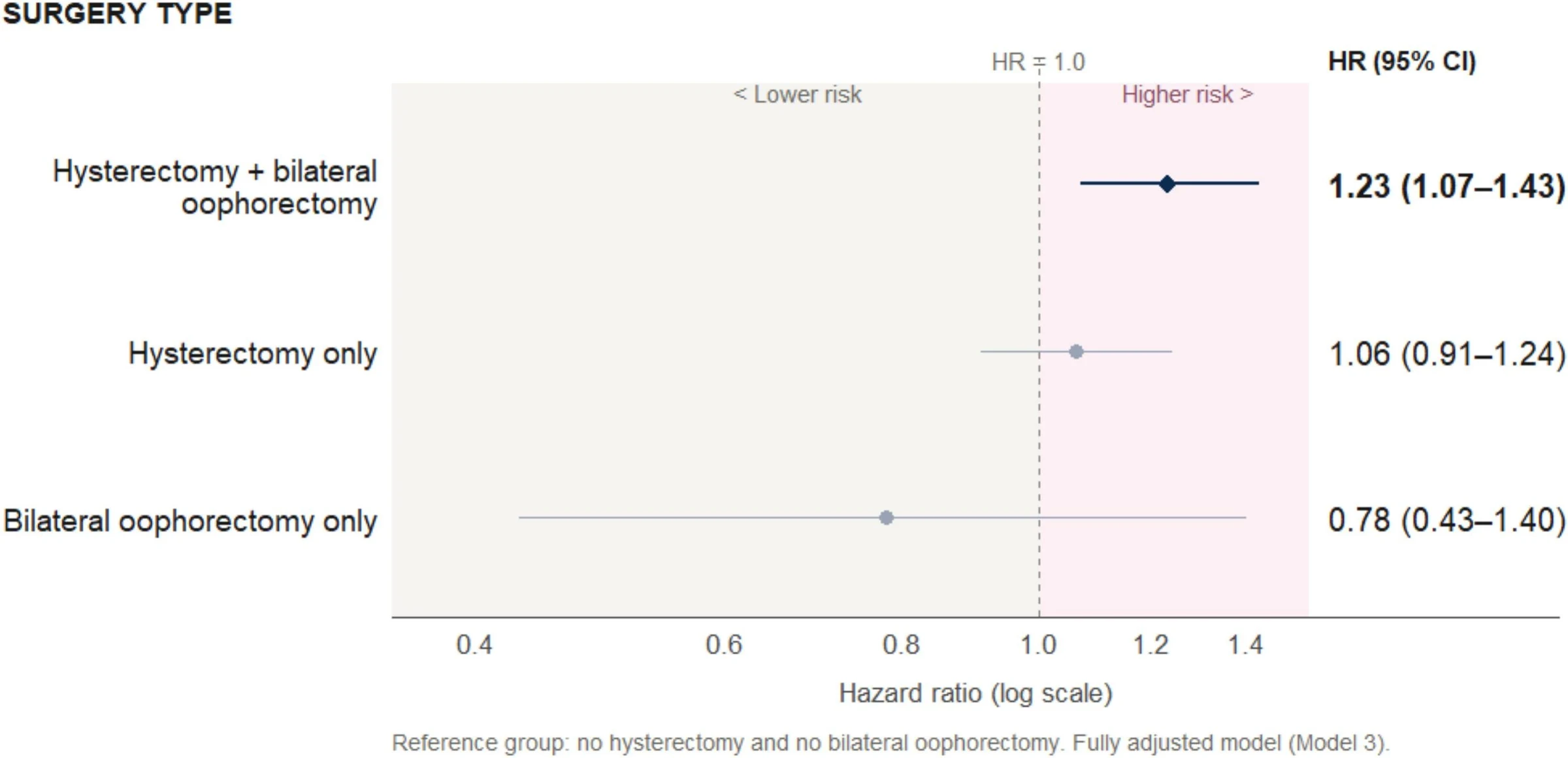
Limit: The findings come from women in the E3N-Generations cohort alone
Edited by Boris Djordjevic · AgingResearch.News
The observational E3N-Generations cohort study followed 82,472 women who were free of diabetes in 1992 until 2008, a median of 16 years. During follow-up, 2,318 women developed type 2 diabetes. Researchers adjusted their analysis for lifestyle, metabolic and reproductive factors.
Women who had a hysterectomy, removal of the uterus, together with removal of both ovaries had a higher relative rate of developing diabetes than women who had neither procedure (hazard ratio 1.23). The association was strongest among women who underwent both procedures before age 45 (hazard ratio 1.70). Hysterectomy alone and removal of both ovaries alone were not associated with diabetes risk.
Why it matters
The study addresses whether reproductive surgery and its timing are relevant to the risk of type 2 diabetes, a disease associated with aging.
Caveats
This observational study cannot show that surgery caused diabetes. The findings concern women initially free of diabetes, not outcomes in people who already had the disease.
The paper
Université Paris-Saclay; Université de Rennes
Maturitas, Oct 23, 2026
