Miscarriage propensity links to higher type 2 diabetes risk
In 39,468 women, each 0.1-unit rise in miscarriage propensity was associated with a hazard ratio of 1.38 for incident type 2 diabetes.
Scientific Reports
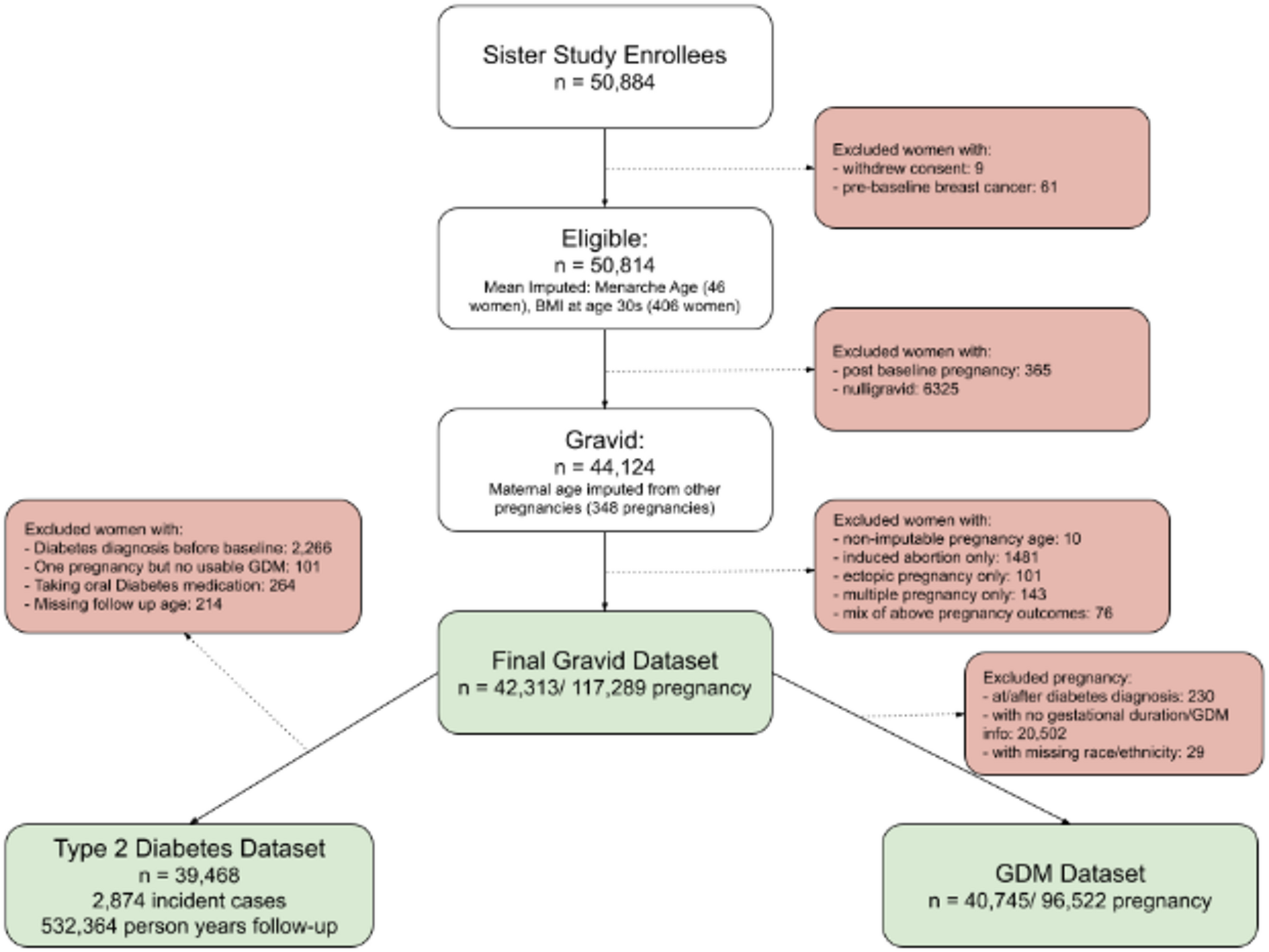
In 42,313 gravid Sister Study participants, researchers evaluated whether a history-based measure of miscarriage propensity predicts subsequent gestational diabetes and type 2 diabetes. The authors estimated propensities for miscarriage, accounting for maternal age and smoking, and gestational diabetes, accounting for body mass index, using an empirical Bayes method.
Each 0.1-unit increase in miscarriage propensity was linked to subsequent miscarriage (odds ratio 5.14) and subsequent gestational diabetes (odds ratio 1.51). For long-term metabolic outcomes, the researchers tracked 39,468 women without prior diabetes who enrolled after completing reproduction. Over 532,364 person-years, 2,874 incident type 2 diabetes cases arose. Miscarriage propensity remained associated with incident type 2 diabetes (hazard ratio 1.38 per 0.1 increase), as did gestational diabetes propensity (hazard ratio 1.35).
Why it matters
Reproductive events earlier in life may serve as early indicators of long-term metabolic vulnerability and age-related type 2 diabetes risk.
Caveats
The findings come from an observational cohort and statistical propensity modeling, demonstrating an association rather than a causal biological mechanism.
The paper
History of miscarriage and type 2 diabetes
National Institute of Environmental Health Sciences
Scientific Reports · 3 Oct 2026 · CC BY