Tumor score linked to survival in breast cancer patients
An observational analysis of breast cancer data linked higher scores to poorer survival and lower scores to more favorable predicted immunotherapy responses.
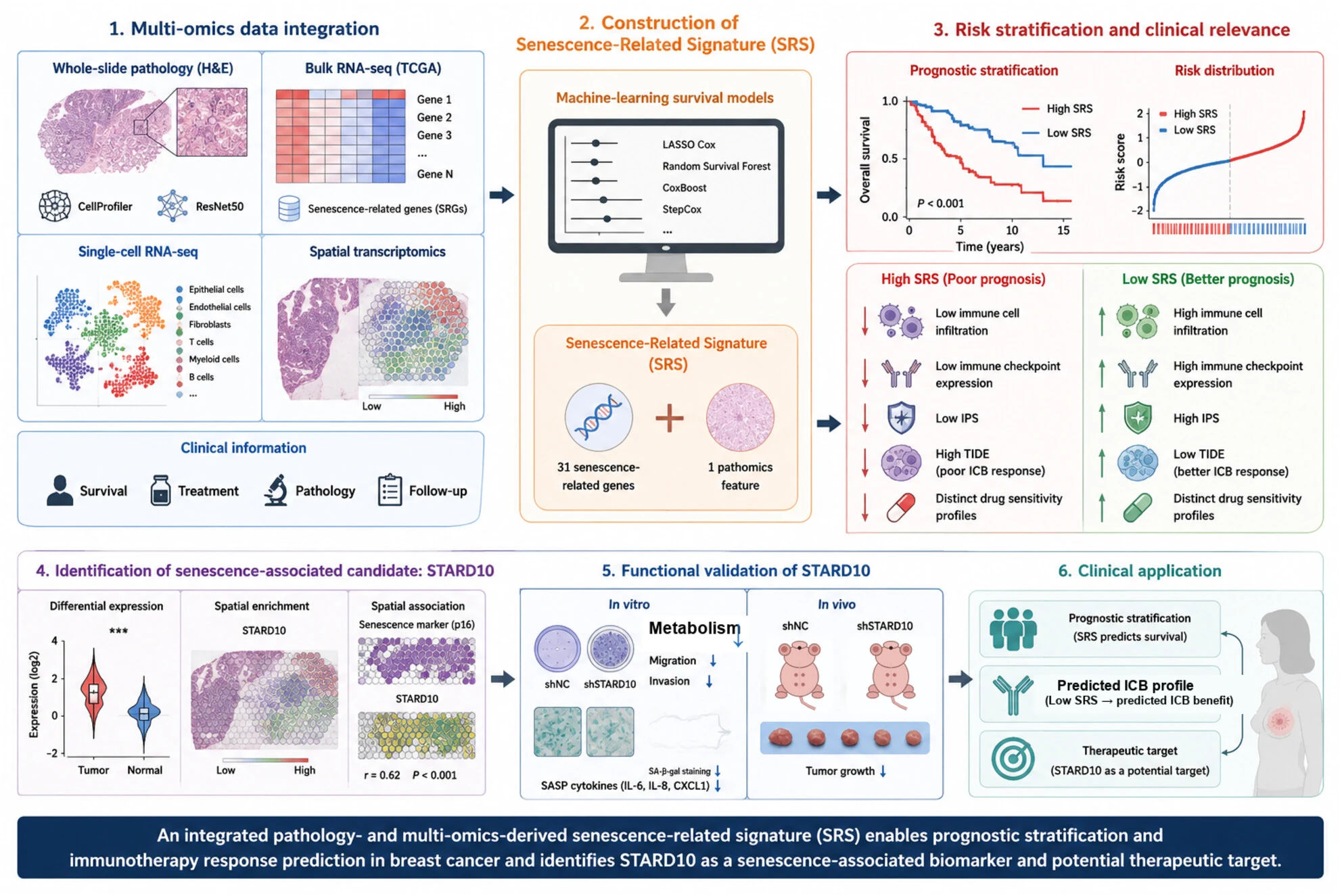
Limit: Immunotherapy-response profiles were predictions rather than measured treatment outcomes
Edited by Boris Djordjevic · AgingResearch.News
An observational analysis of data from people with breast cancer combined clinical information, tumor images and measurements of gene activity. Researchers used machine-learning survival models to build a score related to senescence, a state in which cells stop dividing.
Higher scores were associated with poorer survival across internally divided subsets of a breast cancer dataset. Lower-scoring tumors showed greater immune-cell presence and more favorable predicted responses to immunotherapy, which helps the immune system fight cancer. Analyses of individual cells found senescence-related activity mainly in cells lining tissues and blood vessels.
Why it matters
Cell senescence is relevant to aging as well as cancer. This work examines its potential value for assessing breast cancer prognosis and identifying candidates for further therapeutic research.
Caveats
This observational analysis cannot establish cause and effect, and the reported survival testing used internal subsets of one dataset. Immunotherapy-response profiles were predictions, not measured treatment outcomes.
The paper
First Affiliated Hospital of Wenzhou Medical University
FASEB Journal, Oct 23, 2026