Neighborhood disadvantage linked to worsening chronic illness
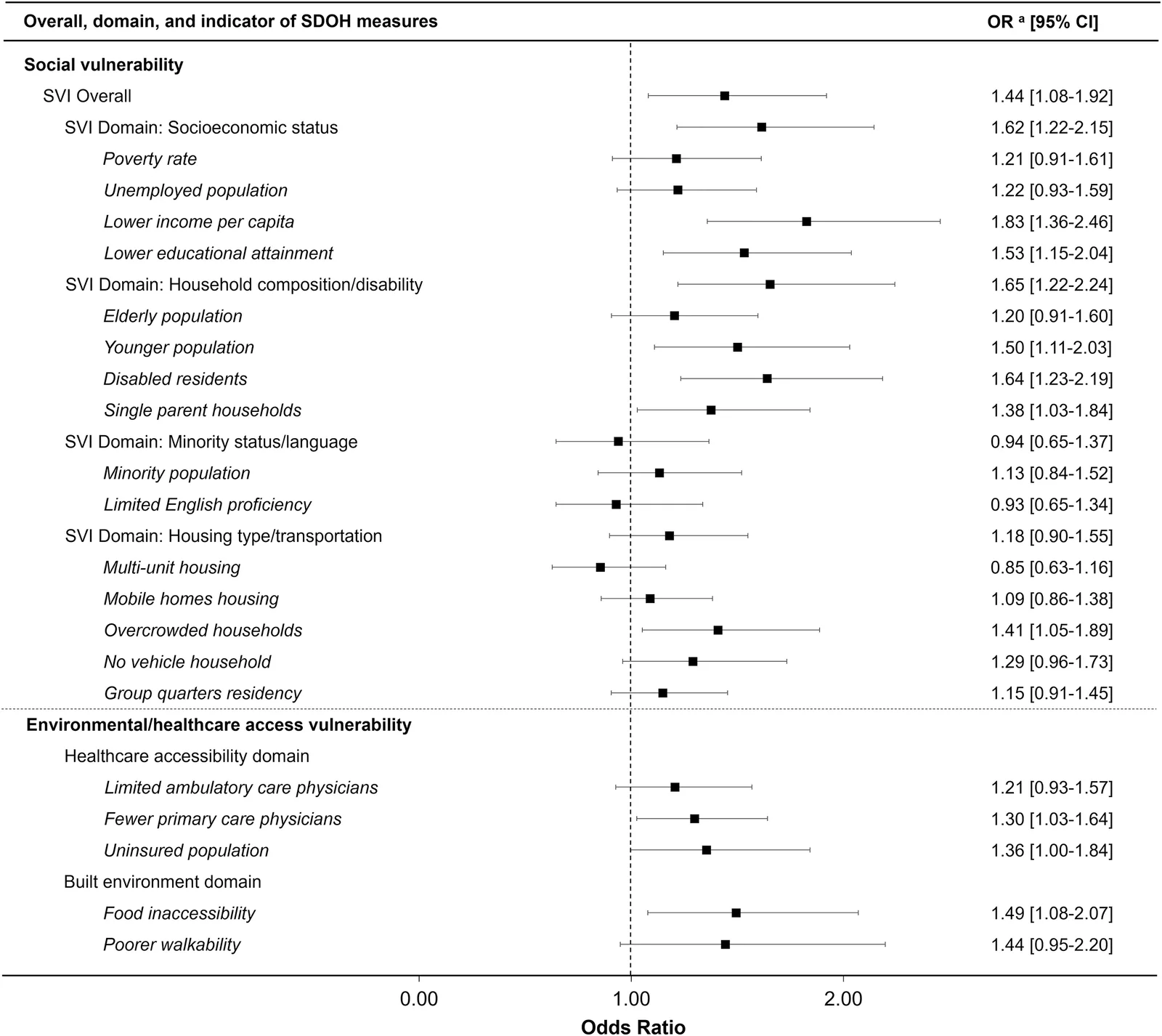
Adult survivors of childhood cancer in the lowest-income neighborhoods had 1.83 times the odds of worsening overall chronic illness burden compared with those in the highest-income neighborhoods.
Limit: Survivors with greater disease burden may have moved to disadvantaged neighborhoods before study entry
Edited by Boris Djordjevic · AgingResearch.News
The observational cohort study included 2,508 US childhood cancer survivors aged 18 or older, all at least five years past diagnosis. Their average age was 31.6 years, and about half were male. All had been treated at St. Jude Children’s Research Hospital and completed at least two clinical assessments.
Researchers linked participants’ starting home addresses to neighborhood measures and tracked the combined severity of 177 chronic conditions. More than 35% experienced worsening overall illness burden during follow-up. Greater neighborhood poverty, lower availability of primary care doctors and limited access to supermarkets or large grocery stores were associated with higher odds of worsening. These associations remained after researchers accounted for cancer treatment and personal factors, including insurance and education.
Why it matters
The study addressed the burden of chronic illness as childhood cancer survivors grow older. Its findings support assessing social risks in follow-up care and further evaluating neighborhood information to help identify higher-risk survivors.
Caveats
This observational study cannot establish that neighborhood conditions caused worsening illness. It included survivors from one US center who completed repeat assessments, excluding those who died before a second assessment or lacked follow-up.
From the paper
- Participants
Of the remaining 4213 survivors, 106 died before a second clinical assessment, and 1599 lacked a follow-up clinical assessment, leaving 2508 survivors for analysis.
- Result
… OR: 1.44, 95% CI: 1.08–1.92 for overall; OR: 1.62, 95% CI: 1.22–2.15 for socioeconomic domain; OR: 1.65, 95% CI: 1.22–2.24 for household composition/disability domain).
- Limitation
The SJLIFE cohort comprises predominantly non-Hispanic White survivors treated at SJCRH, many of whom reside in the mid-South, which may limit generalizability to other racial/ethnic groups, geographic regions, and healthcare systems.
Quoted word for word from the full text on PubMed Central.
- Food inaccessibility
- Limited primary care physician availability
- Neighborhood low education
- Childhood cancer
- Multimorbidity
- Humans
The paper
St. Jude Children's Research Hospital
EClinicalMedicine, Oct 13, 2026, Open access