Protein in blood vessel cells limited bone loss in animals
In animal experiments, loss of the protein worsened bone degeneration, while restoring it eased osteoporosis caused by removal of the ovaries.
Limit: Bone preservation was assessed only 5 weeks after injection
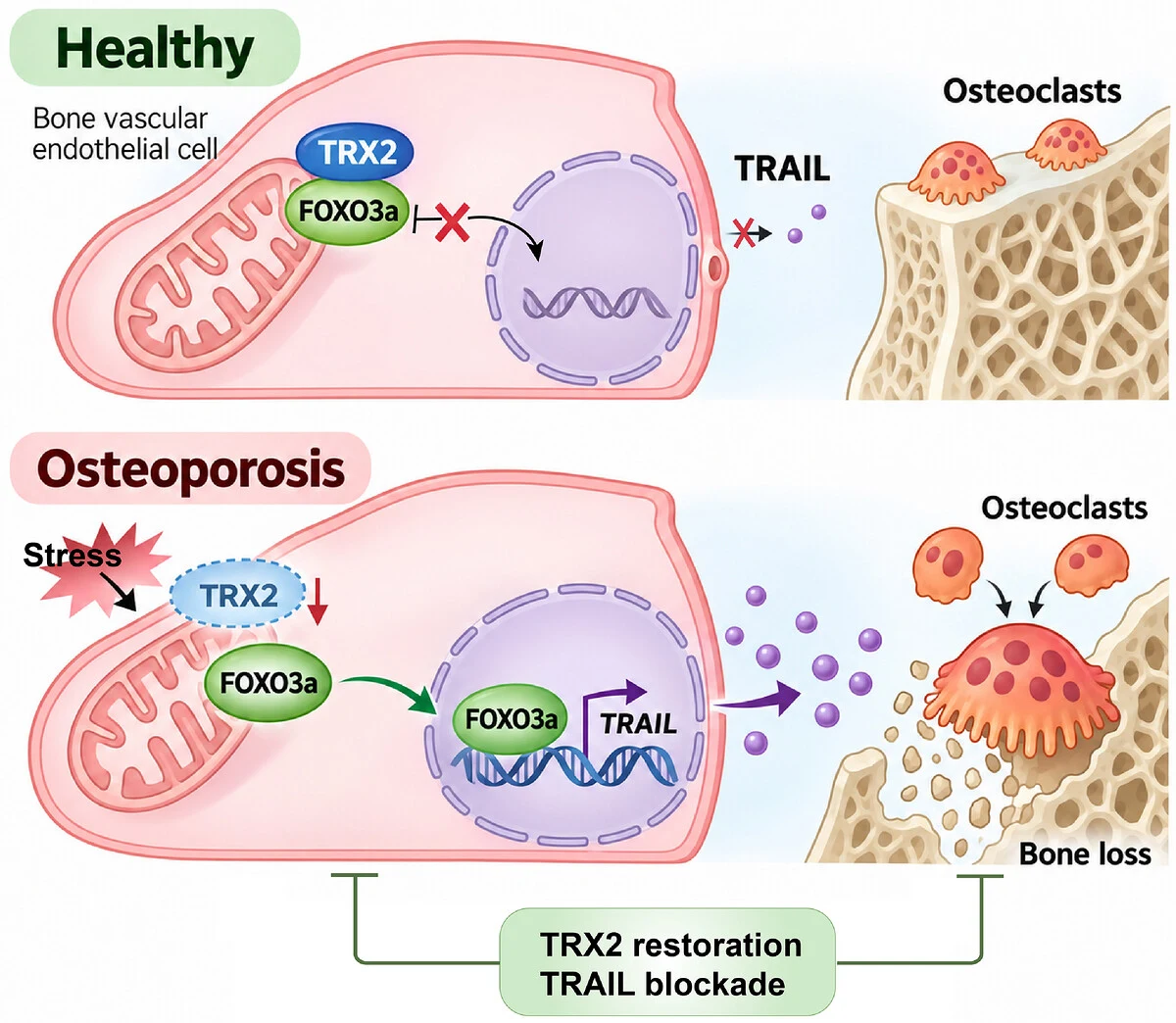
In animal experiments, researchers examined thioredoxin-2, a protein found in the energy-producing structures of cells lining blood vessels in bone. The protein was markedly reduced in aging bone vessel cells. A shortage of it in vessel-lining cells accelerated bone degeneration, reducing bone-forming activity and increasing the formation of cells that break down bone.
Thioredoxin-2 bound FOXO3a, a protein that controls gene activity, and limited its entry into the cell nucleus. Loss of thioredoxin-2 disrupted this binding, allowing FOXO3a to activate the gene for TRAIL, a signaling protein that encouraged the formation of bone-breaking cells. Restoring thioredoxin-2 in vessel-lining cells or blocking TRAIL reduced osteoporosis caused by ovary removal. Both approaches helped preserve the coordination between blood vessel growth and bone formation.
Why it matters
Osteoporosis disrupts the balance between making bone and breaking it down. The findings suggest that proteins in blood vessel cells may offer targets for tackling this age-associated disease.
Caveats
Animal experiments cannot establish whether this approach would work in people. The abstract did not specify the species, sample sizes, intervention doses or duration.
The paper
Thioredoxin-2 Alleviates Osteoporosis by Restraining FOXO3a Nuclear Translocation
Guangzhou First People's Hospital
Advanced Science, Oct 18, 2026

