Atlas maps distinct groups of human white blood cells
An analysis of 1 million human neutrophils, a type of white blood cell, mapped distinct groups and differences linked to health and disease.
Limit: Sequencing platform and sample processing effects could distort neutrophil quality and subset composition
Stake: An author works for Danaher Diagnostics.
Edited by Boris Djordjevic · AgingResearch.News
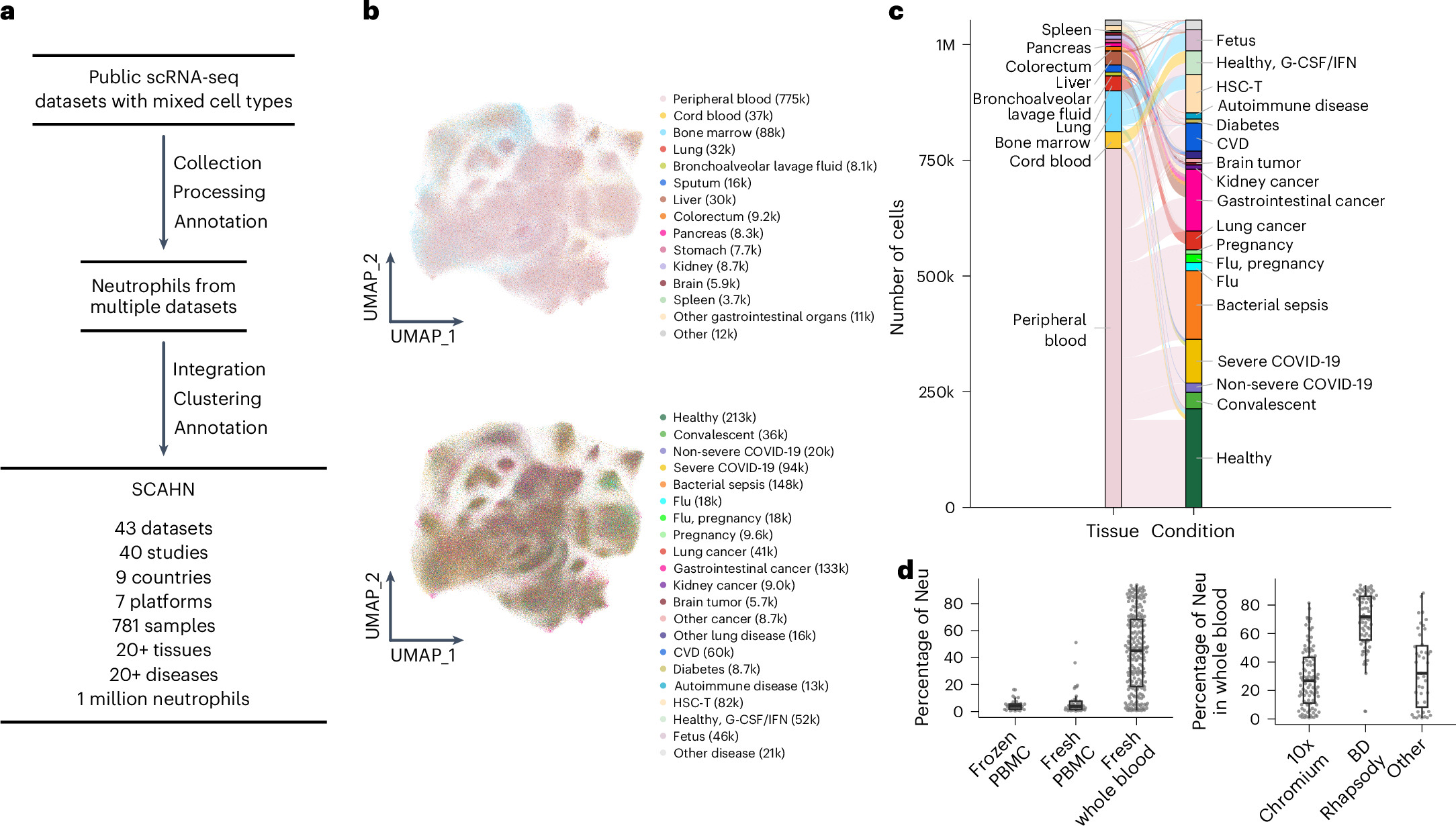
Human neutrophils, the most abundant white blood cells in blood, were the focus of an analysis combining data from 781 samples and 43 independent datasets. Researchers built an atlas of gene activity in individual cells. They identified groups with distinct functions across tissues. Gene activity and the proportions of these groups differed with infection, cancer, immune suppression and sex.
In a separate analysis of 17,023 blood gene-activity profiles from 40 datasets, neutrophil-specific patterns predicted mortality in acutely ill patients at presentation. These patterns were also associated with cancer diagnosis and survival. They correlated with metabolic dysfunction and long-term death from any cause.
Why it matters
Cancer threatens health in later life. The study suggests that neutrophil biology may help refine immune risk assessment.
Caveats
These analyses combined gene-activity datasets; they did not test whether using the atlas improves diagnosis or treatment. The abstract does not report participants’ ages or results specific to older adults.
From the paper
- Participants
In the Stanford EHR database, we included 205,817 patients who had a CBC with differential, no Charlson comorbidities at baseline and normal absolute neutrophil counts (1,500–8,000 cells per µl).
Results, Neutrophil count tracks chronic disease and mortality
- Result
… anakinra significantly lowered 28-day/30-day mortality (hazard ratio (HR) = 0.06, 95% confidence interval (CI): 0.01–0.45, P = 0.0002; Fig. 4h).
Results, Neutrophil subsets associate with diverse disease outcomes
- Limitation
Neutrophil research has predominantly relied on surface proteins to delineate subsets.
Quoted word for word from the full text on nature.com.
The paper
A single-cell atlas of human neutrophils reveals neutrophil heterogeneity across health and disease
Stanford Medicine
Nature Immunology, Oct 21, 2026, Open access