Age linked to immune cell changes in flu-related lung distress
An observational comparison of adults and children with influenza-associated acute respiratory distress syndrome found differences in T cell composition and cell-killing gene activity.
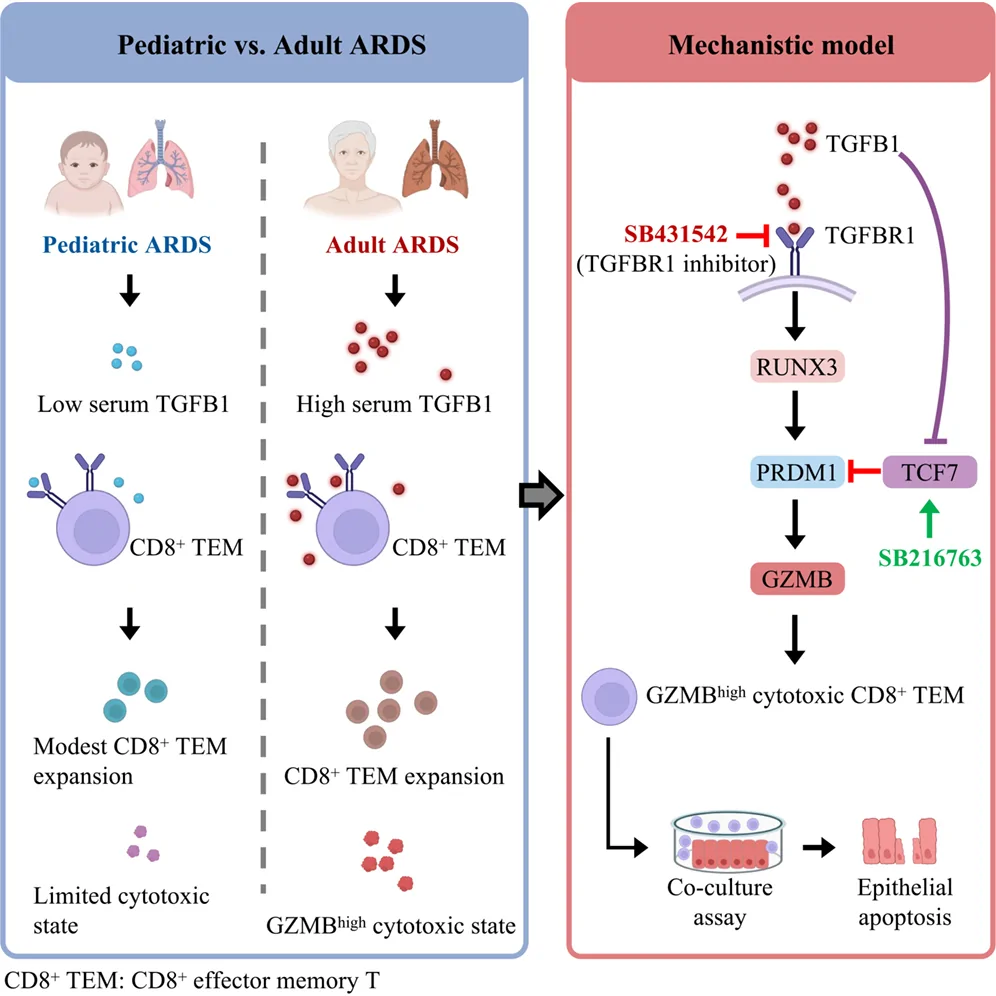
Limit: Immune aging was not tracked over time
Adults and children with influenza-associated acute respiratory distress syndrome, a severe lung condition, were compared in an observational study of T cells, immune cells that help fight infection. Researchers analyzed gene activity in individual cells, the receptors T cells use to recognize targets, and blood proteins. Adults had less diverse T cell receptors and an expanded population of CD8 effector memory T cells, a subtype capable of killing other cells. These cells showed stronger cell-killing gene activity than their counterparts in children.
In separate experiments with cells grown in the lab, TGFB1, a signaling protein, promoted cell-killing programs in this T cell subtype and increased injury to epithelial cells, which line body surfaces.
Why it matters
Understanding how immune responses differ with age may help researchers address why viral acute respiratory distress syndrome has different clinical outcomes across age groups.
Caveats
The observational comparison did not establish cause and effect or track immune aging over time. The injury experiments used cells grown in the lab, not people.
The paper
Tianjin University
iScience, Oct 8, 2026, Open access


