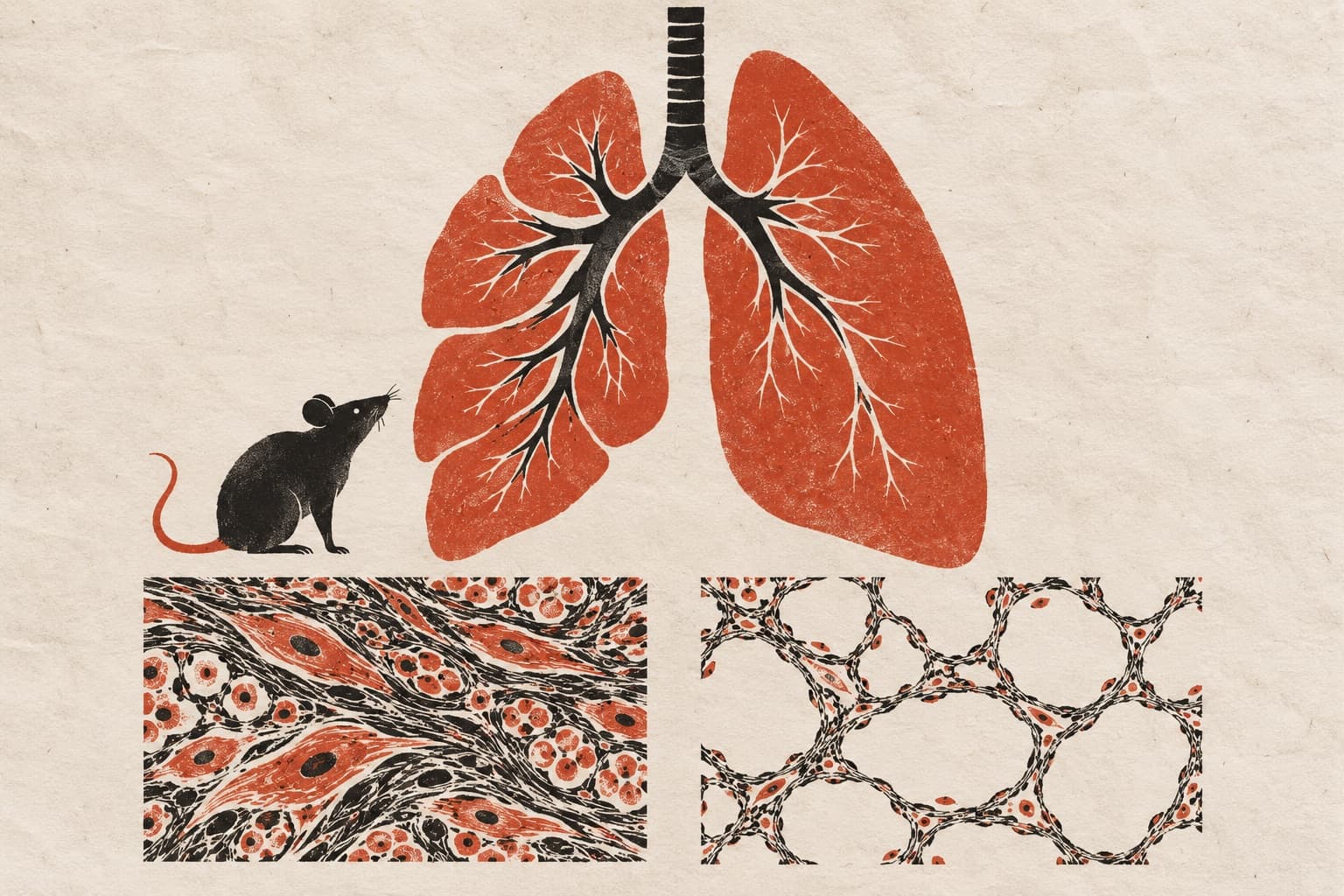
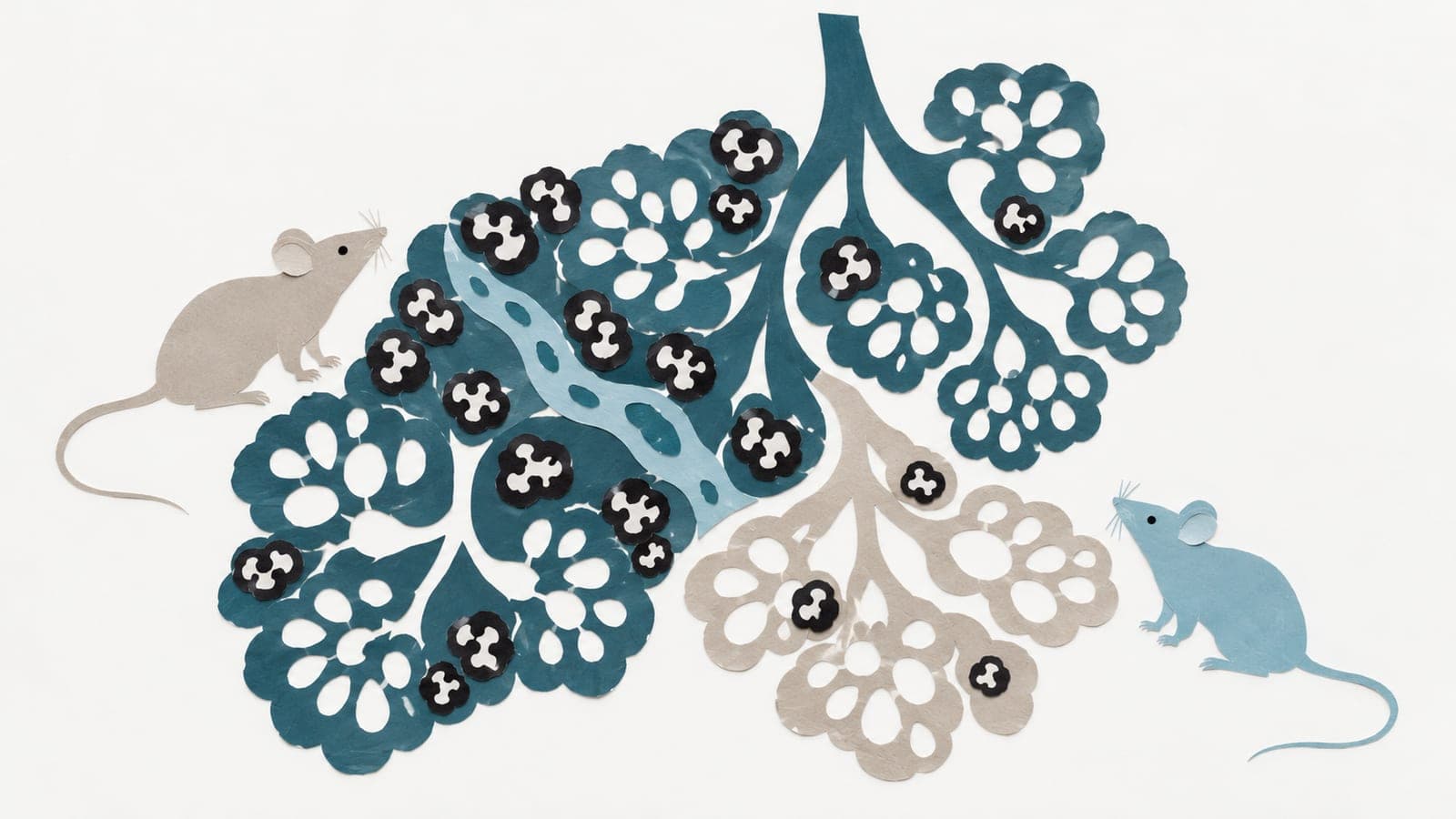
Senescent human lung cells show altered virus defenses
Experiments with influenza A found higher virus levels in senescent lung cells, with a distinct antiviral response in cells from people with idiopathic pulmonary fibrosis.

Limit: Protein-level knockdown checks covered only two senescent healthy-cell replicates; p-IRF3 reduction was inconsistent
Edited by Boris Djordjevic · AgingResearch.News
In an experiment in human lung fibroblasts, cells that help form connective tissue, researchers compared cells from healthy lungs and lungs with idiopathic pulmonary fibrosis, a disease involving lung scarring. They examined how senescence, a state in which cells stop dividing, affected responses to influenza A virus.
Senescence increased virus levels in both groups. Both cell types activated antiviral pathways, but senescent cells from lungs with fibrosis showed a distinct pattern of antiviral gene activity and an altered inflammatory response. Reducing either of two proteins identified as candidate regulators lowered release of interferon beta, an antiviral signaling protein, in senescent cells from healthy lungs. The effects were milder in cells from lungs with fibrosis.
Why it matters
Cell senescence may help explain why people with idiopathic pulmonary fibrosis are vulnerable to virus-associated episodes of sudden disease worsening.
Caveats
These experiments used cells grown in the lab, not people with infections. They did not show whether the altered cellular responses account for patients’ vulnerability to respiratory viruses.
The paper
Cellular Senescence Dysregulates Antiviral Interferon Responses in Idiopathic Pulmonary Fibrosis
University of Southern California; Jena University Hospital
Aging Cell, Oct 22, 2026, Open access