Sight and hearing problems linked to multiple health conditions
Adults reporting both problems had a higher rate of combined physical and psychological conditions than those reporting neither, with a hazard ratio of 2.18.
Dose-response
Limit: Vision and hearing impairments relied on self-reports
Edited by Boris Djordjevic · AgingResearch.News
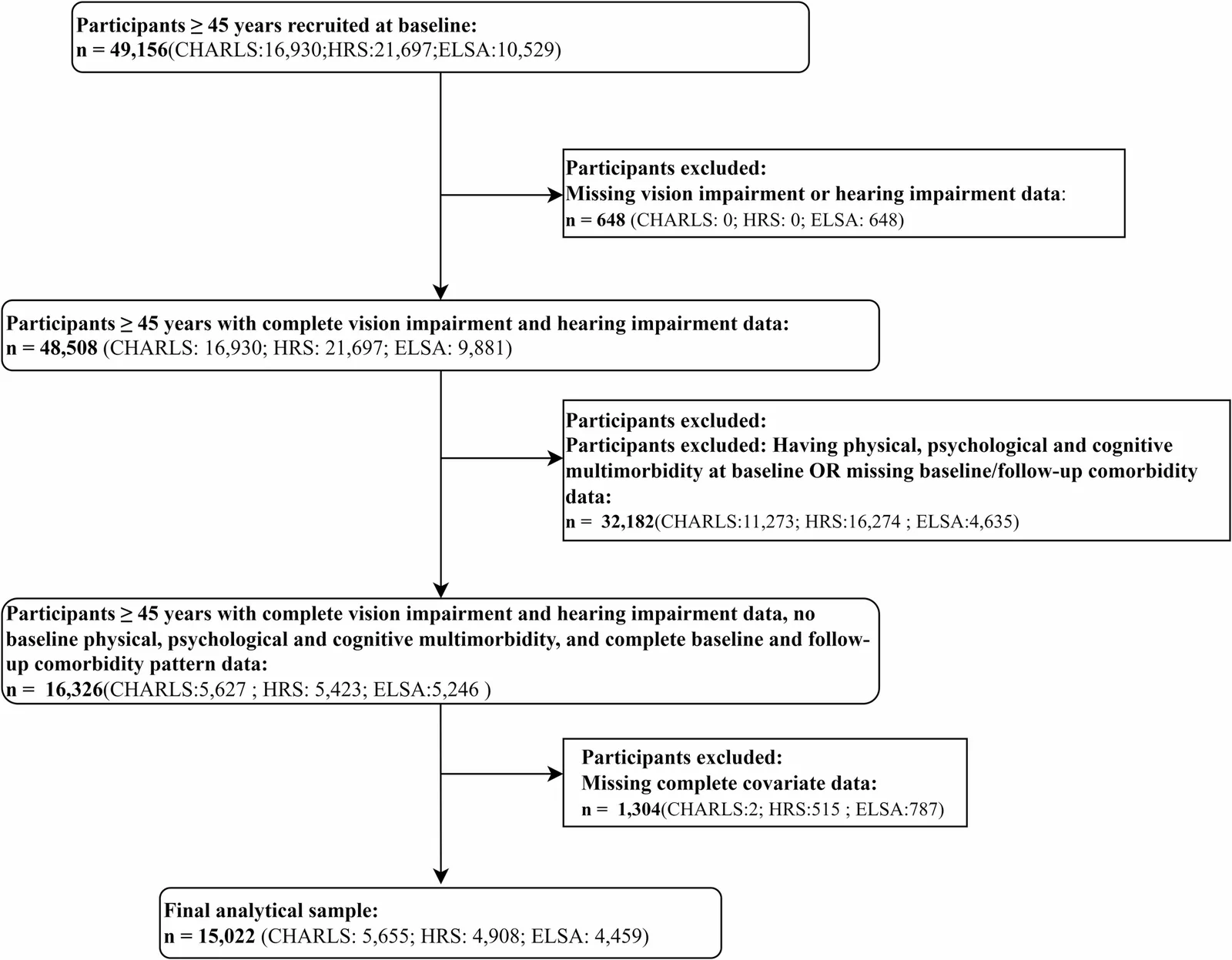
An observational cohort study followed 15,022 adults aged 45 and older in China, the United States and England for 6–8 years. Participants reported their vision and hearing impairments at the start. Researchers examined new combinations of physical diseases, psychological disorders and cognitive impairment, meaning difficulties with thinking and memory.
Combined vision and hearing impairment had the strongest links to combined physical and psychological conditions, combined psychological and cognitive conditions, and all three types together. Vision impairment generally had stronger associations than hearing impairment. The patterns were similar across countries. Loneliness statistically accounted for approximately 10–12% of the observed associations across sensory impairment types, suggesting it might partly explain the links.
Why it matters
Developing physical, psychological and cognitive conditions together poses challenges to healthy aging. The findings may inform efforts to combine accessible vision and hearing services with loneliness-reduction strategies to identify older adults at elevated risk.
Caveats
This observational study cannot establish that sensory impairment or loneliness caused later health problems. Sensory impairments were self-reported, and the study population was limited to adults aged 45 and older in three countries.
- Physical diseases
- Psychological disorders
- Cognitive impairment
- Hearing impairment
- Vision impairment
- Humans
The paper
Capital Medical University; Jilin University
International Journal for Equity in Health, Jul 24, 2026, Open access


