Cognitive and physical deficits link to worsening depression
In 8,473 older adults, having both deficits carried a hazard ratio of 1.76 for developing mild depressive symptoms and 0.82 for symptom reversion.
BMC Geriatrics
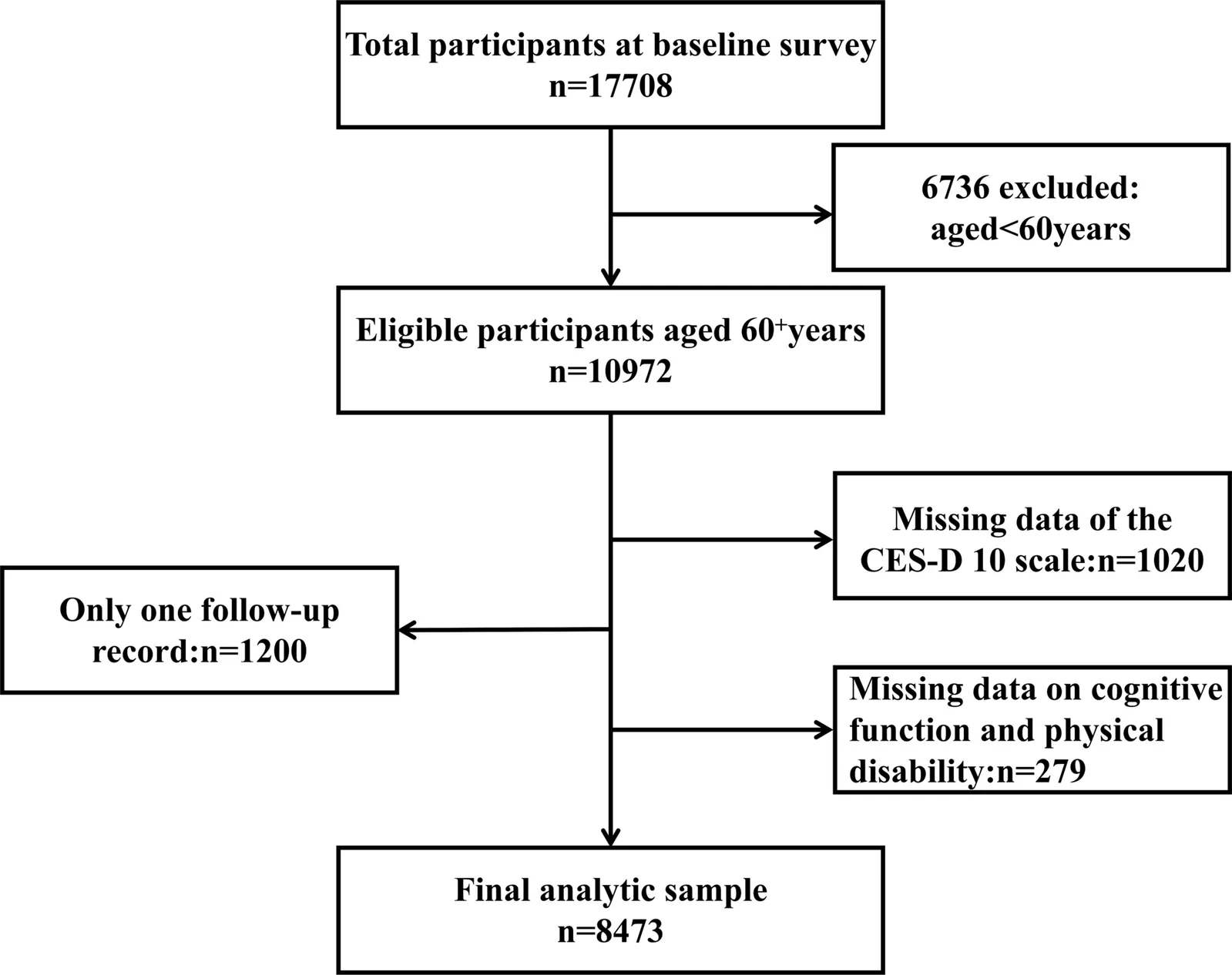
In a study of 8,473 Chinese adults aged 60 and older from the China Health and Retirement Longitudinal Study, researchers evaluated how cognitive impairment and physical disability relate to depressive symptom trajectories across five survey waves from 2011 to 2020. At baseline, 14.0% of participants had cognitive impairment, 17.5% had physical disability, and 6.5% had both conditions.
Depressive symptoms showed dynamic shifts over time, with symptom reversion generally exceeding progression. However, both cognitive impairment and physical disability were independently associated with an increased risk of symptom progression and a reduced likelihood of reversion, with physical disability showing stronger associations. The co-occurrence of both conditions showed the greatest risks, carrying a hazard ratio of 1.76 for progressing from no symptoms to mild symptoms, 1.79 for transitioning from mild to severe symptoms, and reduced reversion hazard ratios of 0.82 and 0.74, respectively.
Why it matters
Depression in older age frequently co-occurs with functional and neurocognitive decline. Clarifying how these common geriatric deficits jointly track with symptom persistence and recovery may inform multi-target strategies intended to preserve psychological resilience in aging populations.
Caveats
The findings rely on observational survey data from a single national cohort, meaning the relationships cannot be interpreted as causal. In addition, depressive states were assessed through periodic screening measures rather than formal clinical psychiatric diagnoses.
The paper
Shandong Second Medical University · Weifang Medical University
BMC Geriatrics · 1 Aug 2026 · CC BY-NC-ND