Combined vision and hearing problems linked to disease risk
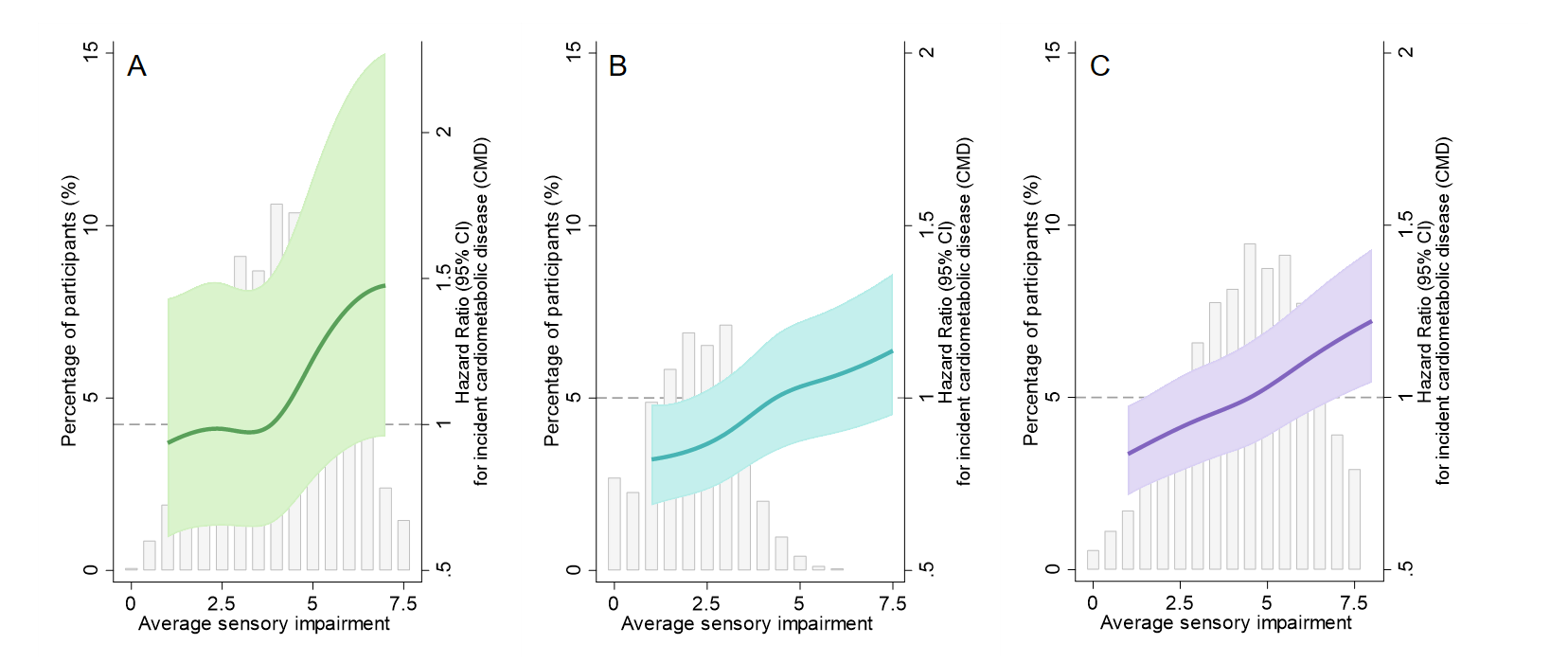
Combined vision and hearing impairment was linked to higher cardiometabolic risk, with a pooled hazard ratio of 1.10 per standard-deviation increase.
Limit: Undiagnosed cardiometabolic disease could impair vision and hearing before diagnosis
An observational study analyzed 52,912 middle-aged and older adults without cardiometabolic disease—conditions such as heart disease, diabetes and stroke—at the start. They came from three aging cohorts in England, the US and Europe and had at least two assessments. Researchers calculated averages of repeated self-reports of vision and hearing problems, updating them over time.
During 505,421 person-years of follow-up—the participants’ combined time in the study—14,566 new cardiometabolic disease events occurred. Higher average levels of vision problems, hearing problems and both together were associated with greater risk. The association was most consistent for combined impairment. Its pooled hazard ratio was 1.10 per standard-deviation increase, a step based on how widely scores varied. A hazard ratio above 1 indicates higher relative risk over time. Combined impairment was also linked to heart disease, diabetes and stroke.
Why it matters
For middle-aged and older adults, assessing vision and hearing together may complement conventional assessment of heart and metabolic disease risk.
Caveats
This observational analysis relied on self-reported sensory problems and cannot establish cause and effect. The Research Square preprint has not been peer-reviewed and does not address people who already had cardiometabolic disease.
From the paper
- Participants
The primary CMD analysis included 3,631 participants from ELSA, 12,064 from HRS, and 37,217 from SHARE.
- Limitation
First, residual confounding and reverse causation cannot be excluded in an observational study [48].
Quoted word for word from the full text on researchsquare.com.
- Hearing impairment
- Self-reported hearing impairment
- Cardiometabolic disease
- Heart disease
- Diabetes
- Humans
The paper
Dual Sensory Impairment and Incident Cardiometabolic Disease: A Multicohort Longitudinal Study
Shandong First Medical University
Research Square, Oct 19, 2026, Open access, Preprint, not peer-reviewed


