Blood proteins linked to later amyotrophic lateral sclerosis
Nine blood proteins were linked to later disease in 52,584 UK Biobank participants followed for an average of 11.8 years.
Limit: Early ALS may change blood proteins, rather than protein changes causing later ALS
Edited by Boris Djordjevic · AgingResearch.News
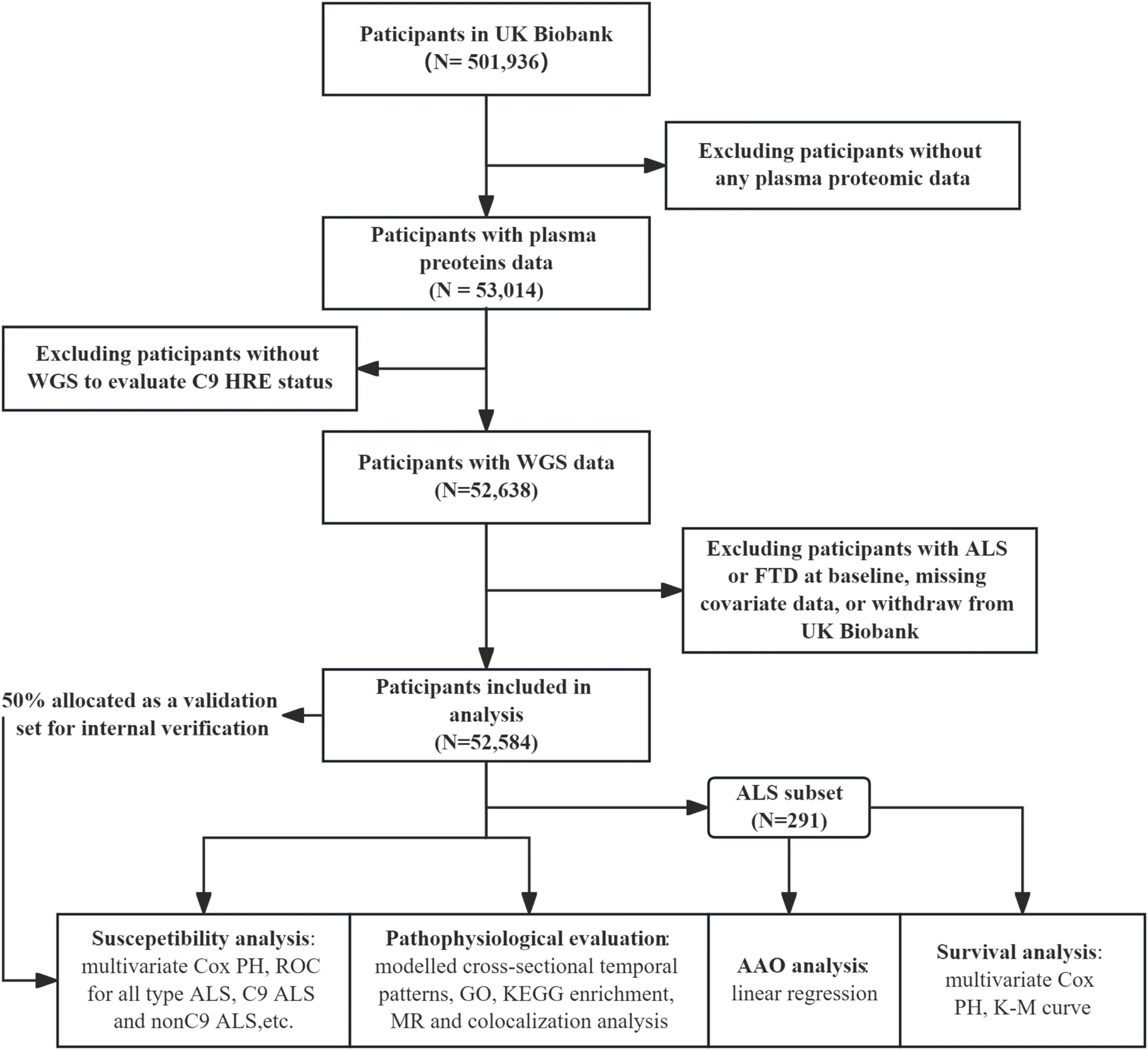
An observational study measured 2,920 blood proteins in 52,584 UK Biobank participants. Researchers followed them for an average of 11.8 years; 291 developed amyotrophic lateral sclerosis (ALS), a progressive and fatal neurological disease. Among those cases, 34 carried a genetic mutation linked to ALS.
Nine proteins were associated with later ALS, with some linked to higher risk and others to lower risk. Associations differed between people with and without the mutation. Models combining protein levels with age and sex had area-under-the-curve scores above 0.750 for predicting ALS at three, five and 10 years. This measure describes how well a model distinguishes people who develop a disease from those who do not.
Why it matters
ALS lacks reliable markers for predicting its onset. Candidate blood markers may support earlier detection and research into how the disease develops.
Caveats
These observational links do not show that the proteins cause or protect against ALS. The mutation-linked subgroup included only 34 cases.
From the paper
- Participants
In this prospective cohort study, we followed 52 584 participants from the UK Biobank for a mean of 11.8 years.
- Result
Plasma NEFL (neurofilament light polypeptide) demonstrated the strongest association with ALS risk (HR: 2.897, 95% CI: 2.566–3.271, FDR < 0.001), followed by EGFLAM (Pikachurin; HR: 0.402, 95% CI: 0.266–0.606, FDR = 0.020) …
Results, 3.2 Association Between Protein and All-Type Incident ALS Risk
Quoted word for word from the full text on onlinelibrary.wiley.com.
- Extracellular matrix remodeling
- Inflammation
- Amyotrophic lateral sclerosis
- C9orf72-associated amyotrophic lateral sclerosis
- Non-C9orf72-associated amyotrophic lateral sclerosis
- Humans
The paper
West China Hospital
Journal of Cachexia, Sarcopenia and Muscle, Oct 2026