Kidney injury often persisted among adult hospital survivors
Kidney injury persisted for 7 to 90 days in 10,884 of 23,868 adult survivors (45.6%) in a retrospective study at a Chinese hospital.
Limit: Excluding milder cases without serial creatinine measurements likely inflated the incidence of persistent kidney injury
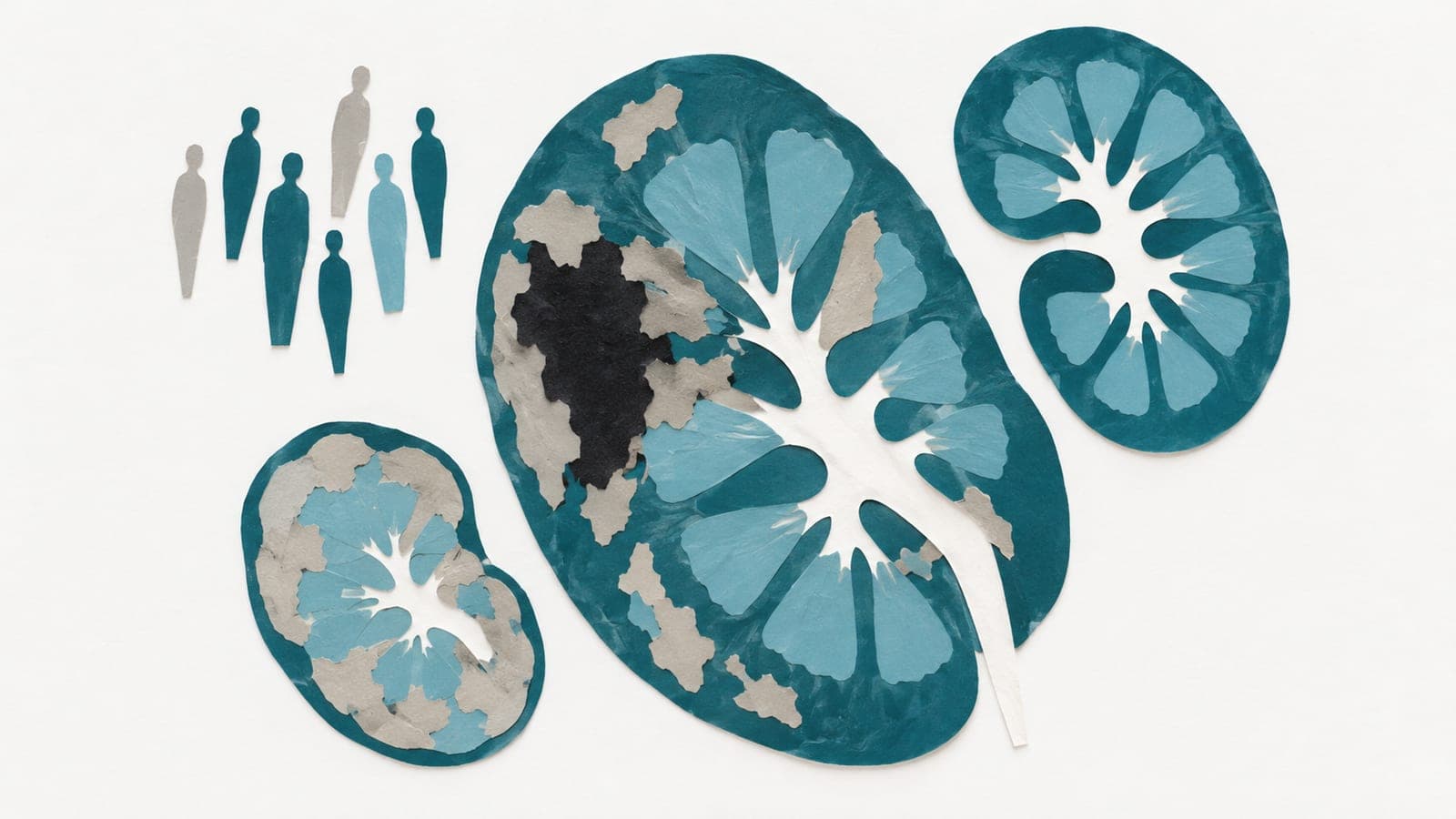
A retrospective cohort study analysed medical records from 23,868 adults who survived at least one episode of acute kidney injury at Tongji Hospital in China. The records covered January 2015 to April 2024. Acute kidney disease—injury persisting for 7 to 90 days—occurred in 45.6% of the group. Older age and more severe initial injury were among the factors associated with it.
The researchers also examined 6,597 patients without previous chronic kidney disease who had at least one year of follow-up. In this subgroup, 19.8% developed chronic kidney disease. Persistent injury was associated with a higher risk of developing chronic kidney disease than injury that did not persist. The hazard ratio, a measure of relative risk over follow-up, was 1.92.
Why it matters
The authors’ call for closer kidney-function monitoring after discharge is particularly relevant to older adults, with older age among the factors linked to persistent injury.
Caveats
This observational study could not establish that persistent injury caused chronic kidney disease. It covered one Chinese hospital, and the long-term analysis included only patients without previous chronic kidney disease who had at least one year of follow-up.
From the paper
- Participants
Among 6597 patients in the cohort, 1308 (19.8%) developed de novo CKD during follow-up.
- Result
Among acute precipitants and clinical etiologies, hepatorenal syndrome was independently associated with an increased likelihood of AKD progression (OR 1.95, 95% CI 1.59–2.39).
Quoted word for word from the full text on tandfonline.com.
The paper
Tongji Hospital
Renal Failure, 15 Oct 2026, Open access