Fat and muscle measures linked to survival after valve replacement
An observational study of 915 people linked scan-measured fat and muscle characteristics to death risk after catheter-based aortic valve replacement.
Multicenter
Limit: Fat and muscle changes after the procedure were not measured
Edited by Boris Djordjevic · AgingResearch.News
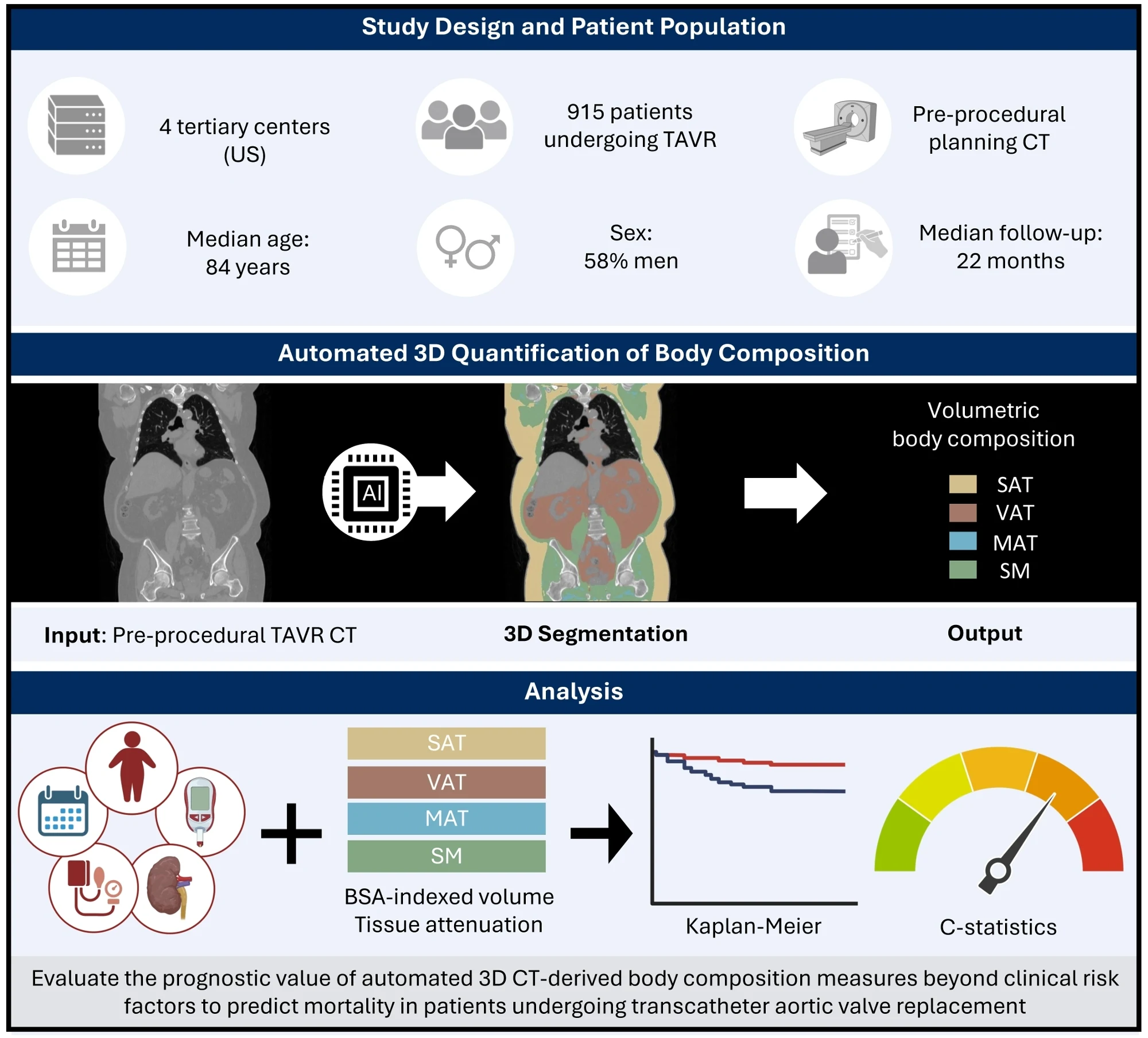
In a retrospective observational study, researchers examined 915 patients who underwent aortic valve replacement through a catheter, a thin tube. Their median age was 84, and 58% were men. An artificial intelligence system measured fat and muscle on computed tomography scans, which use X-rays, taken before the procedure.
Over a median follow-up of 22 months, 160 patients (17.5%) died. Less fat under the skin and greater X-ray absorption by fat were associated with a higher risk of death. More skeletal muscle and greater X-ray absorption by muscle were associated with a lower risk. These associations held after accounting for age, sex, body mass index, high blood pressure, diabetes and chronic kidney failure.
Why it matters
For older people facing aortic valve replacement, body composition may help refine estimates of death risk beyond routine patient characteristics and health conditions.
Caveats
This retrospective observational study cannot show that changing fat or muscle would change survival. The findings concern patients undergoing catheter-based aortic valve replacement, not older adults generally.
- Diabetes
- Adipose tissue attenuation
- Chronic renal failure
- CT-derived body composition measures
- Hypertension
- Humans
The paper
Massachusetts General Hospital
Circulation Cardiovascular Imaging, Oct 20, 2026


