Model estimates further fracture risk after hip fracture surgery
The model scored 0.891 for ranking fracture risk in the development group and 0.861 in patients discharged later.
1,735 patients, independent replication
Limit: The study did not measure whether using the model reduced fractures
Edited by Boris Djordjevic · AgingResearch.News
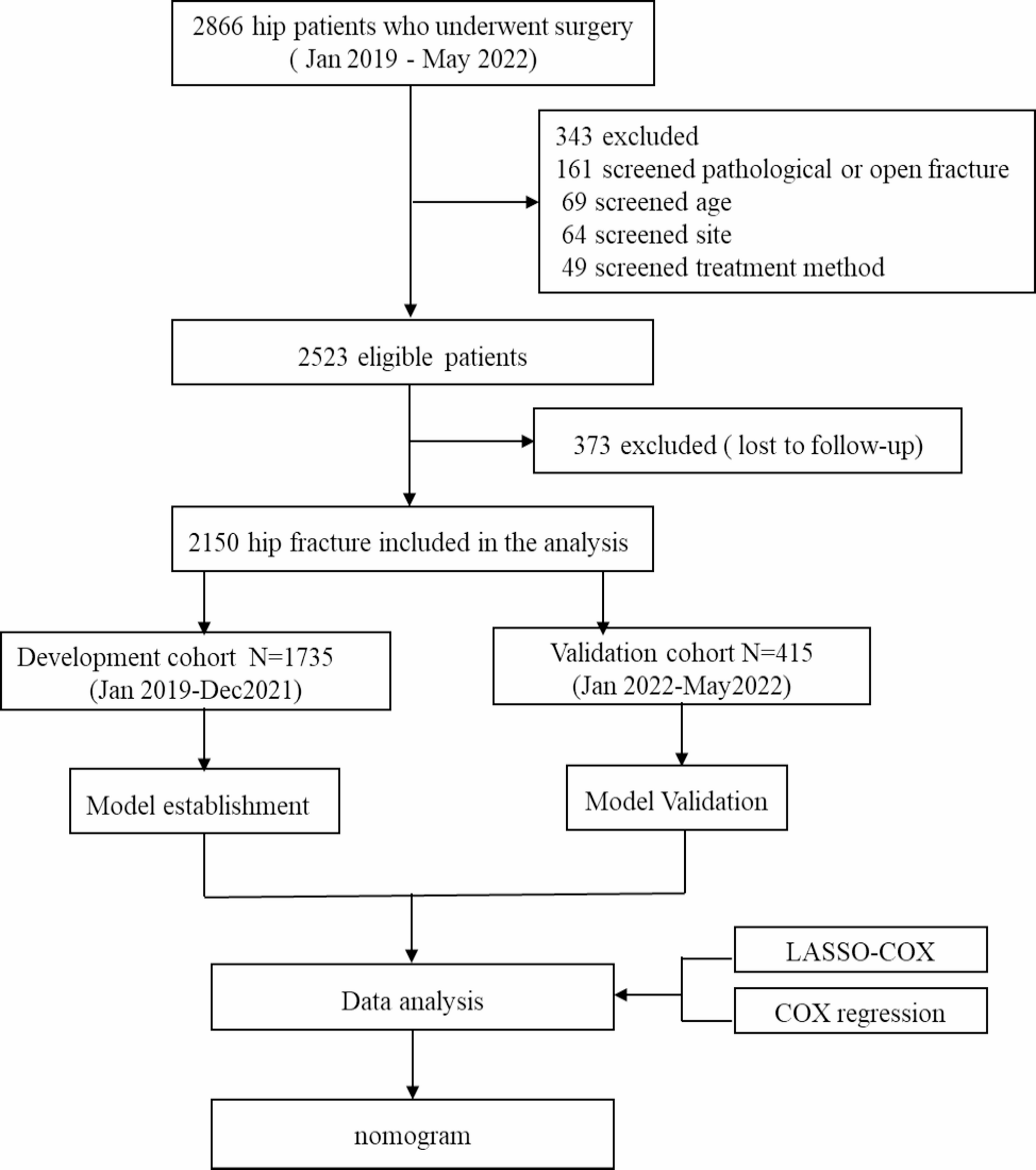
Researchers studied older adults who underwent surgery for a first fragility hip fracture on one side between January 2019 and May 2022. The retrospective cohort study used medical records and structured telephone interviews. Researchers developed the prediction model in 1,735 patients and checked it in 415 patients discharged later.
Over two years, 190 patients (8.9%) experienced another fracture. The model combined age, hip function, neurodegenerative diseases—conditions that progressively damage nerve cells—eye disease, living alone and exercise. Exercise was associated with lower fracture risk. Researchers assessed how well the model ranked patients by risk and how closely its predictions matched observed fractures. Predicted and observed risks agreed well.
Why it matters
Further fractures are associated with declining function and a higher risk of death in older adults. Risk assessment may help guide individualized prevention.
Caveats
This observational study did not test whether using the model reduced fractures. Its performance in younger people or people without a previous hip fracture remains unestablished.
Exercise is part of Bryan Johnson's Blueprint
The paper
Second Affiliated Hospital of Soochow University; First Affiliated Hospital of Wenzhou Medical University
BMC Musculoskeletal Disorders, Jul 23, 2026, Open access


