Nutritional risk linked to early death after hip fracture
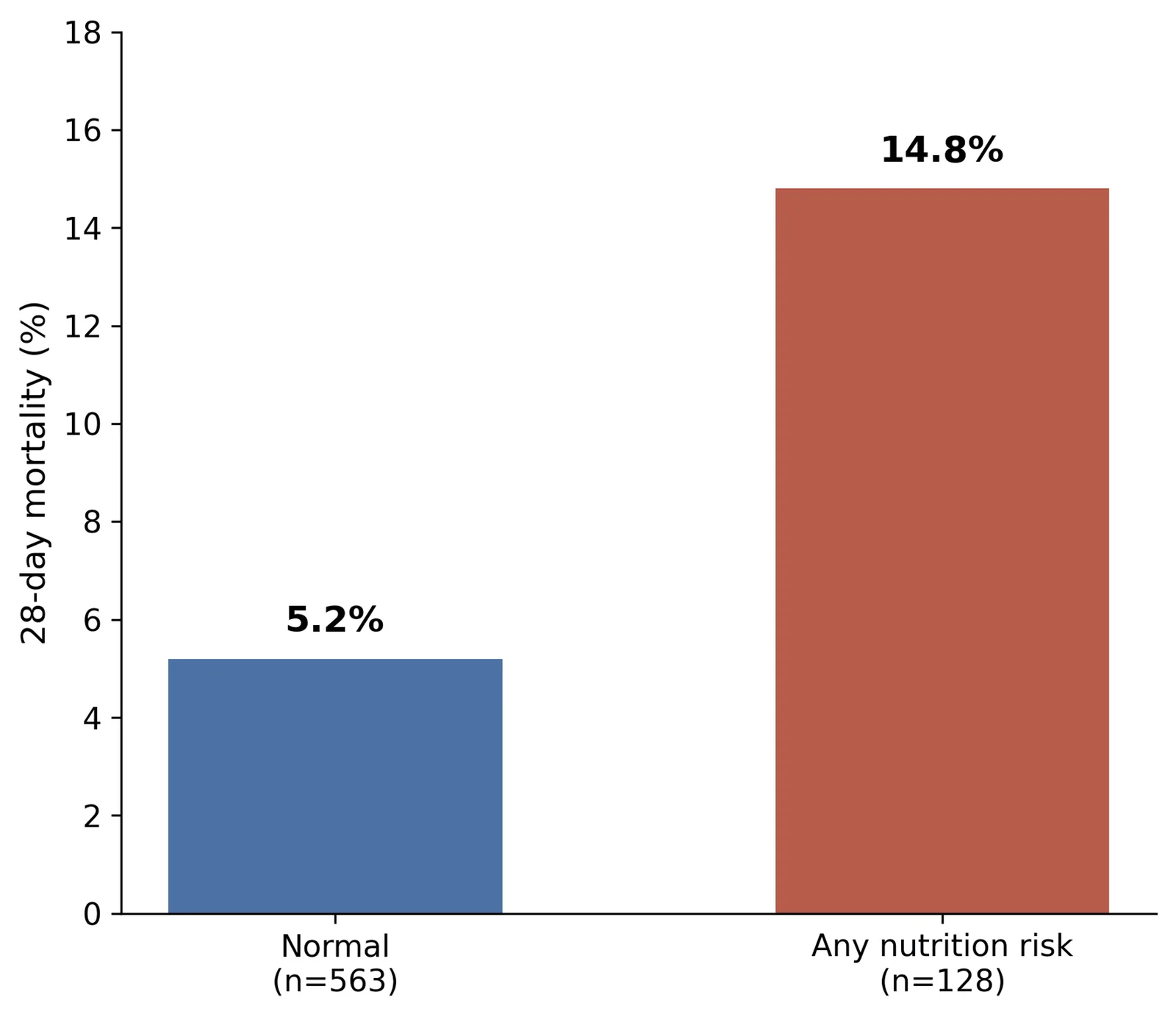
Within 28 days, 14.8% of hip-fracture patients with nutritional risk died, compared with 5.2% of those with normal nutritional status.
Our read
Populations- Studied:
- Cohort study of 691 people
- In the record:
- The 8th paper on Abbreviated Mental Test Score with results in people; 58 on record in all.
Editor of record: Boris Djordjevic · AgingResearch.News
Researchers examined 709 consecutive patients admitted with hip fracture in a retrospective cohort study. They assessed nutritional risk on admission using the Malnutrition Universal Screening Tool. They combined patients classified as at risk or malnourished into one nutritional-risk group. They excluded 18 patients whose anesthetic risk could not be graded, leaving 691 for analysis.
Of these patients, 128 had nutritional risk. Deaths from any cause within 28 days were more common in this group than among patients with normal nutritional status. The association remained after accounting for age, sex, anesthetic risk grade and scores on a test of mental abilities. These measured factors did not substantially explain the link.
Why it matters
Hip fractures carry a substantial risk of early death in older adults. The findings support including nutritional assessment in a broader evaluation of that risk.
Caveats
This retrospective observational study could not establish cause and effect. Unmeasured factors may still have influenced the association.
From the paper
- Participants
Of 709 patients in the dataset, 18 (2.5%) were excluded due to an ungradable ASA grade, leaving 691 patients in the primary analysis.
- Primary outcome
Nutritional risk was associated with significantly higher unadjusted odds of mortality (OR 3.21, 95% CI 1.74-5.93).
- Limitation
The retrospective, single-center design may limit generalizability and cannot exclude residual confounding from unmeasured factors such as frailty, polypharmacy, and comorbidity burden not captured by ASA grade alone; a formal frailty assessment was not performed.
Quoted word for word from the full text on cureus.com.


Comments
Be the first to comment.