Integrating volumes into myocardial work: the prognostic role of non-invasive pressure-strain-volume analysis in transcatheter aortic valve implantation
Abstract
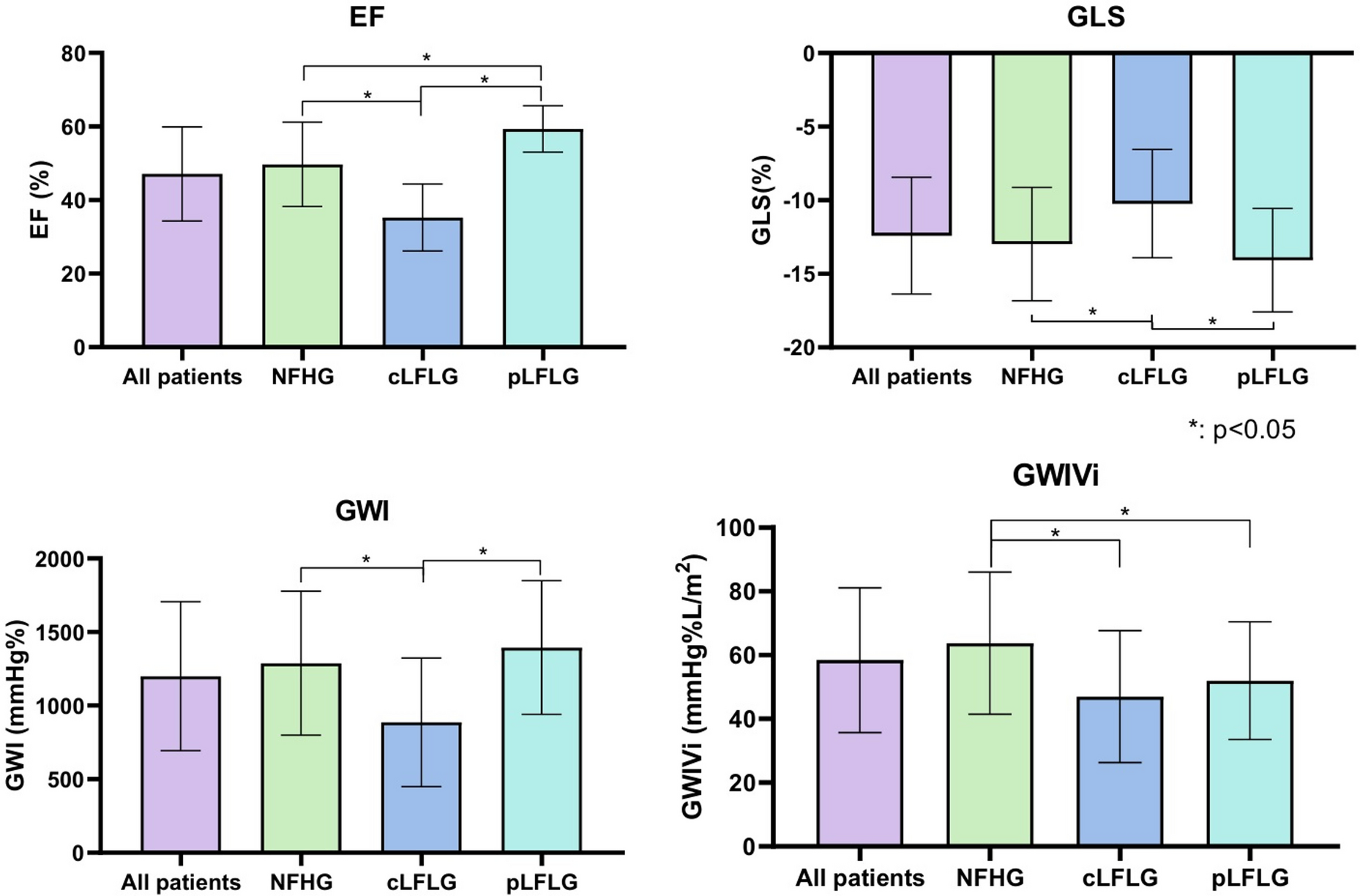
The accurate echocardiographic assessment of the left ventricular (LV) contractile state remains challenging in aortic stenosis, as ejection fraction and even global longitudinal strain are markedly load-dependent. The novel pressure-strain loop-derived myocardial work were developed to overcome this limitation; however, incorporation of instantaneous LV volume may further improve this method. We aimed to quantify myocardial work using pressure-strain-volume (PSV) loops and to evaluate its prognostic value in patients undergoing transcatheter aortic valve implantation (TAVI). We enrolled 300 patients scheduled for TAVI (age 78.7 ± 6.3 years, 41% female). The endpoint was all-cause mortality, reached by 62 patients over a median follow-up of 25 months. Echocardiography and non-invasive blood pressure measurements were performed one day before TAVI. LV pressure was estimated noninvasively, while strain curves were derived from speckle-tracking analysis. Pressure-strain relations were adjusted to instantaneous LV volumes to construct PSV loops, yielding volume-adjusted indices (GWIVi and GCWVi). GWIVi showed similar extent of LV dysfunction in classical and paradoxical low-flow low-gradient AS phenotypes compared to the normal flow-high gradient patients (46.98 ± 20.71 vs. 51.99 ± 18.43 vs. 63.74 ± 22.26 mmHg%L/m², p < 0.001), while other LV function parameters did not. In multivariable Cox-regression, GWIVi was an independent predictor of mortality (Hazard ratio: 0.955 [confidence interval: 0.773-0.993], p < 0.05) alongside clinically relevant other markers such as hemoglobin and atrial fibrillation. PSV loop-derived myocardial work detected LV mechanical differences between AS phenotypes and provided independent prognostic value in TAVI candidates, potentially offering a more physiologically accurate assessment of LV function in this population.


