Higher body weight linked to greater frailty in US adults
Each additional unit of body mass index was associated with a 4 to 5 percent higher frailty index, on average, in genetic analyses.
Limit: The analysis examined excess weight, not changes in frailty after weight loss
Edited by Boris Djordjevic · AgingResearch.News
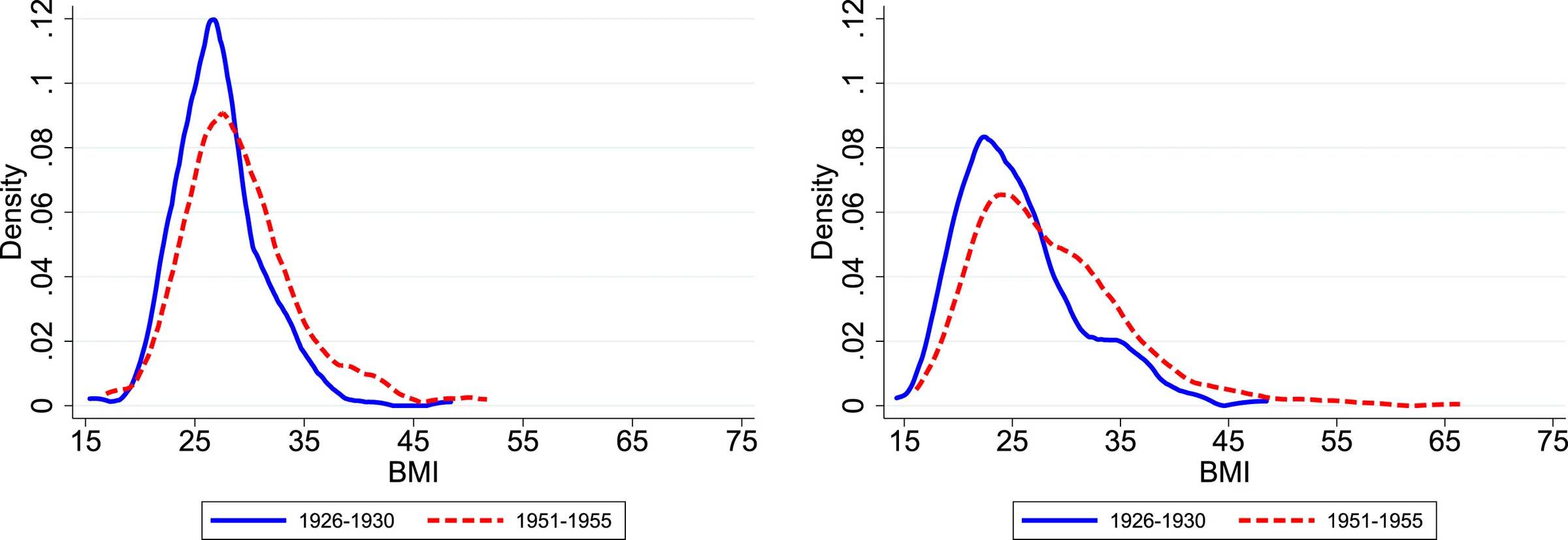
US adults in the Health and Retirement Study were the focus of an observational study of excess weight and health in old age. Researchers calculated a frailty index: the proportion of age-related health problems a person had. Higher body mass index, a measure of weight relative to height, and other indicators of excess weight were associated with greater frailty.
The researchers also used a genetic score that captured inherited susceptibility to higher body mass index. The score’s association with body mass index grew stronger among people born later. They used this birth-year pattern to develop a further genetic analysis of excess weight and frailty. In these analyses, each additional unit of body mass index was associated with a 4 to 5 percent higher frailty index, on average.
Why it matters
Frailty provides a way to study the buildup of health problems with age. The research addressed how excess weight relates to this broader measure of later-life health.
Caveats
This was an observational genetic analysis, not a randomized weight-loss trial. The findings concern US adults in the Health and Retirement Study and do not show whether losing weight reduces frailty.
The paper
Heavy inheritance: Genetic pathways from excess weight to biological aging and health in old age
University of Göttingen
Economics and Human Biology, Oct 17, 2026