Tiny drug-carrying gels ease colitis in aged mice
In aged mice with chemically induced colitis, oral gels carrying an anti-inflammatory compound reduced disease severity and altered immune-cell responses.
Limit: Only 6 mice per group in the treatment experiment
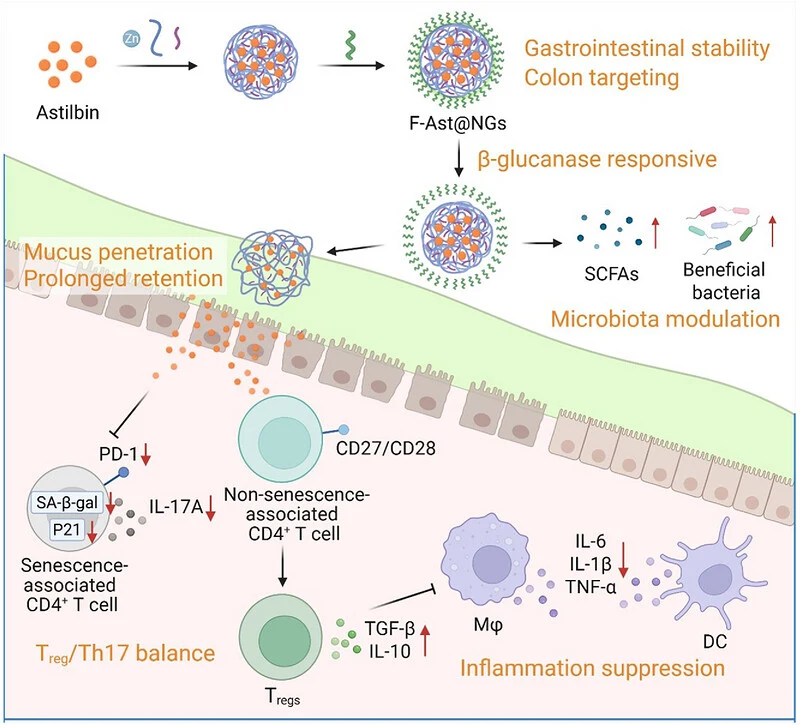
Researchers tested oral drug-carrying gels in aged mice with colitis, or colon inflammation, induced by the chemical dextran sulfate sodium. The gels carried astilbin, a natural compound with anti-inflammatory activity. They were designed to remain stable through the upper digestive tract and release the compound in the colon.
The gels eased disease severity and reduced features associated with senescence, a state in which cells stop dividing, in CD4 T cells, a type of immune cell, in the colon. They also enhanced responses by regulatory T cells, which help restrain immune activity. The gels’ benefits were markedly weaker in mice depleted of these regulatory cells, supporting an important role for their regulation of immune responses.
Why it matters
Age-related immune changes can limit the effectiveness of existing inflammatory bowel disease therapies. The study explored colon-targeted drug delivery as a possible approach to this problem.
Caveats
These were experiments in mice with chemically induced colitis, not studies in older people with inflammatory bowel disease. The abstract did not report animal numbers, doses or treatment duration.
From the paper
- Participants
A total of 106 eligible patients were included in the final analysis.
Quoted word for word from the full text on advanced.onlinelibrary.wiley.com.
The paper
The Fourth Affiliated Hospital of Soochow University
Advanced Science, Oct 18, 2026