Glucose-Lowering Therapies in Type 2 Diabetes-Associated Sarcopenia: Mechanisms, Clinical Evidence and a Muscle-Centred Framework
Abstract
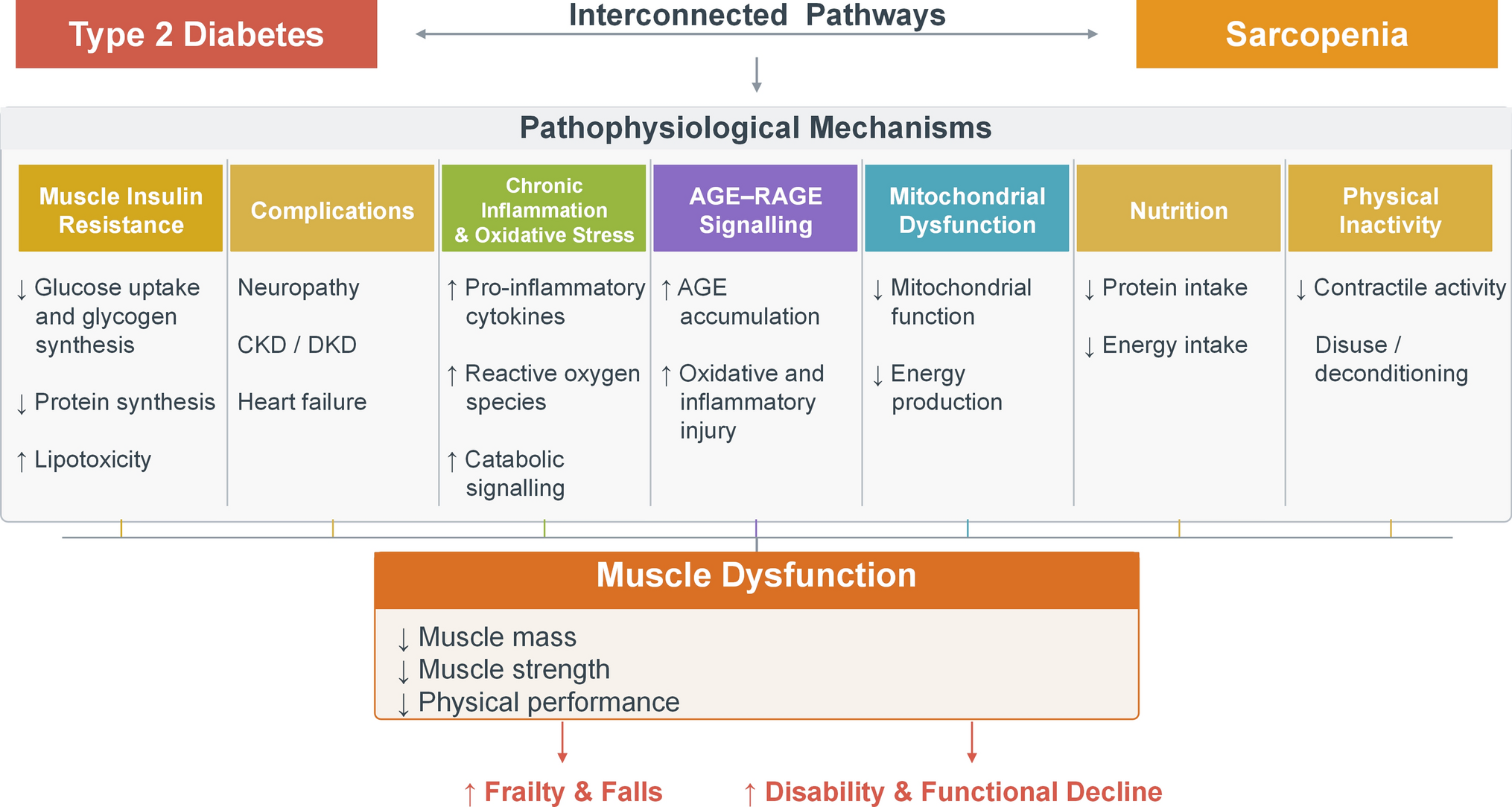
Sarcopenia is increasingly recognised as a clinically important comorbidity in diabetes mellitus, particularly in older adults and individuals with long-standing type 2 diabetes. Because skeletal muscle is the principal site of insulin-stimulated glucose disposal, declines in muscle mass, quality, strength and physical performance may exacerbate insulin resistance and glycaemic instability and increase the risks of frailty, disability, falls, fractures, cardiovascular events and mortality. Contemporary glucose-lowering therapies have transformed diabetes care through established cardiorenal benefits and weight reduction, yet skeletal muscle outcomes are rarely prespecified or systematically assessed in pivotal trials. This evidence gap is especially relevant for weight-reducing agents such as glucagon-like peptide-1 receptor agonists and sodium-glucose cotransporter 2 inhibitors, which are often associated with reductions in dual-energy X-ray absorptiometry-derived or bioelectrical impedance analysis-derived lean-mass estimates. However, these changes should be interpreted cautiously, as they often occur in the context of overall weight loss and may be influenced by alterations in body water. In addition, dual-energy X-ray absorptiometry- or dual-energy X-ray absorptiometry-derived lean-mass estimates do not directly quantify contractile skeletal muscle. Accordingly, reductions in lean-mass estimates alone are insufficient to infer clinically meaningful muscle loss without concurrent assessment of muscle strength or physical performance. This narrative review summarises the bidirectional mechanisms linking diabetes and sarcopenia and appraises major glucose-lowering drug classes from a muscle-centred perspective. It integrates mechanistic insights with human evidence on muscle-relevant outcomes, including body composition, strength and physical performance, and addresses practical safety and monitoring considerations in sarcopenia-prone phenotypes, including sarcopenic obesity. We also propose a pragmatic, hypothesis-generating Cardiorenal-Muscle Quadrant Framework that considers glycaemic efficacy and cardiorenal benefit alongside muscle reserve, functional status and treatment-related risks, with emphasis on functional monitoring, resistance exercise, nutritional optimisation and individualised glycaemic targets in older or frail adults.