Gut microbiome composition and cardiometabolic risk among healthcare workers: findings from the EXPONIT study
Abstract
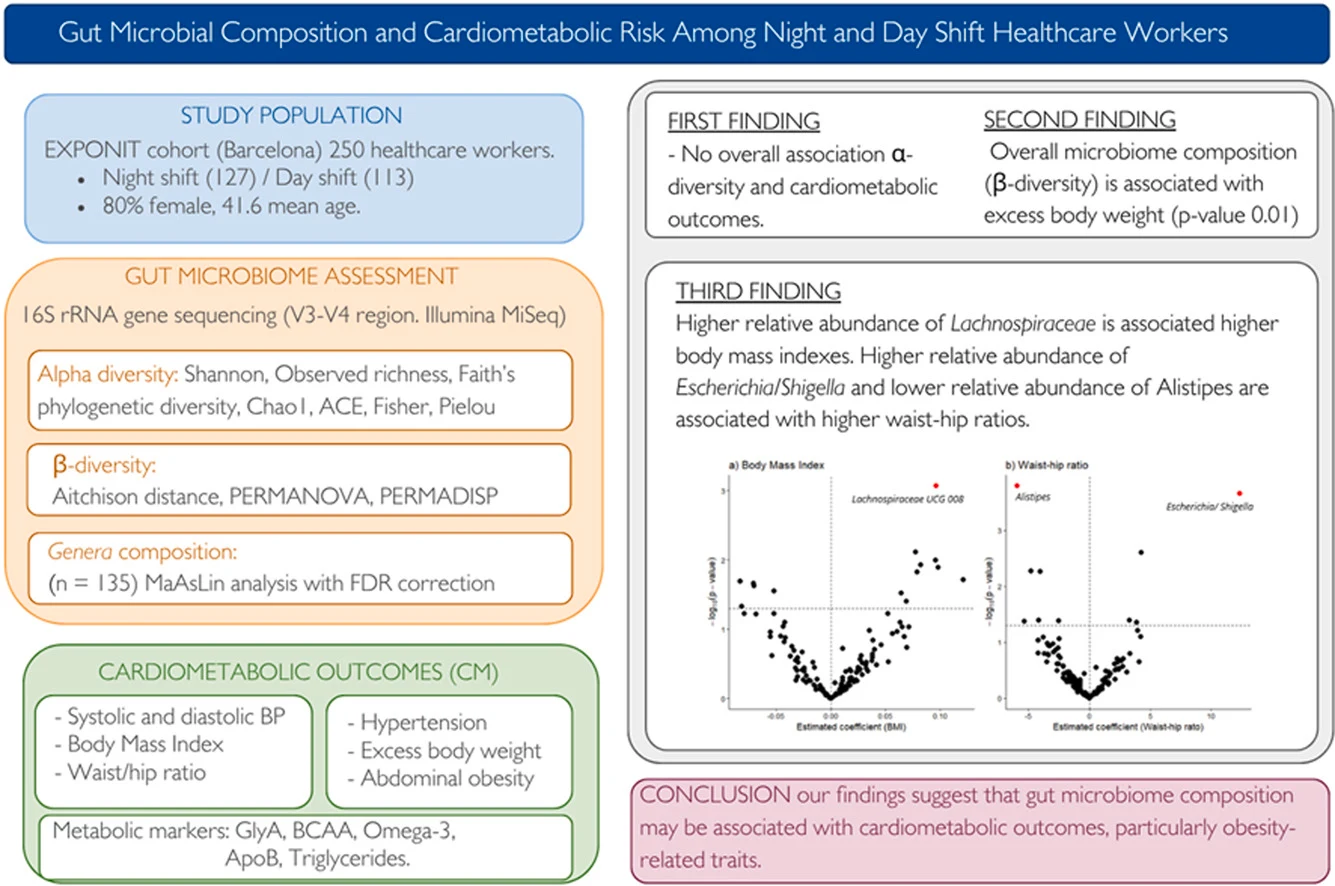
BACKGROUND AND AIMS: The gut microbiome plays an important role in metabolic regulation and has been linked to cardiometabolic disorders. Circadian-related factors (night shift work, sleep quality, chronotype) may influence gut microbiome characteristics and cardiometabolic health. We aimed to investigate the associations between gut microbiome diversity and composition and cardiometabolic outcomes, and evaluate whether these associations differ by work schedule, sleep quality, and chronotype. METHODS AND RESULTS: Fecal samples were taken on a working day, and gut microbiota composition was assessed using 16S rRNA gene sequencing. Anthropometric measures (body mass index,waist-to-hip ratio, systolic and diastolic blood pressure) and blood samples (metabolic biomarkers), were obtained during study visits. Associations between microbial composition and cardiometabolic outcomes were examined using robust linear and logistic regression models. Potential interactions with shift work status, sleep quality, and chronotype were also explored. Overall, alpha diversity was not significantly associated with cardiometabolic markers. However, overall gut microbiome composition (beta diversity) was associated with excess body weight (PERMANOVA p = 0.01, R² = 0.7%). In addition, specific genera were associated with anthropometric markers: greater relative abundance of Lachnospiraceae-unclassified-genus-008 was associated with a higher body mass index; and increased relative abundance of Escherichia/Shigella and lower relative abundance of Alistipes were associated with higher waist-to-hip ratio. No associations were found between beta diversity or taxonomic composition and metabolic biomarkers. CONCLUSION: Specific gut microbial profiles may be associated with cardiometabolic markers, particularly obesity-related traits. Future longitudinal studies are needed to clarify the directionality and underlying mechanisms of these associations.
The paper
Universitat Pompeu Fabra; University of New Mexico
Nutrition, Metabolism, and Cardiovascular Diseases, Sep 16, 2026


