Parkinson’s linked to less everyday walking in Ghana
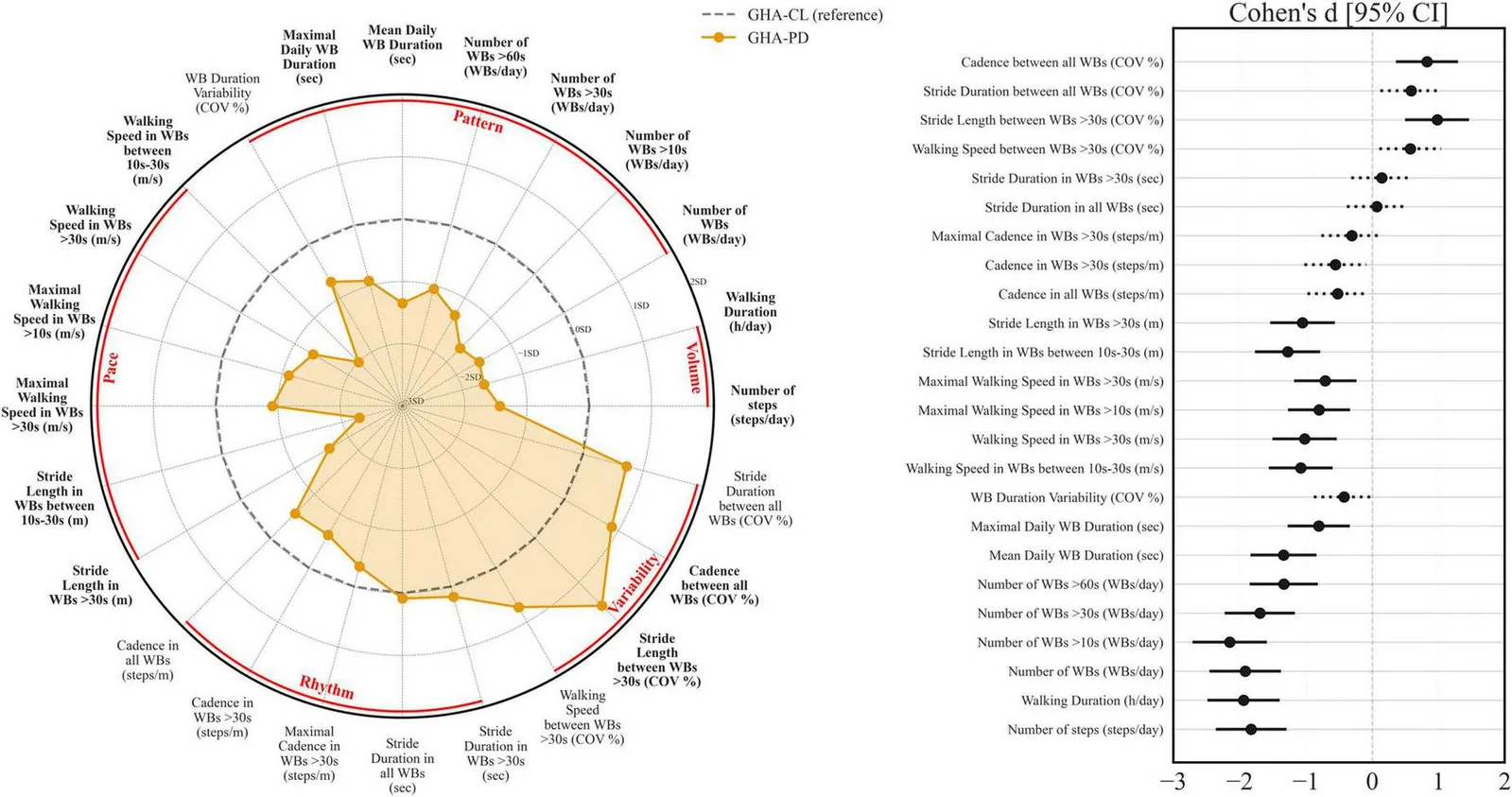
In Ghana, daily steps were 2,153 in people with Parkinson’s versus 10,001 in controls during seven days of wearable monitoring.
50 participants
Limit: Unmeasured comorbidities could partly explain the walking difference
In an observational study, 50 people with Parkinson’s disease and 30 older people without the disease in Ghana wore a movement-tracking device for seven days. Researchers calculated 24 measures of everyday mobility. They also included age- and gender-matched Parkinson’s and control groups from an earlier UK study.
Sixteen mobility measures differed between the Ghanaian groups. Daily walking time was 0.43 hours in people with Parkinson’s, compared with 2.07 hours in controls. Mobility impairment was more pronounced in the Ghanaian Parkinson’s group than in its UK counterpart. Differences remained in 18 measures after adjustment for other factors. The monitoring method had high feasibility and acceptability in Ghana, although participants commonly reported discomfort.
Why it matters
Parkinson’s-related walking difficulties can threaten everyday function and independence. Understanding how they present in African populations matters as life expectancy and Parkinson’s prevalence rise.
Caveats
This observational comparison could not establish what caused the mobility differences. The Ghanaian findings came from 50 people with Parkinson’s and 30 older controls.
From the paper
- Result
Compared with the UK-PD cohort, the GHA-PD cohort took, on average, 3,340 fewer daily steps per day (β = −3340, 95% CI −5002 to −1679) and completed 174 fewer daily WBs per day (β = −174, 95% CI −227 to −123).
- Limitation
First, residual confounding from unmeasured factors (e.g., nutrition, comorbidities, habitual physical activity, environmental factors, socioeconomic context, social support and depressive symptoms) likely remains.
Quoted word for word from the full text on frontiersin.org.
The paper
Newcastle University
Frontiers in Aging Neuroscience, Oct 2, 2026