Caloric restriction attenuates NLRP3 inflammasome activation and oxidative stress in leukocytes of patients with obesity
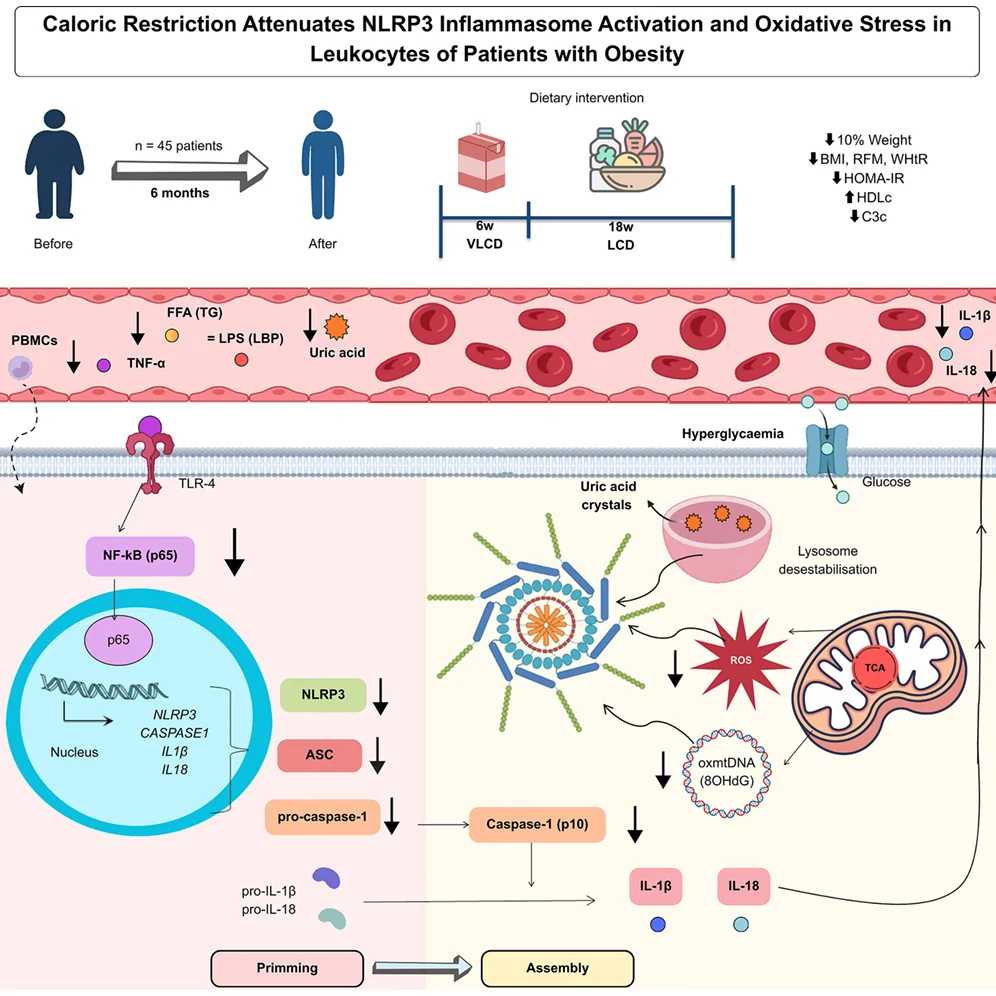
6 months
Abstract
Obesity promotes chronic low-grade inflammation through metabolic stress and activation of the NOD-like receptor family pyrin domain-containing 3 (NLRP3) inflammasome. The effects of caloric restriction on this pathway in humans are poorly understood; therefore, we evaluated the impact of a 6-month hypocaloric dietary intervention in 45 adults with obesity by assessing the metabolic, inflammatory, oxidative stress, and inflammasome-related markers in peripheral blood mononuclear cells. Weight loss improved metabolic parameters, reduced oxidative stress, and decreased the expression of nuclear factor κB (NF-κB), NLRP3, apoptosis-associated speck-like protein containing a CARD (ASC), and pro-caspase-1, while there tended to be a reduction of active caspase-1. These changes were accompanied by lower circulating interleukin (IL)-1β (IL-1β) and IL-18 levels, suggesting systemic attenuation of inflammasome activity. Baseline adiposity and insulin resistance influenced the magnitude of the response to dietary intervention. These findings support caloric restriction as a strategy to mitigate obesity-associated immunometabolic dysfunction and identify the redox-inflammasome axis as a potential therapeutic target.
The paper
Fundación para el Fomento de la Investigación Sanitaria y Biomédica de la Comunitat Valenciana; Instituto de Salud Carlos III
iScience, Oct 5, 2026, Open access