Comparative Effects of Low-Fat and High-Fat Diets on Non-HDL Cholesterol, Apolipoproteins, and Lipoprotein Ratios: A Meta-Analysis of Randomized Controlled Trials
Preregistered CRD42023420978
Abstract
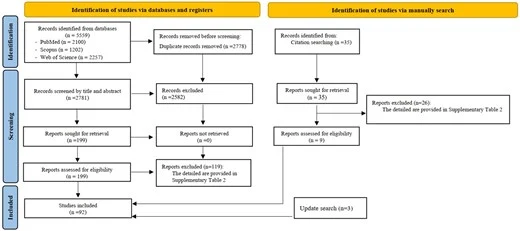
CONTEXT: Evaluating the effects of low-fat diets (LFDs) on nontraditional blood lipid measures provides a more comprehensive assessment of their impact on lipid metabolism. OBJECTIVES: This systematic review and meta-analysis aimed to evaluate the effects of LFDs (≤30% energy from fat) compared with high-fat diets (HFDs; >30% energy from fat) on non-high-density lipoprotein cholesterol (non-HDL-C), apolipoproteins, and lipoprotein ratios. DATA SOURCE: We systematically searched PubMed, Scopus, and Web of Science from inception to June 2, 2024, and then updated the search through August 8, 2025, without language restrictions. DATA EXTRACTION AND SYNTHESIS: Randomized controlled trials (RCTs) that examined the effects of LFDs compared with HFDs on nontraditional lipid measures among adults were selected. Independent reviewers extracted data and assessed the risk of bias and the certainty of evidence. Random-effects meta-analyses were used to estimate weighted mean differences (WMDs) and 95% CIs for each outcome. Reporting adhered to the PRISMA guidelines. RESULTS: Ninety-two trials were included in this meta-analysis. Compared to HFDs, LFDs significantly reduced non-HDL-C (WMD = -8.00 mg/dL, 95% CI, -13.1 to -2.89; I2 = 77.8%; high-quality evidence), apolipoprotein (Apo) A1 (WMD = -2.51 mg/dL, 95% CI , -3.92, to -1.10; I2 = 66.1%; low-quality evidence), HDL-C2 (WMD = -0.72 mg/dL, 95% CI , -1.20, to -0.23; I2 = 0%; moderate-quality evidence), and HDL-C3 (WMD = -1.32 mg/dL, 95% CI , -2.29, to -0.36; I2 = 36.7%; moderate-quality evidence). No significant effects were observed on ApoB, ApoB100, ApoB in LDL-C, ApoC3, and the ApoB/ApoA1 ratio (low- to very low-quality evidence). LFDs led to a slight but significant increase in the total cholesterol/HDL-C and triglycerides/HDL-C ratios (moderate-quality evidence). Moderate-quality evidence indicated no effect of LFDs on lipoprotein (a) (LP[a]). CONCLUSIONS: Although LFDs significantly reduce non-HDL-C, the evidence for their effects on ApoB, ApoA1, HDL-C/ApoA, and ApoB/ApoA1 remains inconclusive. This meta-analysis indicates that LFDs can be an effective dietary strategy to reduce non-HDL-C, without strong evidence of adverse effects on lipoprotein ratios. SYSTEMATIC REVIEW REGISTRATION: PROSPERO registration no. CRD42023420978.
The paper
Shahid Sadoughi University of Medical Sciences; Shahid Beheshti University of Medical Sciences
Nutrition Reviews, 16 Oct 2026
